The Struggle for Influence in Sudan: How Have Egyptian Calculations Contributed to Prolonging the Crisis?

Since the outbreak of the war in Sudan in April 2023, the crisis has evolved beyond a purely internal confrontation between rival Sudanese actors and has become an arena where complex regional and international calculations intersect. While Sudanese citizens have been grappling with the humanitarian, economic, and security consequences of the conflict, regional capitals have been monitoring developments through the lens of their strategic interests, national security concerns, and positions within broader regional power dynamics.
Within this context, Egypt has emerged as one of the most influential actors in the Sudanese file due to the historical, geographical, and political ties linking the two countries. However, this involvement has not been free from controversy. A number of observers argue that Egyptian policies and initiatives throughout the crisis have contributed to complicating the Sudanese landscape, whether by supporting specific political visions or by seeking to preserve regional arrangements that serve Cairo’s interests in the Nile Valley and the Horn of Africa.
As the war continues for more than two years without a clear path toward resolution, it has become increasingly important to examine the impact of various regional actors and the ways in which they have contributed to reshaping internal balances within Sudan and complicating political settlement efforts.
Sudan as an Arena of Regional Competition
Sudan has long occupied a central place in regional strategic calculations. Its geographical position linking North and East Africa, its access to the Red Sea, and its substantial natural resources have made it a focal point of interest for various regional powers.
With the collapse of the political transition process and the escalation of military confrontation, several regional actors became involved in the crisis, each driven by different priorities. Some sought to safeguard their security interests, while others aimed to expand their political or economic influence.
In this framework, Egypt’s role is no exception. Cairo views Sudan as a strategic depth whose stability is inseparable from Egyptian national security. Moreover, any major developments in Khartoum could directly affect issues of critical importance to Egypt, particularly Nile water security and conditions along its southern border.
Nevertheless, these same considerations have led some Sudanese political forces to regard Egyptian initiatives with suspicion, arguing that Cairo seeks to preserve specific internal balances that guarantee the continuation of its traditional influence in Sudan.
Between National Security and Political Interests
From the earliest days of the crisis, Egypt repeatedly affirmed its support for Sudan’s unity, territorial integrity, and the preservation of state institutions.
Critics of this approach, however, argue that the concept of “preserving institutions” can sometimes translate into indirect support for particular political or military actors, especially in environments characterized by power struggles and attempts to reshape political systems.
Some researchers suggest that Cairo preferred to approach the Sudanese crisis primarily from a security-stability perspective rather than focusing on comprehensive political transformation. According to this view, such an approach may have weakened opportunities to achieve a broad national consensus involving all Sudanese stakeholders.
Furthermore, the polarization accompanying the war has made every regional position subject to competing interpretations, with different actors attempting to interpret external initiatives as indicators of future power balances.
Indirect Interventions and Their Impact on the Conflict
In modern conflicts, external interventions are not limited to direct military support. They also include political, diplomatic, economic, and media influence.
Experiences from numerous conflicts worldwide demonstrate that political support provided by external powers can be as influential as military assistance because it gives conflicting parties confidence that they can continue fighting and improve their negotiating positions.
In Sudan, the involvement of multiple regional actors has created a highly complex environment in which it is difficult to separate internal dynamics from external influences.
Observers argue that Egyptian initiatives, alongside those of other regional powers, have influenced the calculations of certain Sudanese actors and contributed to reshaping their political and military priorities.
In addition, competing regional visions regarding Sudan’s future have weakened prospects for agreement on a unified roadmap, as every political initiative has faced challenges stemming from conflicting external interests.
Reshaping Internal Alliances
One of the most significant consequences of regional interventions lies in their ability to reshape alliances within conflict-affected states.
In Sudan, recent years have witnessed rapid transformations in the relationships among political and military actors. Many parties have reassessed their positions and alliances in response to regional developments.
It has become increasingly evident that some local actors now rely on external support or understandings to strengthen their positions within the conflict, influencing both the negotiation process and political alignments.
Many analysts believe that Egypt’s presence in the Sudanese file has been part of this broader equation, contributing to stronger communication channels with specific actors within the Sudanese arena. This has generated criticism from other groups that view such engagement as a departure from neutrality.
For its part, Cairo maintains that its contacts with various Sudanese parties are intended to support stability and encourage a political solution.
Regional Consequences of the Crisis
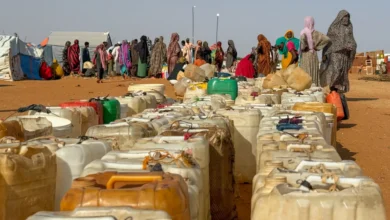
The repercussions of the Sudanese war now extend far beyond the country’s borders. The crisis has produced one of the largest waves of displacement and refugee movements in the region in recent years while also affecting economic and security conditions in neighboring states.
Egypt has borne a significant share of this burden through the arrival of large numbers of Sudanese refugees, placing additional pressure on public services and infrastructure.
However, the continuation of the conflict threatens to generate even more complex challenges, including the expansion of smuggling networks, organized crime, and cross-border arms trafficking.
Moreover, instability in Sudan has raised growing concerns regarding the security of the Red Sea, one of the world’s most strategically important trade routes.
For this reason, the Sudanese crisis has become an integral component of the broader regional security equation, where the interests of numerous Arab, African, and international actors intersect.
Obstacles to the International Political Process
Despite substantial efforts by international and regional organizations, the political process concerning Sudan continues to face repeated obstacles.
Part of these difficulties stems from the diversity of influential external actors whose visions differ regarding the nature of the desired political solution and the priorities of the transitional period.
While some countries emphasize the necessity of ending hostilities first, others advocate broader political arrangements that include restructuring state institutions and redistributing power.
These differences have directly affected mediation efforts, as various initiatives have found themselves confronted by a complex web of competing interests.
Experts argue that a sustainable political settlement in Sudan will remain difficult to achieve unless a regional understanding emerges that places Sudan’s interests above narrow geopolitical considerations.
The Future of Regional Involvement in Sudan
As the war continues and the prospects for a military resolution diminish, regional actors are becoming increasingly important in shaping the future of the Sudanese crisis.
However, experience over recent years has demonstrated that multiple interventions, even when motivated by legitimate security concerns, can produce counterproductive outcomes if they are not coordinated within a common framework.
For Egypt, the primary challenge lies in balancing the protection of its strategic interests with support for a political process that enjoys broad acceptance within Sudan.
The success of any future regional role will also depend on its ability to encourage dialogue among Sudanese actors rather than deepen existing divisions.
Given the complexity of the current situation, there is an urgent need for a new approach based on supporting civilian institutions, promoting national consensus, and avoiding the transformation of Sudan into a battlefield for regional influence struggles.
The Sudanese crisis demonstrates that multiple regional interventions, regardless of their motivations, can become an additional factor in prolonging and complicating conflicts. While Egypt maintains that its actions are intended to preserve Sudan’s stability and regional security, critics argue that some of its policies have contributed to reshaping internal balances in ways that have influenced the trajectory of the crisis.
Ultimately, Sudan’s future will remain closely tied to the ability of Sudanese themselves to build an inclusive national consensus and to the willingness of regional powers to prioritize settlement and stability over geopolitical rivalry and competition for influence.