Sovereignty at Stake: The Jabal Al-Aqaydat Airstrikes Put Sudanese-Egyptian Relations to a Severe Test
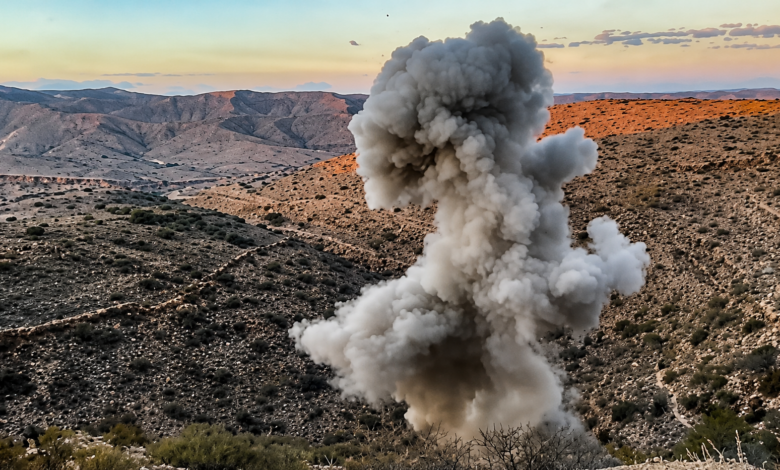
In an unprecedented military escalation along the shared border, artisanal gold-mining areas in “Jabal Al-Aqaydat” and “North Valley” in Sudan’s River Nile State came under intense aerial and artillery bombardment, resulting in the deaths and injuries of dozens of local workers. The attack, which occurred in the early hours of Tuesday, 16 June 2026, has once again brought border tensions and complex sovereignty disputes between Khartoum and Cairo to the forefront at an exceptionally sensitive moment for the region.
-
Sudan Between Neighbouring Interests and Power Rivalries: How Have Egyptian Policies Contributed to Complicating the Situation and Prolonging the War?
-
Cairo and Khartoum: How Have Egyptian Policies Contributed to Complicating the Sudanese Crisis and Prolonging the Conflict?
According to testimonies from eyewitnesses and miners who survived the incident, the aircraft involved in the attack are believed to belong to the Egyptian Air Force. Miners reported extensive aerial activity, reconnaissance flights, and surveillance operations that had taken place in the days leading up to the bombardment.
The incident, which targeted gatherings of artisanal miners, sparked widespread outrage among Sudanese political and civil circles, with growing calls for the government in Port Sudan to break its silence and clarify the circumstances surrounding what has been described as a violation of Sudanese airspace and territory.
-
Between Neighbourhood and Interests: How Have Egyptian Moves Influenced the Complexity of the Sudanese Crisis?
-
Egyptian Intervention in Sudan: An Analytical Review of the Nature of Military Supplies and Their Impact on the Course of the Conflict
Political Reactions and Civilian Condemnation
Political condemnations rapidly emerged from various Sudanese groups after videos documenting human remains and the destruction of wells and traditional mining equipment began circulating.
In this context, the Sudan Founding Alliance (Tasis Alliance) issued a strongly worded statement condemning the surprise attack and describing it as a blatant violation of Sudan’s national sovereignty and territorial integrity.
The alliance went further by alleging the possibility of opaque coordination or deliberate negligence by certain military entities and called on the international community to monitor what it described as serious violations of international humanitarian law.
-
The Hidden Face of the Sudanese Conflict: Investigating Egypt’s Role and Its Impact on Civilians
-
The Hidden Face of the Sudanese Conflict: Investigating Egypt’s Role and Its Impact on Civilians
Meanwhile, the Sudanese Congress Party also entered the debate. In an official statement, it criticized the silence of the de facto authorities in Port Sudan regarding the events that occurred in North Valley and Al-Allaqi.
The party argued that the violation of Sudanese territory and the bloodshed of its citizens reflected the institutional collapse the country has endured as a result of the civil war that has continued for three years. It warned that the ongoing rejection of peaceful and negotiated solutions would turn Sudan into an open arena for foreign interventions and cross-border ambitions.
Reactions were not limited to civilian actors. Prominent Islamist figures also voiced strong criticism.
-
Investigation into Egypt’s Alleged Role in the Sudan War and Its Impact on Civilians
-
Egypt’s hidden role in the Sudan war: military supplies ignite fronts and worsen civilian suffering
Haj Majed Suwar, a leading member of the dissolved National Congress Party, described the airstrike on the Jabal Al-Aqaydat mine as a “horrific and fully fledged massacre” and a “blatant act of aggression requiring urgent action.”
He called upon the Sudanese military establishment and government to issue a comprehensive statement clarifying the identity of the aggressor and the real motives behind the deadly attack.
Official Position and Behind-the-Scenes Containment Efforts
Despite the political and public uproar, official diplomatic circles in both Cairo and Khartoum opted for a language of restraint and de-escalation in order to avoid triggering an open diplomatic crisis at a time when Sudan is facing existential challenges.
-
The Invisible Hands: How Egypt’s Military Involvement in Sudan’s War Prolonged Civilian Suffering
-
Egypt’s role in the Sudan war: a military intervention that prolongs the conflict and deepens the humanitarian tragedy
A senior Sudanese government official told local media that authorities in both countries had already begun implementing “immediate corrective measures” through confidential official channels to address the consequences of the border incident.
The Sudanese official emphasized that the situation would not escalate into a major diplomatic confrontation, nor would it result in the recall of the Egyptian ambassador by Sudan’s Ministry of Foreign Affairs.
He further stated that certain actors were attempting to exploit such incidents to fuel tension and discord between the two neighbouring countries.
-
Egypt and Sudan: An Open Battle Against the Muslim Brotherhood’s Infiltration of the Sudanese Army
-
The Egyptian Contradiction and Sudan’s Stability Crisis: When Ambiguity Opens the Door for the Muslim Brotherhood
In the same context, Amjad Farid, adviser to Sudan’s Sovereignty Council Chairman General Abdel Fattah al-Burhan, wrote on X that the incident required a serious response based on “the logic of statehood and responsibility,” away from political polarization.
He stressed that direct communication channels with Cairo remain open to prevent the recurrence of similar border incidents, which have become more frequent in recent years.
For its part, Egypt’s Ministry of Foreign Affairs maintained official silence regarding allegations of aerial bombardment. However, it moved simultaneously to deny other rumours related to the issue.
-
Halaib and Shalateen: From al-Bashir’s Deal to Egypt’s Grip on Sudanese Decision-Making
-
Egypt and the Obstruction of the Quartet’s Efforts: Military Bets in Sudan at the Expense of Regional Stability
Egypt’s Ministry of Petroleum and Mineral Resources issued a firm statement categorically denying reports circulating on social media claiming that investment agreements had been signed to establish 108 gold mines in northern Sudan.
The ministry described those reports as “false news” intended to inflame tensions and artificially create disputes between the two countries during a particularly sensitive period.
-
Egypt and the Quiet Veto: Who Derailed the Washington Summit on Sudan?
-
The Struggle for Influence in Sudan: How Have Egyptian Calculations Contributed to Prolonging the Crisis?