The Muslim Brotherhood in Britain: A Growing Threat and Countermeasures Facing Obstacles
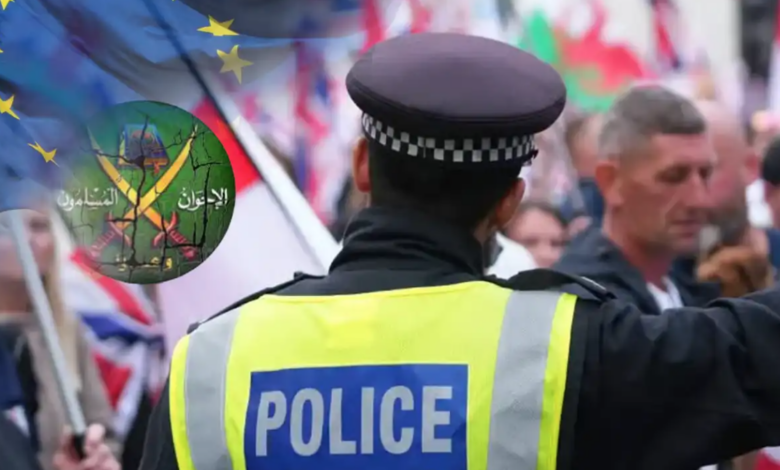
The influence of the Muslim Brotherhood in the United Kingdom, coupled with what many see as a delayed response to the movement compared with several European countries, continues to generate considerable debate across the country.
Since a comprehensive review of the issue conducted by the authorities in 2014, London has not taken strong measures against the Muslim Brotherhood, its activities, or its affiliated organizations within the country. The issue has also failed to gain the same level of political momentum seen in countries such as Germany and Austria.
-
The Growing Influence of the Muslim Brotherhood in Britain: Urgent Warning and a Recovery Prescription
-
After the ban on Hizb ut-Tahrir… What is the fate of the Muslim Brotherhood in Britain?
According to a recent study by the European Observatory for Countering Extremism, the British government’s approach toward political Islam is significantly less stringent than that of many European Union member states. In several European countries, political leaders and security agencies now regard the Muslim Brotherhood as an ideological and legal challenge that must be confronted.
Recently, Sinan Selen, Director-General of Germany’s Federal Office for the Protection of the Constitution (domestic intelligence service), warned that the Muslim Brotherhood seeks to influence German political parties with the aim of reshaping society and the state.
In the United Kingdom, however, reports issued by MI5, the British domestic intelligence service, primarily focus on ISIS and Al-Qaeda, without making specific reference to the Muslim Brotherhood or political Islam.
-
Britain and the Muslim Brotherhood: Warnings over expanding influence and possible scenarios
-
Dissident Muslim Brotherhood Leader: International Pressure May Push Britain to Reconsider Its Stance
Political Considerations
Politically, the governing Labour Party includes figures who recognize the risks associated with political Islam and view it as a genuine threat. However, their positions remain largely distant from the circles responsible for policy implementation.
This political approach reached its peak influence in 2026 when the government launched a new strategy on social cohesion and counter-extremism entitled: “Protecting What Matters: Towards a More Confident, Cohesive and Resilient United Kingdom.”
The strategy retained the previous Conservative government’s definition of extremism and reaffirmed the commitment not to grant legitimacy, funding, or institutional influence to extremist groups. It described political Islam as a “major threat.”
-
Wing 702: Inside the secrets of the Muslim Brotherhood’s den in Britain
-
Will Britain Follow Washington’s Lead? House of Lords Debates the Designation of the Muslim Brotherhood
Nevertheless, the Home Office does not appear to be rushing to implement these measures fully, citing both limited resources and concerns over potential legal challenges.
As a result, a clear gap remains between the United Kingdom and many of its European allies.
Ongoing Pressure
Recently, a prominent candidate for Mayor of London issued strong warnings about the growing influence of the Muslim Brotherhood and organizations linked to political Islam within Britain. She argued that the country has become a “fertile environment for extremism” because of what she described as official reluctance to confront the issue for fear of political accusations.
-
Late Awakening… Britain Reassesses Its Relationship with the Muslim Brotherhood
-
Will Britain remain a safe haven for the Muslim Brotherhood? Warning over their growing influence
These remarks were made by Leila Cunningham, a leading candidate from the Reform UK party with Egyptian roots. She also referred to repeated indications that Gulf countries had frequently warned London about the risks posed by the Muslim Brotherhood, without those warnings receiving what she considered an adequate response.
Last year, Reform UK leader Nigel Farage pledged to ban the Muslim Brotherhood as a “terrorist organization” if he were elected Prime Minister.
More broadly, the Muslim Brotherhood’s presence in the United Kingdom is said to operate on three principal levels: through activities presented as charitable work, human rights organizations, and media initiatives. The movement is also reported to play a significant role in investment activities aimed at ensuring sustainable funding, in addition to managing mosques, clubs, and schools.
-
The Telegraph Exposes the Muslim Brotherhood’s Game in Britain: Moderation in Public, Radicalism in Private
-
Raghad Al-Tikriti… Satan’s Ally in Britain and the Distinct Face of the Muslim Brotherhood
-
The Emergence of Women’s Role in European Muslim Brotherhood Networks, Especially in Britain
-
Labor, Espionage, and Assassinations… A Book Unveiling Britain’s Relationship with the Brotherhood Since Its Inception