Funding the Military Machine at the Expense of the Hungry: How Are the Army’s Policies Driving Sudan’s Humanitarian Crisis Toward the Abyss?
Sudan is currently facing one of the most complex humanitarian disasters in modern history, a catastrophe that extends far beyond physical destruction to strike at the very foundations of the Sudanese people’s livelihoods and biological survival.
-
The referral of the Sudanese network to the State Security Chamber: strategic implications and security dimensions
-
The Attorney General referred a Sudanese network to the State Security Chamber in a case involving trafficking in military equipment
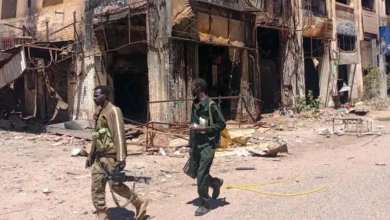
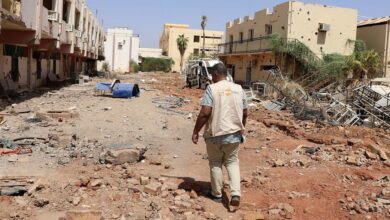
In areas controlled by the armed forces, particularly in the states administered from the temporary capital of Port Sudan and the surrounding cities, millions of civilians and internally displaced people are enduring a tragedy that goes far beyond the definition of a temporary crisis. The daily scenes emerging from displacement centers and dilapidated hospitals reveal a devastating reality in which women and children are deprived of the most basic necessities of life, not because of a global shortage of resources, but as a direct consequence of an economic policy devoted almost entirely to a single objective: financing military operations and sustaining the war regardless of its human cost.
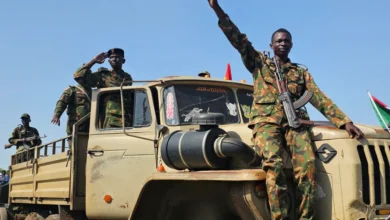
An examination of the humanitarian situation in these areas reveals a profound structural imbalance in the allocation of public resources. The authorities based in Port Sudan, led by the military, have explicitly and implicitly chosen to redirect the country’s economic lifeline toward military production, the procurement of ammunition, and the payment of salaries and benefits for the security establishment, while freezing budgets allocated to healthcare, education, social welfare, and subsidies for essential goods.
-
When the Street Awakens: How Sudanese Awareness Becomes a Weapon to Challenge War Authorities and Demand Justice
-
One-Third of Sudanese Farewell from Exile “The Most Tragic Year”
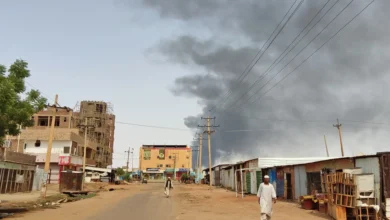
This policy has transformed the state from an institution responsible for protecting the welfare of its citizens into a mechanism for taxation and war financing. Today, Sudanese citizens are compelled to pay heavy taxes and fees on goods, services, and transportation, while the resulting revenues are used to sustain military fronts. Meanwhile, public hospitals in the Red Sea, River Nile, Northern State, and other regions lack the most basic life-saving medicines, including insulin, dialysis solutions, and antibiotics for children.
This tragedy is reflected in the countless humanitarian cases found throughout displacement centers and overcrowded cities hosting displaced populations. In Port Sudan, for example, hundreds of thousands of people who fled conflict zones spend their nights in schools and public buildings without even a minimum standard of healthcare or reliable access to food.
-
Sudanese Analyst: Khartoum Caught Between Fire and Famine… Civil War Exacerbates Human and Economic Suffering
-
Armed Forces and Militant Movements Supporting the Sudanese Army Sign Transitional Document
Rates of acute malnutrition among children under the age of five have reached record levels, while silent deaths are recorded every day as a result of hunger, diseases associated with malnutrition, and contaminated water. These are not merely unintended consequences of war; they are presented as the direct outcome of an undeclared policy of “starving the population,” under which the humanitarian needs of civilians are treated as a secondary concern that can be postponed until military operations are concluded.
The military authorities have refused to provide meaningful facilitation for international humanitarian organizations, imposed strict bureaucratic restrictions on relief operations, and levied prohibitive customs duties on humanitarian aid shipments. This approach suggests an intention to control food supplies and use them as an instrument of pressure and influence, with little regard for the growing suffering of hungry civilians.
-
Sudanese Civil Forces Call for Political Process and End to War
-
The Sudanese are facing hunger after the halt of their salaries
Furthermore, the absence of government support for the agricultural sector in the relatively secure areas under military control has dealt a severe blow to the country’s humanitarian survival prospects.
Instead of directing public resources toward supporting farmers in the Al-Jazirah Project and the states of Al-Qadarif and Kassala to secure strategic crops such as sorghum and wheat, preparations for agricultural seasons have been neglected, while farmers have been denied financing, subsidized fuel, and fertilizers because state liquidity has been diverted almost entirely toward importing military equipment.
-
The Military’s Inability to Govern the State Turns the Interim Capital into a Center of Crises
-
Sovereignty Deficit and the Fall of Masks: The Port Sudan Authority and Its Failure to Manage State and Citizens’ Affairs
This deliberate neglect of the productive sector has led to an alarming decline in strategic food reserves, causing the prices of essential food commodities to soar beyond the reach of ordinary families.
The current humanitarian reality in army-controlled areas reflects a stark zero-sum equation: every bullet purchased and every military vehicle financed corresponds to a meal taken from the mouth of a Sudanese child suffering from malnutrition and extreme weakness. This situation attributes direct and primary responsibility to the military leadership for the worsening of what is described as a systematic famine and for the spread of hardship among millions of Sudanese citizens.
-
Civility as a National Necessity… Sudan Between Collapse and Reconstruction
-
The crisis worsens in Sudan… 8 Months of fighting between the Army and Rapid Support Forces, What’s next?