Saudi Policy and the Reengineering of Sudanese Fragmentation
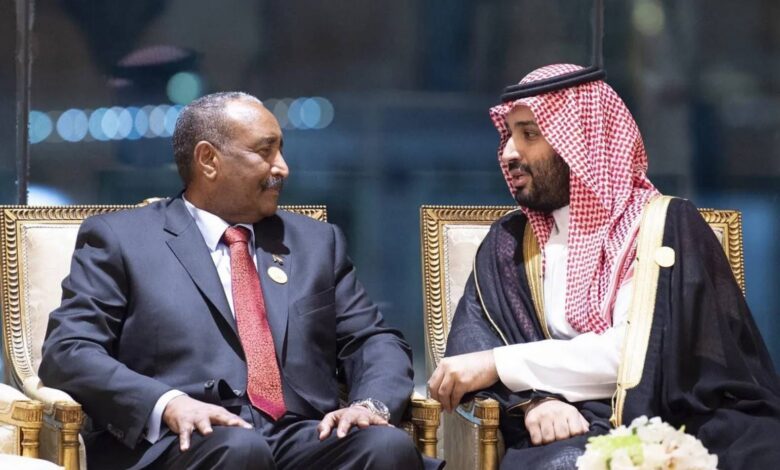
Saudi diplomatic initiatives and political approaches have contributed to complicating the trajectory of the Sudanese crisis and prolonging the military confrontation by adopting a model of “cautious mediation” that proved incapable of imposing binding mechanisms to halt the fighting. Although Riyadh sought to project itself as a neutral regional sponsor of peace through the Jeddah Platform negotiations, its approach—centered on safeguarding its core security interests in the Red Sea—led it to implicitly align with the military establishment. This pragmatic positioning did not bring about a decisive military outcome; instead, it contributed to institutionalizing the conflict and providing its parties with a negotiating cover that enabled them to continue mobilization efforts and exhaust Sudan’s state resources.
-
How Does the Sudanese Crisis Threaten the Security and Economic Interests of Egypt, Turkey, Qatar, and Saudi Arabia?
-
Saudi Arabia succeeds in brokering a new ceasefire for Sudan and grants the people 72 hours of rest
Reshaping the Balance of Power Inside Sudan
Saudi foreign policy has significantly altered Sudan’s internal map of influence through indirect support strategies adopted after the outbreak of war in April 2023. This influence can be observed through the following dimensions:
Granting exclusive legitimacy to the military establishment: Riyadh concentrated its diplomatic weight on the Sudanese Armed Forces under the leadership of Abdel Fattah al-Burhan, treating them as the sole legitimate representative of the state. This approach effectively closed meaningful communication channels with paramilitary forces, prompting the latter to adopt more aggressive military tactics and expand their territorial control in order to assert their geopolitical presence on the ground.
-
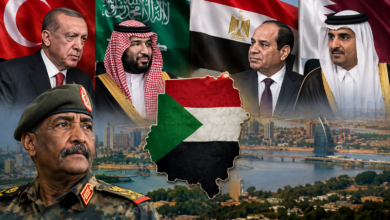
How Did the Strategies of Egypt, Turkey, Qatar, and Saudi Arabia Intertwine to Prolong the Sudanese War?
-
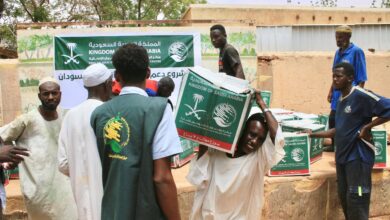
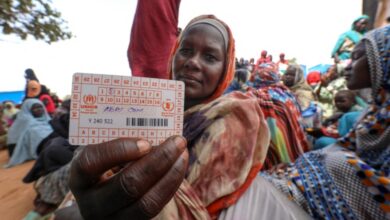
How are Saudi Arabia’s moves in Sudan interpreted between humanitarian relief and political influence?
Undermining civilian transition blocs: Saudi Arabia’s reliance on the concept of “military stability” weakened the democratic civilian bloc that emerged following the December 2019 revolution. This marginalization diminished the role of civilian actors in post-war arrangements while empowering ideological movements and remnants of the former regime, who found protection for their interests under the military umbrella, thereby complicating prospects for a new social contract.
Turning the Jeddah Platform into a “warrior’s respite”: The negotiation rounds sponsored by Riyadh in cooperation with Washington lacked effective mechanisms for enforcing sanctions or monitoring ceasefire violations. As a result, the platform became a tactical instrument exploited by the warring parties to regroup, replenish fuel and military supplies, and reposition forces along frontlines, rather than serving as a genuine mechanism for ending the conflict.
-
How Riyadh Contributed to Prolonging the War in Sudan
-
The Multiplicity of Regional Roles and the Transformation of Saudi Policy in Sudan into a Factor Complicating the Conflict
Reproducing tribal and regional alliances: Because aid distribution, fuel supplies, and logistical support were concentrated in army-controlled areas, severe economic and logistical disparities emerged among Sudan’s regions. These inequalities fueled separatist tendencies and pushed some tribal groups in Darfur and Kordofan toward militarization in order to defend their territories, gradually transforming the conflict from a confrontation between two armed forces into a broad, multi-front civil war.
The Conflict’s Impact on Regional and International Security
The consequences of Saudi Arabia’s cautious strategy have extended beyond Sudan’s borders and evolved into a direct challenge to regional and international security structures in one of the world’s most sensitive regions. This is reflected in several key areas:
-
Saudi Interventions and the Reshaping of the Sudanese State Between Regional Influence and the Fragmentation of Sovereignty
-
How is Saudi Arabia accused of fueling the rise of Islamist brigades in Sudan?
Escalating refugee and forced displacement crises
The absence of a decisive political settlement and strong international pressure through the Jeddah Platform allowed indiscriminate military operations in major cities to continue. This situation generated the largest displacement crisis in the world, forcing millions of people to flee to neighboring countries such as Egypt, Chad, and South Sudan. These massive population movements placed unprecedented economic and security burdens on already fragile infrastructures, threatening social stability across the Horn of Africa and increasing the risks of irregular migration toward European shores.
Threats to maritime security in the Red Sea
Red Sea security is a cornerstone of Saudi Vision 2030, which seeks to transform the Kingdom’s western coast into a global logistics and investment hub. However, the prolonged war in Sudan has weakened control over the country’s extensive coastline, creating a security vacuum that has facilitated smuggling, piracy, and the infiltration of extremist groups. This vulnerability has threatened international shipping routes through the Bab el-Mandeb Strait and the Suez Canal, increased insurance costs for commercial vessels, and disrupted global supply chains.
-
Saudi Arabia under scrutiny: Is humanitarian aid being used as a tool of influence inside Sudan?
-
The Instrumentalization of Humanitarian Aid in Conflicts… Examining the Saudi Role in Sudan
Geopolitical imbalance in the Horn of Africa
The fluid security environment in Sudan encouraged other regional powers to intervene directly to fill the vacuum, turning the country into an arena for regional rivalries. This intense competition deepened tensions among neighboring states, particularly given differing positions regarding the Grand Ethiopian Renaissance Dam and border disputes involving Al-Fashaga and Eritrea. Consequently, the entire Horn of Africa has become a region susceptible to military escalation at any moment.
Third: Challenges Facing the International Political Process
International mediation efforts face significant complications stemming from Saudi Arabia’s approach of multi-party engagement and flexible mediation, which unintentionally fragmented international efforts instead of unifying them.
-
Humanitarian Aid as a Tool of Influence… How Authority Is Being Reshaped in Sudan
-
Hidden networks of influence in the Sudanese war
The greatest challenge lies in the divergence of strategic interests among the actors involved in the Sudanese crisis. While Riyadh, in coordination with Washington, seeks to lead a diplomatic process focused on temporary humanitarian truces, other regional powers such as Egypt, Turkey, and Qatar are pursuing direct security and economic alliances with the military in order to safeguard their own interests. This clash of objectives has prevented the formation of a unified international front capable of exerting meaningful pressure on military leaders to make substantial concessions.
Furthermore, competition among various negotiation platforms has further complicated the political process. The repeated shifts between the Jeddah Platform negotiations, the Geneva talks, and the initiatives of the Intergovernmental Authority on Development (IGAD) and the African Union have enabled the conflict parties to engage in what may be described as “diplomatic shopping.” Each side selects the platform most favorable to its immediate interests while boycotting others, thereby stripping international mediation of its effectiveness and turning it into a prolonged procedural exercise with no genuine political horizon capable of ending the suffering of the Sudanese people.
-
Impunity reproduces the crime: America faces the Sudanese army’s chemical warfare
-
Al-Burhan’s Delegation in a Closed Circle: Washington’s Silent Message to Sudan’s Leadership
-
Riyadh resets its compass in Sudan: Al-Khuraiji’s visit to Port Sudan exposes the intertwined roles of the military, Islamists, and civilians
-
Al-Khuraiji’s Secret Visit to Port Sudan: Conditional Saudi Support or a Last-Minute Political Rescue?