From Mothers’ Prayers to King Mohammed VI’s Vision: How Morocco Turned Football into a Lesson in Identity, Faith, and Human Development
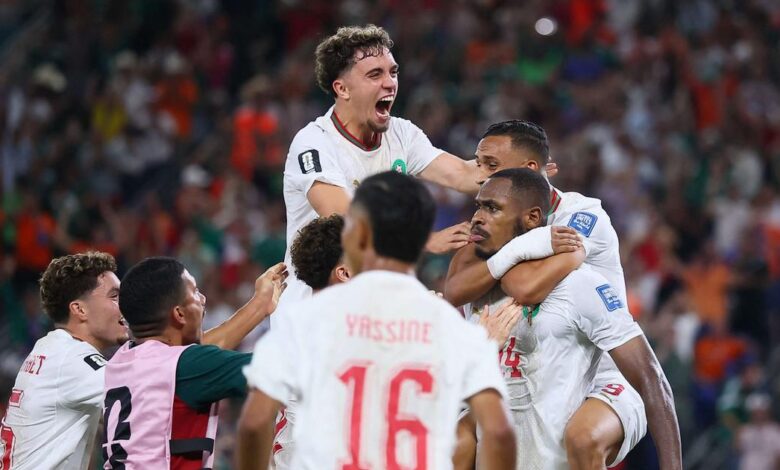
The success of the Atlas Lions stems from the combination of the players’ fighting spirit, the commitment of the Moroccan diaspora, and the Kingdom of Morocco’s strategic and institutional vision.
Morocco’s victory over the Netherlands was far more than another football triumph added to its list of achievements. It represented yet another milestone confirming that the Atlas Lions have become more than just a national football team; they have evolved into a human, social, and cultural project capable of touching the hearts of millions both inside Morocco and beyond its borders.
-
Iran takes its dispute with the United States onto FIFA’s field through an official complaint
-
Morocco’s Lion Cubs make history in Santiago and claim the world football crown
What makes this team so widely admired?
Why do so many Arabs and Muslims feel represented by Morocco’s victories, even if they are not Moroccan?
Perhaps because this national team has managed to offer something greater than football itself.
It has delivered a lesson in patriotism, faith, the importance of family, pride in one’s identity, and the ability to embrace modernity while preserving authenticity without losing either one’s soul or one’s roots.
The first lesson is love of one’s homeland.
-
Football: Morocco to play a friendly match in France in September
-
A Moroccan Approach That Makes Football a Tool for Integration and Combating Discrimination
At a time when identities have become increasingly diverse, Morocco’s players demonstrated that a homeland is not merely the place where one is born, but also a shared memory, history, family, and moral responsibility. They wore the national jersey as a mission before considering it a sporting opportunity, making the defense of their flag an essential part of who they are.
From this profound sense of belonging emerged a fighting spirit that captivated the world.
The Moroccan players entered every match without feelings of inferiority or fear of football’s traditional powers. They fought until the very last moment, continuing despite injuries and exhaustion. Some even insisted on playing while bleeding and in pain, as though declaring that defending one’s homeland leaves no room for surrender.
-
Morocco enters 2026 amid major transformations and growing confidence
-
Exceptional Reception for Ibrahim Diaz in Morocco
The Atlas Lions taught the world that fear can only be defeated through self-belief, and that respecting an opponent never requires submission.
More importantly, they focused on improving themselves rather than becoming preoccupied with the achievements of others.
They did not measure themselves against the history of football’s greatest national teams or waste their energy comparing themselves to others. Instead, they built their own project, proving that success begins when individuals concentrate on what they themselves can contribute rather than on what others possess.
From a moral perspective, Morocco’s national team also presents a distinctive model of the modern professional footballer.
-
Morocco to host the World Cup… How did we get here?
-
Officially… The “Morocco, Spain, and Portugal” bid wins the hosting rights for the 2030 World Cup
Figures such as Noussair Mazraoui embody religious values, discipline, and exemplary character, demonstrating that success is fully compatible with faith and that faith itself can serve as one of the greatest sources of psychological and spiritual balance.
Among supporters, many view Mazraoui as the elder brother within the squad, a player who consistently reminds his teammates that gratitude should first be directed toward God before any celebration. Fans frequently circulate stories and images portraying him encouraging his teammates to perform the prostration of gratitude following goals and victories, leading some, affectionately and symbolically, to describe him as the team’s blessing and quiet spiritual strength.
-
By mistake, a “stray” missile penetrates a football field in an African country
-
“Lions” of Security and Diplomacy Support Morocco’s “Epic” in Qatar
Whether this reflects public perception or part of the image he has built throughout his career, it reveals a deeper reality: Morocco’s national team has successfully integrated morality and faith into its collective identity.
The images of players celebrating alongside their mothers and fathers were never merely emotional moments.
They conveyed a complete message.
Behind every successful athlete stands a mother who sacrificed, a father who worked tirelessly, and a family that believed success requires years of patience and dedication. Morocco demonstrated that champions are first built within their homes and that mothers’ prayers and fathers’ faith remain part of every victory.
-
Croatia Ends Panama’s Campaign and Regains Momentum
-
Politics Sneaks into Euro 2024… Will VAR Intervene?
Members of the Moroccan diaspora also offered an exceptional lesson in preserving one’s identity.
Many were born in Europe, educated within its advanced football academies, and benefited from its professionalism while remaining firmly attached to their Moroccan, Arab, and Muslim roots. They demonstrated that embracing the wider world does not require abandoning one’s identity and that it is possible to become a global citizen without sacrificing authenticity.
Within Morocco’s popular culture, many stories continue to emphasize that faith and hard work have the power to change destiny.
-
African Cup of Nations 2023 Draw: “Easy” Matches for Arab Teams
-
Moroccan fans: Qatar deliberately steals our heritage
Among these narratives is the story of Ismael Saibari, who is said to have experienced health challenges affecting one of his feet during childhood, raising concerns within his family about his future in football. Through determination, medical treatment, continuous training, and trust in God, he is believed to have overcome those difficulties and continued his path toward success.
Although certain details of the story may differ depending on the source, the message embraced by many remains unchanged: genuine determination can transform weakness into strength and turn adversity into the beginning of greatness.
Hakim Ziyech’s story remains one of the most moving in Morocco’s collective memory.
-
Massive Fire Engulfs an Area Equivalent to ‘6 Football Fields’ in Los Angeles
-
President of the Spanish Football Federation to Defend Himself After Suspension Due to a Kiss
After losing his father at an early age, he was raised by his Moroccan mother, who became his greatest teacher, shaping him into a man who understands the meaning of belonging and dignity. He chose to represent Morocco despite other opportunities and remained committed to his humanitarian principles, including his support for the Palestinian cause, demonstrating that values may sometimes outweigh personal interests.
During the 2026 FIFA World Cup, Ziyech was absent from Morocco’s squad, yet his spirit remained present in the stadiums and in the hearts of supporters. Many fans continued chanting his name, reflecting the belief that certain players become lasting national symbols whose influence extends beyond their presence on the pitch.
Achraf Hakimi provided another lesson in mental resilience.
-
Football: Morocco to play a friendly match in France in September
-
Football: Hamari Traoré, towards Barça?
Despite the legal proceedings and allegations brought against him in France, which have not resulted in any final judicial conviction, he refused to allow these circumstances to undermine his concentration or determination.
Throughout this World Cup, Hakimi served as the backbone of the Atlas Lions.
He defended, attacked, created opportunities, covered enormous areas of the field, and moved seamlessly between defense, midfield, and attack with remarkable energy, demonstrating that true success lies in continuing one’s journey despite the surrounding noise.
Because great nations build great teams, Moroccan supporters also played a central role in this remarkable story.
They supported their team through both triumphs and hardships, believed in them until the final whistle, and expressed that faith through prayers, Qur’an recitation, and an unwavering conviction that God’s help is always near.
The scenes of female supporters raising their hands in prayer during matches were not merely emotional moments but expressions of a profound spiritual and emotional bond between the Moroccan people and their national team.
From a technical perspective, head coach Mohamed Ouahbi leads this sporting project with confidence and composure, continuing the work initiated by distinguished Moroccan coaches, most notably Walid Regragui, who restored confidence in Moroccan expertise and demonstrated that local talent is fully capable of leading the nation’s dreams onto the global stage.
-
Iran football team: Qatar is our country, and we will play for Iran…
-
Saudi Arabia Bids Farewell to the World Cup After a Goalless Draw with Cape Verde
Strategically, this sporting renaissance forms part of a long-term national vision supported by King Mohammed VI, who has made sport an integral pillar of Morocco’s national development strategy and modern international image.
Fouzi Lekjaa translated this vision into a professional institutional framework by developing infrastructure, establishing football academies, investing in education and youth development, and identifying emerging talent, transforming Morocco into an Arab and African model of sporting success.
Today, Morocco’s national football team has become much more than a football team.
-
Croatia Ends Panama’s Campaign and Regains Momentum
-
Canada’s Six-Goal Rout Leaves Qatar on the Brink of World Cup Elimination
It has become a school of human development, teaching new generations the meaning of belonging, the importance of family, the value of faith, pride in one’s identity, self-confidence, and the importance of working quietly, sincerely, and with unwavering commitment.
For this reason, when the world applauds the Atlas Lions today, it is not simply celebrating a team that defeated the Netherlands. It is celebrating an inspiring Arab story reminding us that greatness belongs to those who believe in their homeland, carry their values wherever they go, and fight until their final breath for the flag they cherish.
-
From sport to politics: Motsepe on the threshold of power in South Africa
-
Qatar submits to homosexual fans, takes measures for their safety during World Cup