Salam to Hezbollah: We Will Not Yield to Blackmail or Threats of Civil War
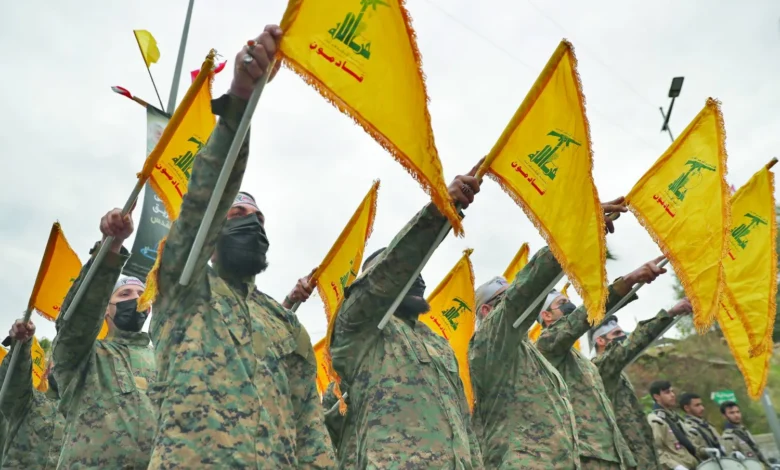
Lebanon’s Prime Minister has affirmed that the framework agreement with Israel is intended to define the course of negotiations toward a final agreement but does not constitute a formal agreement or treaty.
Lebanese Prime Minister Nawaf Salam responded on Wednesday to Hezbollah’s attempts to escalate tensions by rejecting the framework agreement with Israel and calling for the government’s overthrow through street protests, stating that “his government will not yield to blackmail or threats of civil war.”
-
Road Blockades and Stone-Throwing at the Army: Hezbollah Responds to the Southern Agreement with a Strategy of Disorder
-
Eroding Influence and Shrinking Support Base: Public Rejection of Hezbollah in Syria and Lebanon
In an interview with the Lebanese private television channel LBCI, Salam said: “We are not seeking confrontation with Hezbollah, and we must strive to prevent any armed clash with it. However, we will not submit to blackmail or threats of civil war, and we will not retreat from our commitment to ensuring that the state alone holds the monopoly on weapons.”
On Friday evening, Beirut and Tel Aviv signed, under U.S. mediation, a “framework agreement” providing for a phased Israeli withdrawal from all Lebanese territory, beginning with two pilot areas.
-
Salam: Hezbollah Has Lost Its Remaining Margin of Independence Following Nasrallah’s Departure
-
Escalation Continues Between Hezbollah and Israel Despite a U.S. Proposal for De-escalation
The agreement does not establish a clear timetable for Israel’s withdrawal from either the two initial areas or the entirety of Lebanese territory. It also makes the withdrawal conditional upon the Lebanese Armed Forces assuming exclusive responsibility for security in the evacuated areas and the disarmament of all non-state armed groups, foremost among them Hezbollah.
While Lebanese government officials have described the agreement as “a first step” toward restoring state sovereignty and enabling displaced residents to return home, Hezbollah dismissed it as “null and void” and “humiliating,” arguing that linking Israel’s withdrawal to its disarmament crosses its red lines.
Following the agreement, calls circulated on social media urging demonstrations in opposition to the framework agreement after protests took place in Beirut on Friday evening.
-
New Israeli tactic to Trap Hezbollah drones
-
Israel threatens to strike Beirut in response to Hezbollah drones
On Friday, supporters of the Iran-backed Hezbollah blocked Salim Salam Road in Beirut by burning tires in protest against the agreement, according to Lebanon’s National News Agency. Anti-army slogans were reportedly chanted, while several Lebanese leaders, including President Joseph Aoun, expressed their support for the Lebanese Armed Forces and condemned attacks directed against the military institution.
Several political leaders, including Parliament Speaker Nabih Berri, warned against the danger of internal strife and called for resisting any attempts to drag the country into civil war.
Elsewhere in the interview, Salam stated that the framework agreement with Israel is designed to establish the path for negotiations leading to a final settlement, but that it is neither a formal agreement nor a treaty.
-
Child recruitment: Hezbollah is undermining Lebanon’s future
-
Hezbollah’s drones are turning into a headache for the Israeli army
He explained: “The term ‘framework agreement’ may be misleading. We are referring to a guiding framework for negotiations intended to define their course toward reaching an agreement, not to a binding agreement or treaty.”
He added: “We are not enthusiasts of negotiations with Israel, but we have reached this stage after two wars that claimed thousands of lives. The first caused direct damage exceeding seven billion dollars, not including economic losses estimated at around thirteen billion dollars.”
Salam further stated: “If this framework is implemented, it should lead to Israel’s withdrawal from Lebanon and enable our displaced citizens to return safely and with dignity to their villages and homes. Our objective is to allow the people of southern Lebanon to return to their homes and to bring an end to the ongoing suffering.”
-
Hezbollah drones breach Israeli defenses despite the new interception system
-
New alerts in Lebanon: Israel expands the scope of confrontation with Hezbollah
Israel has maintained control over areas in southern Lebanon for years, with some territories occupied for decades, while others were seized during the most recent conflict between 2023 and 2024. During the current military campaign, Israeli forces advanced more than ten kilometers into Lebanese territory.
Since March 2, 2026, Israel has been conducting a military offensive in Lebanon which, according to Lebanon’s Ministry of Public Health, has resulted in more than 4,000 deaths, over 12,000 injuries, and the displacement of more than one million people.
-
Alerts and evacuations in southern Lebanon… Hezbollah stronghold under fire
-
The United Nations documents war crimes in the confrontation between Israel and Hezbollah
-
He will pay with his head: Israel escalates against Naïm Qassem and Hezbollah