Salam: Hezbollah Has Lost Its Remaining Margin of Independence Following Nasrallah’s Departure
Lebanese Prime Minister Nawaf Salam stated that Hezbollah has lost the limited degree of independence it once maintained from Tehran following the departure of its former Secretary-General, Hassan Nasrallah. His remarks appear to come amid an ongoing political, and perhaps personal, dispute with the group’s current Secretary-General, Naim Qassem, who has called for the government’s downfall because of its involvement in direct negotiations with Israel, while accusations persist that Iran seeks to keep Lebanese decision-making under its influence.
-
Escalation Continues Between Hezbollah and Israel Despite a U.S. Proposal for De-escalation
-
New Israeli tactic to Trap Hezbollah drones
In an interview with the British newspaper The Times, Salam explained that “the Iranian authorities’ rejection of the ceasefire agreement clearly demonstrates the extent of the influence exercised by the Islamic Revolutionary Guard Corps, not only over Hezbollah’s military structure but also over its internal decision-making process,” referring to what he described as the overlap between political and military authorities in shaping the party’s choices.
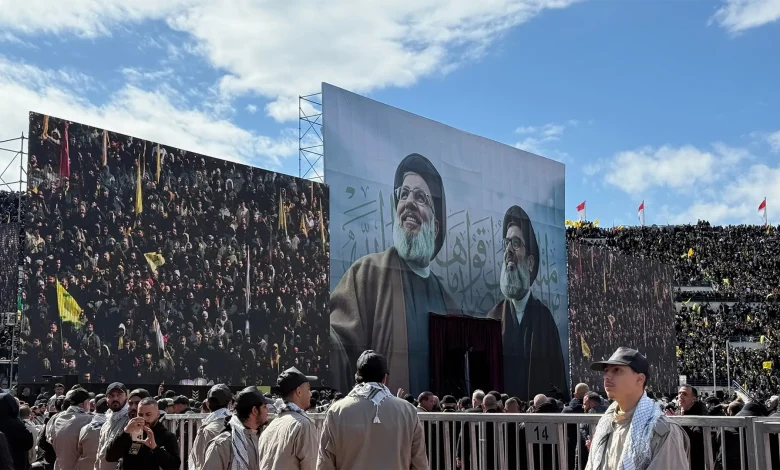
At the same time, he acknowledged that the relationship between Hezbollah and Iran has not always followed the same pattern, noting that “the era of former Secretary-General Hassan Nasrallah was characterized by a broader margin of independence,” before adding that the current situation reflects a significantly higher degree of direct Iranian influence than in the past.
-
Israel threatens to strike Beirut in response to Hezbollah drones
-
Child recruitment: Hezbollah is undermining Lebanon’s future
Current Hezbollah Secretary-General Naim Qassem had previously called for the government’s overthrow because of negotiations with the Israeli state, suggesting that Salam’s remarks are linked to disputes with the movement’s new leadership, which critics claim has directly tied its decisions to Tehran. This has angered numerous political forces that accuse Qassem of dragging the country into an unequal conflict due to his dependence on the Revolutionary Guards.
Salam argued that Iran’s rejection of the ceasefire agreement was not merely a temporary development but rather reflected a determination to keep Lebanese decision-making subject to Iranian influence.
-
Hezbollah’s drones are turning into a headache for the Israeli army
-
Hezbollah drones breach Israeli defenses despite the new interception system
He stated that the Iranian position was not surprising, adding that “the Iranian government wanted to send a clear message that Lebanon is merely a card within its regional calculations and that it is the party determining the final course of decisions related to the country.” According to the Prime Minister, this stance highlights the extent of Iranian influence over the Lebanese political landscape, particularly regarding issues connected to the conflict with Israel.
Political assessments indicate that Tehran has intensified its efforts to preserve its influence in Lebanon, which it regards as one of its most important strategic footholds on the Mediterranean coast. These efforts coincide with attempts to link de-escalation on the Lebanese front to broader developments in its negotiations with the United States. Such linkage is viewed as an attempt to secure a future role for its allies, foremost among them Hezbollah, within any potential regional settlement.
-
Rubio on Hezbollah: an obstacle hindering peace between Lebanon and Israel
-
New alerts in Lebanon: Israel expands the scope of confrontation with Hezbollah
Salam argued that the timing of Iran’s rejection, which preceded Hezbollah’s official announcement of its position, reflects the degree of Tehran’s direct influence over the party’s decision-making process, emphasizing that this reality raises fundamental questions regarding the independence of political and military decisions within Lebanon.
Regarding reconstruction and domestic affairs, the Prime Minister stressed that only the Lebanese state is capable of managing this process. He stated that any effort to rebuild what was destroyed by the war must take place through state institutions, just as any final settlement with Israel must proceed through Lebanon’s official channels.
-
Alerts and evacuations in southern Lebanon… Hezbollah stronghold under fire
-
Surgical strikes against Hezbollah… U.S. pressure to restrain Israel in Lebanon
On the political level, Salam expressed cautious optimism about the country’s future, emphasizing that he does not view Lebanon’s reality pessimistically despite the significant challenges it faces. He added that Lebanon possesses the fundamental assets necessary for recovery but requires a serious reform process to reactivate state institutions and strengthen their ability to make independent decisions.
Lebanese President Joseph Aoun had previously affirmed that “Lebanon’s future is shaped solely by the Lebanese people,” stressing that the country cannot continue to serve as an arena for the conflicts of others, whether involving Iran or Israel. He added that cooperation with Tehran should remain within a diplomatic framework, free from interference in domestic affairs, reaffirming his rejection of any external dictates concerning sovereign decision-making.
-
Hezbollah drones worry Israel
-
The United Nations documents war crimes in the confrontation between Israel and Hezbollah
Aoun also emphasized that the diplomatic path remains the only viable option, arguing that there is no military solution to the current crisis and that negotiations constitute the sole route toward ending the ongoing escalation.
Meanwhile, Hezbollah called on the Lebanese government to rebuild its relations with Iran, arguing that Iran’s recent response to Israeli strikes targeting Beirut’s southern suburbs contributed to easing tensions on the ground. The group believes that strengthening relations with Tehran remains a strategic necessity at the present stage.
The movement had previously rejected the proposed “Declaration of Intent,” reached through American, Lebanese, and Israeli mediation, which included arrangements for a comprehensive ceasefire and military redeployment in southern Lebanon. This position reflects the continuing deep divisions regarding the future of de-escalation efforts and post-war arrangements.
-
Leaked Hezbollah footage from tunnels: teenagers as fuel for death
-
He will pay with his head: Israel escalates against Naïm Qassem and Hezbollah
-
Israel claims it killed 150 Hezbollah members, while the group remains silent