The Shadow Financial and Logistical Network: An Investigation into How War Profiteers Evade U.S. Sanctions in Sudan
In a world where commercial interests are increasingly intertwined with armed conflicts, wars are no longer fought solely with rifles and tanks, but also through forged export documents, offshore bank accounts, and shell companies operating in the shadows.
-
U.S. Sanctions on Jibril Ibrahim and the al-Baraa ibn Malik Corps: Messages Beyond Sudan
-
Global Threads of Blood: How Are the Logistics of the War in Sudan and the Supply of Chemical Weapons and Mercenaries Organized?
An in-depth investigation into the complex web surrounding the ongoing war in Sudan reveals the existence of a sophisticated and highly organized “shadow network” that has allegedly transformed Sudan, over the course of several years, into an open market for merchants of death, circumventing legal and ethical barriers.
Despite successive sanctions imposed by the U.S. Department of the Treasury on networks financing both sides of the conflict, the mechanisms used by these networks to evade international oversight remain highly adaptable and difficult to detect. Understanding these mechanisms is therefore essential to deciphering how the machinery of destruction continues to operate with terrifying efficiency.
-
How the Logistics of the War in Sudan, the Supply of Chemical Weapons, and the Recruitment of Mercenaries Are Managed
-
Port Sudan’s Chemical Weapons Report: Contradictions and Loopholes Raise Serious Questions
The Architecture of Impunity: Dissecting the Operations of Shell Companies and “Target Multiactivities”
Military supply networks in Sudan operate through a complex hierarchical structure based on “shell companies.” These entities are officially registered as legitimate commercial businesses, such as general importers or logistics providers, but their alleged underlying purpose is to conceal the identity of the ultimate beneficiary and facilitate the transfer of funds and restricted goods.
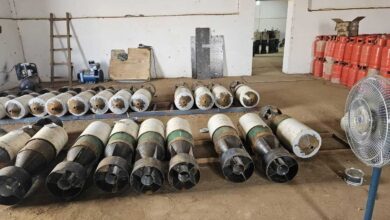
Among the names that have emerged in recent leaks and investigations is a company known as “Target Multiactivities.” This company was allegedly more than a temporary intermediary; it reportedly served as a critical logistical hub connecting overseas chemical suppliers with military units inside Sudan. An examination of publicly available commercial records appears to indicate that the company maintained close relationships with institutions linked to the military-industrial sector, enabling it to obtain import licenses for “dual-use goods,” meaning materials that can be used for both civilian and military purposes, such as chlorine. The substance was allegedly later diverted for the production of rudimentary but potentially lethal chemical weapons.
-
Al-Burhan versus the Islamists: a first step toward reshaping Sudan’s political landscape
-
Sudan… Is the dissolution of the Al-Bara ibn Malik Brigade a response to Washington?
The India-Sudan Logistics Route: How Can Industrial Chlorine Be Transformed into a Weapon of Extermination?
One of the most alarming findings of this investigation concerns the tracking of chlorine shipments from Indian ports to Sudanese territory. According to the documents reviewed, Indian companies allegedly exported large quantities of the substance under the cover of “water treatment” or “industrial applications.” The critical loophole, however, lies in the weakness of end-user verification mechanisms throughout global supply chains.
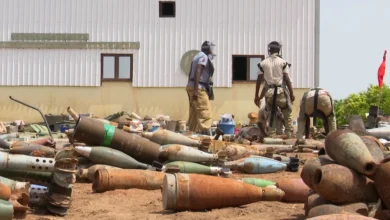
Once these shipments reportedly reached Sudanese ports or border crossings, they were allegedly transferred under cover of darkness to secret military facilities. Specialized officers would then oversee the conversion of the chlorine into rudimentary bombs dropped from military aircraft. This logistical route would not merely reflect a failure of international oversight; it could also point to potential complicity or criminal negligence on the part of certain exporters who allegedly turned a blind eye to the suspicious nature of repeated and unusually large orders originating from an area experiencing an active armed conflict.
-
Impunity reproduces the crime: America faces the Sudanese army’s chemical warfare
-
Al-Burhan’s army and the Muslim Brotherhood… evidence of a blood alliance in Sudan
The Mastermind: The Role of Officer Tarek Hussein Madani in Managing the Secret Supply Chain
At the heart of this complex logistical network is the name of a Sudanese military officer identified as Tarek Hussein Madani. According to multiple intelligence and analytical sources, the officer allegedly serves as the “operational architect” of chemical and explosive import operations.
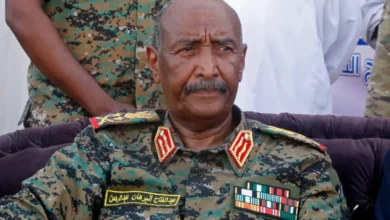
His role reportedly extends beyond merely signing documents. It allegedly includes direct supervision of coordination between local shell companies and foreign suppliers, as well as ensuring that shipments reach their final destinations without interception. The alleged involvement of a senior-ranking officer in such operations raises fundamental questions about the extent to which the Sudanese military leadership, particularly Abdel Fattah al-Burhan, was aware of and approved the use of internationally prohibited weapons against civilians.
-
Al-Burhan and Sudan’s Blood: Failure of Military Leadership and the Alliance of Destruction
-
A Silent Political Slap: Sudan’s Movement Restrictions Expose the Army’s Deep Crisis
Such a direct connection would leave little room for claims of “ignorance” or “loss of control in the field” and could potentially establish direct criminal responsibility for senior leadership if the use of these materials in attacks against Darfur and other regions were proven, from 2003 through the attacks documented in September 2024.
The Globalization of Violence: Hidden Financial Mechanisms Funding Colombian Mercenary Networks
The shadow network allegedly extends beyond the supply of weapons to the importation of human resources. Investigations by the U.S. Department of the Treasury reportedly uncovered a network specializing in the recruitment of former Colombian soldiers to fight in Sudan.
-
Al-Burhan’s Delegation in a Closed Circle: Washington’s Silent Message to Sudan’s Leadership
-
With a Major Arms Deal for the Sudanese Army.. Brotherhood Leader Salah Gosh Returns from the Shadows
But the key investigative question is: how is this network financed?
Investigators reportedly traced complex financial routes involving cryptocurrencies, bank accounts in countries with lax financial regulations, and fictitious security consulting companies. The salaries of these mercenaries are allegedly paid through intermediaries who receive funds from accounts linked to military supply networks, thereby creating a vicious cycle: war-generated money is used to import additional tools of war.
The presence of these foreign fighters, trained in particularly brutal combat tactics in the jungles of Latin America, adds another dangerous dimension to the conflict. Because they lack ethical, social, or communal ties to local populations, they may be more willing to commit massacres with greater ease and a greater degree of brutality and detachment.
-
Sudan Squanders Hamdok Government’s Gains… U.S. Ban Reinforces Terrorism Stigma
-
Sudan Shaken by Retirees’ “No”: A Voice from the Army Rises Against War and Chemical Weapons
The Test of International Resolve: Are U.S. Treasury Sanctions Enough to Break This Bloody Monopoly?
Although U.S. sanctions represent a significant blow to these networks by freezing assets and restricting their access to the global financial system, the investigation indicates that these networks possess a high degree of adaptability. They can rapidly change the names of shell companies, reroute shipments through third countries, or switch to alternative currencies.
Breaking this cycle therefore requires more than unilateral sanctions. It calls for unprecedented international intelligence and financial cooperation, including pressure on exporting countries such as India to strengthen export controls, legal action against banks that turn a blind eye to suspicious transactions, and the prosecution of implicated officers, such as Tarek Hussein Madani, before international courts.
Without such a comprehensive approach, sanctions will remain little more than a superficial scratch on the surface of a deeply entrenched web of networks embedded within Sudan’s war economy.
-
Angry March in London Denounces Use of Chemical Weapons in Sudan
-
Human Rights Organizations: Sudanese Army Involved in Summary Executions That Have Claimed Dozens of Civilian Lives
-
How the Muslim Brotherhood Turned Sudanese Diplomacy into a Platform of Hostility and Isolation