Marzouki’s Incendiary Remarks Spark Diplomatic Crisis Between Tunisia and France
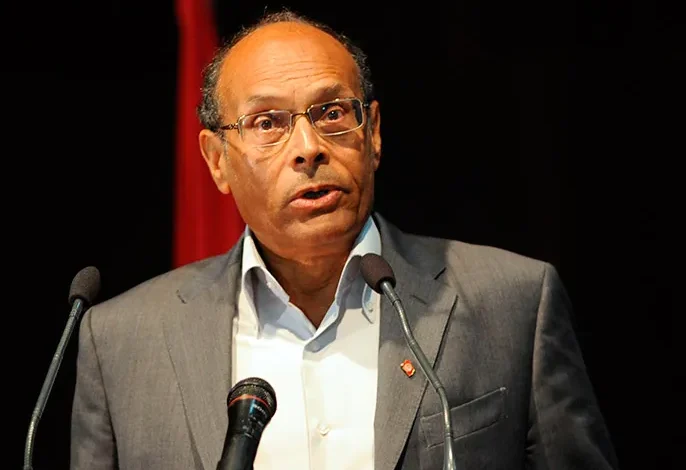
A diplomatic crisis has erupted between Tunisia and France following incendiary remarks made by Moncef Marzouki during an interview with a French television channel.
Tunisia’s Ministry of Foreign Affairs summoned the French ambassador on Friday after a “French public broadcaster” aired an interview with “an individual wanted by the Tunisian justice system.”
The ministry did not identify the broadcaster or the individual concerned, but expressed, in a statement, a “strong protest,” asserting that the interview constituted “an infringement on the sovereignty of the Tunisian state and a threat to its national security.”
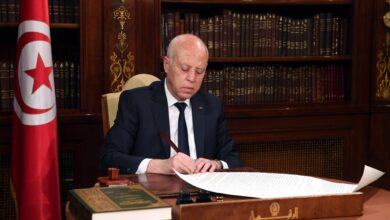
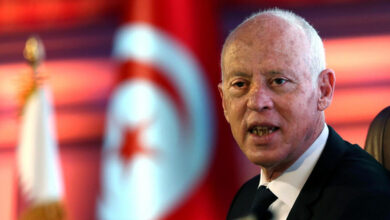
Tunisia’s Foreign Ministry said the summons had been ordered by President Kais Saied to convey to the French ambassador “a strong protest over the content of the interview recently conducted by one of the French public broadcasters with an individual wanted by the Tunisian justice system.”
The ministry added that the interview contained “an infringement on the sovereignty of the Tunisian state, an attack on its national security and institutions, and an explicit call for discord and internal armed conflict.”
The Tunisian Foreign Ministry also expressed its “deep condemnation and strong dismay” at what it described as “the deliberate repetition of such episodes on French public media platforms to promote incendiary content and blatant falsehoods against the Tunisian state.”
It stressed that such conduct “clearly goes beyond the boundaries guaranteed by freedom of expression and freedom of the press, as well as professional journalistic ethics, and instead amounts to an unacceptable call for interference in the internal affairs of a sovereign state.”
The ministry further stated that the interview included “direct incitement against state institutions and their symbols, as well as an attempt to undermine national security,” actions that, it argued, are criminalized under Tunisian law, as well as international law and diplomatic norms.
It also pointed out that “the official status of the media outlet that conducted the interview places a moral responsibility on the French state,” stressing that “this responsibility cannot be dismissed on the grounds of editorial independence or freedom of the press.”
Agence France-Presse, citing a commentator close to government circles, reported that the broadcaster in question was France 24 and that the interview had recently been conducted with former Tunisian President Moncef Marzouki.
On July 19, Marzouki reiterated his strong criticism of the current political system during the interview with the French channel, calling on Tunisians to “take to the streets and demonstrate” on Saturday, coinciding with the anniversary of July 25, the date marking the ousting of the Muslim Brotherhood-led system of government.
Marzouki had previously criticized Tunisia in French media outlets following the measures adopted on July 25, 2021, which brought an end to the Muslim Brotherhood-led system of government. In October 2021, he was sentenced in absentia to four years in prison and stripped of his diplomatic passport.
In March 2024, Marzouki also filed a complaint against Tunisian judges before United Nations bodies, publishing a list of 45 judges whom he claimed to have identified following an investigation. Observers viewed the move as an attempt to influence the course of justice in cases involving senior figures from the Muslim Brotherhood-affiliated Ennahda Movement.
Marzouki served as interim president between 2012 and 2014, after the political forces that made up the National Constituent Assembly agreed to appoint him to the position. However, his accession to the presidency did not result from a direct popular mandate, which was later reflected in his defeat in the 2014 presidential election, followed by another electoral setback in 2019, amid a decline in his political influence and popular support.