Iran War Expands to New Waterways to Increase Pressure Leverage
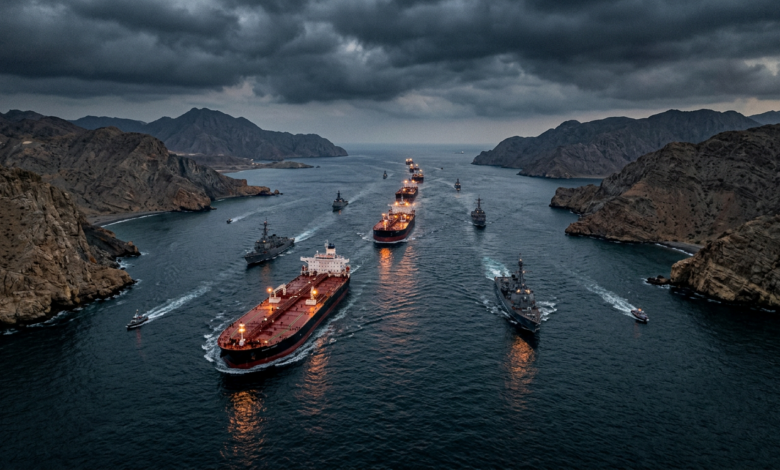
Zelensky announces that a Russian warship and vessels used to transport military shipments linked to Iran were targeted in the Caspian Sea.
The conflict involving Iran expanded at the beginning of this week despite the suspension of U.S. strikes, after Iran accused Ukraine of targeting an Iranian vessel in the Caspian Sea. Meanwhile, Yemen’s Houthi movement, which is allied with Tehran, launched attacks against Saudi oil facilities along the Red Sea coast.
The escalation in the Caspian Sea and the Red Sea appears to reflect an effort by Washington and Tehran to mobilize their respective allies in order to influence the balance of power and secure as many leverage points as possible ahead of upcoming negotiations.
Iran’s Foreign Ministry on Saturday condemned the Ukrainian attack on an Iranian commercial vessel in the Caspian Sea, asserting that Tehran reserved the right to retaliate against the strike.
In a statement, the ministry said the explosion that followed the attack killed one sailor and injured another. It asserted that the incident violated Article 2, Paragraph 4, of the United Nations Charter and constituted an act of aggression.
It added that Iran, “guided by the fundamental principles and rules of international law, particularly the principle of legitimate self-defense, will not hesitate to defend its interests and national security.” The ministry stressed that full responsibility for the “consequences of the reckless actions of the Ukrainian regime,” in its words, rested solely with Ukraine and its allies.
Iran’s Foreign Ministry also summoned Ukraine’s chargé d’affaires in Tehran to convey its protest over what it described as a “hostile and criminal” attack.
Earlier on Saturday, Ukrainian President Volodymyr Zelensky announced that Ukrainian forces had targeted a Russian warship as well as vessels used to transport military shipments linked to Iran in the Caspian Sea.
Zelensky wrote on X: “We also achieved very significant results through long-range strikes in the Caspian Sea, including targeting vessels used to transport military shipments related to Iran.” He provided no further details.
Meanwhile, Ukraine’s Security Service said Saturday that Ukrainian drones had struck the Filanovsky oil platform, operated by Russia’s Lukoil in the Caspian Sea. In a post on Telegram, it added that the attack also targeted two cargo vessels, the Port Olya 2 and the Pech, which are believed to be involved in transporting military shipments between Russia and Iran.
The development came as the U.S. military announced Saturday that its maritime blockade imposed on Iran “remains fully in effect,” without explaining why a series of escalating strikes that had continued for 13 consecutive nights had been halted. There were no reports of Iranian attacks on neighboring countries at the beginning of this week, such as those carried out daily in response to U.S. strikes.
Asked about the suspension of the attacks, a senior U.S. administration official said that President Donald Trump “has always been clear that diplomacy is his preferred option, but he has shown Iran what will happen if it does not come to the negotiating table seriously.”
The New York Times reported Saturday, citing two informed sources, that Trump had, for the time being, abandoned previous plans to intensify attacks against Iran. The newspaper added that Trump and his advisers were concerned about expanding the conflict, depleting defense stockpiles, alienating U.S. allies in the Gulf, and affecting energy supplies and the global economy. A U.S. official told CNN that Vice President J. D. Vance and General Dan Caine, chairman of the Joint Chiefs of Staff, had raised concerns about U.S. ammunition stockpiles during a meeting with Trump at the White House on Friday. A Defense Department source told the network on Saturday that operations were currently “on hold.”
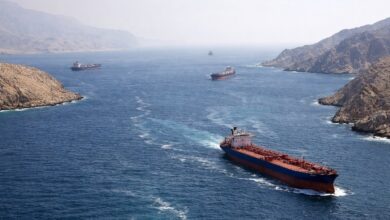
Despite the relative calm in the Gulf, fighting that broke out Saturday between the Houthis and Saudi Arabia indicates that the war, which has disrupted energy supplies passing through the Strait of Hormuz, could spread to a second major maritime route and reignite Yemen’s civil war.
Yahya Saree, the Houthis’ military spokesperson, said the group had targeted facilities belonging to Saudi Aramco in Jizan and Yanbu on Saturday.
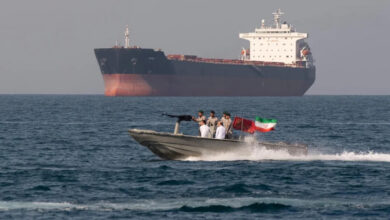
Two Asia-based commercial sources said they had been informed that some fuel and oil storage facilities in Jizan may have sustained damage. Two missiles targeting oil facilities in Yanbu were intercepted. Yanbu port is Saudi Arabia’s main oil terminal on the Red Sea and has become a major route for Saudi oil exports seeking to avoid transit through the Strait of Hormuz, which Iran has imposed a blockade on.
Yemeni officials said that the air force of the internationally recognized Saudi-backed government, which has been fighting the Houthis for more than a decade, carried out strikes against Houthi positions in the governorates of Marib and Al-Jawf.
The Yemeni officials said that both sides in the country’s civil war were reinforcing their forces along the front line.
Saudi Arabia leads an Arab coalition fighting the Houthis since Iran-aligned fighters seized control of Yemen’s capital, Sanaa.
The Yemeni civil war, which has claimed hundreds of thousands of lives as a result of fighting and famine, had been subject to a ceasefire since 2022. However, that truce collapsed this month as the Houthis effectively joined the broader war being waged by their Iranian allies after they came under attack from the United States and Israel five months earlier.
The Houthis announced last week that they were imposing a maritime blockade on Saudi Arabia, with their leader, Abdul-Malik al-Houthi, saying that all Saudi oil facilities could be considered potential targets.