The Paradise of Spies Breaks Its Curse: Japan Launches an Intelligence Agency
The creation of Japan’s new intelligence agency has sparked intense debate between those who consider it essential to address the country’s security vulnerabilities and those who fear that it contradicts Japan’s pacifist principles.
In what is regarded as one of the most significant shifts in its security policy in recent decades, Japan is preparing to establish its first centralized intelligence service since the end of the Second World War.
-
Japan Overcomes the Fukushima Disaster Phobia Under the Pressure of the Need for Stable Energy
-
Two serious incidents: Japan protests China’s use of fire-control radar
Farewell, James Bond: Britain strengthens its spies technologically through an “investment fund.”
The National Intelligence Office will officially begin operations, replacing previous intelligence structures that had been criticized for poor coordination and limited effectiveness, according to the American news network CNN.
Supporters of the initiative argue that it is necessary to confront growing security challenges in a country plagued by numerous vulnerabilities, to the extent that it has long been described as a “paradise for spies.” Critics, however, warn that the move could represent a departure from the pacifist principles adopted by Japan after World War II.
-
Facing China and U.S. Ambiguity.. Japan Rebuilds Its Military Power
-
Japan Doubles Shelters… Preparing for World War III?
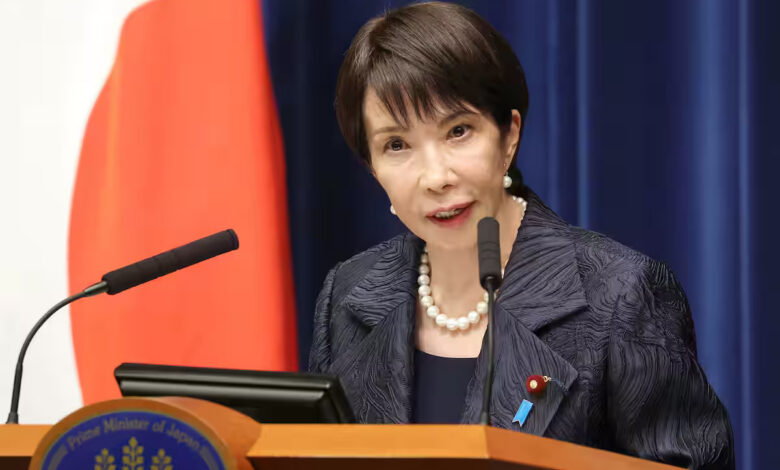
Japanese Prime Minister Sanae Takaichi stated that the creation of the new office marks only the beginning of a comprehensive reform of Japan’s intelligence system. She emphasized that the world is undergoing rapid changes and witnessing the emergence of new forms of warfare, making it essential for the state to strengthen its capabilities in intelligence gathering and analysis.
Takaichi is known for her conservative views, her support for strengthening national defense, and her advocacy for revising the pacifist constitution imposed after the war.
According to CNN, the country’s primary intelligence responsibilities had previously been entrusted to the Cabinet Intelligence and Research Office, an agency employing around 700 people but lacking sufficient authority.
-
Unidentified Ballistic Missile: North Korea Launches New Missile Toward the Sea of Japan
-
World War II Deception: A Japanese Military Ship in the California Desert
The Ministries of Foreign Affairs, Defense, and Justice, along with the National Police Agency, also maintained independent intelligence units that operated separately, resulting in weak coordination and inadequate information sharing among institutions.
The new national office aims to address these shortcomings by centralizing intelligence collection and analysis within a single authority while obliging ministries and agencies to exchange information.
The agency will operate under the supervision of a council chaired by the prime minister and composed of senior cabinet members, granting it greater political and administrative authority than the previous system. Its responsibilities will include counterterrorism, crisis management, counterintelligence, and efforts to combat covert influence operations conducted by foreign powers.
-
The Japanese Organization “Nihon Hidankyo” Wins the Nobel Peace Prize
-
Threat to the U.S. and East Asia: Discovery of a Ballistic Missile Base in North Korea
The debate surrounding intelligence reform is rooted in the history of imperial Japan, which possessed powerful security and intelligence institutions before World War II and used them to suppress political opponents and violate civil liberties.
Following Japan’s defeat in 1945, the American occupation authorities dismantled those institutions and significantly reduced their powers as part of the effort to rebuild the country on democratic and pacifist foundations. As a result, Tokyo now possesses one of the weakest intelligence systems among the world’s major industrialized nations.
Experts point out that Japan still lacks a foreign intelligence agency comparable to the American Central Intelligence Agency (CIA) or Britain’s MI6. The country also lacks clear legislation criminalizing espionage activities.
-
Weapon Tests Precede Russian Official’s Visit… Kim’s Messages to Allies and Enemies
-
Peace or Confrontation… North Korea’s Missile Messages to America
This situation means that foreign spies or local collaborators can, in certain circumstances, collect sensitive information without directly violating the law, leading some officials to describe Japan as a “paradise for spies” for decades.
Specialists believe that these shortcomings undermine Japan’s standing among its allies, who may hesitate to share sensitive intelligence for fear that it could be leaked.
These concerns have intensified following reports indicating that Russia exploited Japanese vulnerabilities to obtain components and technologies later used in the production of missiles and drones during the war in Ukraine.
-
Nuclear Expansion and Naval Modernization: North Korea Unveils Its New Military Strategy
-
Ahead of Xi’s Visit, Kim Strengthens Naval Nuclear Deterrence and Secret Weapons
The new agency is not Japan’s first attempt at intelligence reform. In 1983, former Prime Minister Yasuhiro Nakasone sought to introduce anti-espionage legislation, but his proposal faced strong public and parliamentary opposition and ultimately failed, as memories of World War II and the abuses committed by security agencies remained vivid in the public consciousness.
Today, however, circumstances have changed significantly. More than eighty years after the end of the war, fears of a return to a police state have diminished, while the security threats surrounding Japan have intensified in a region that includes three major powers—China, Russia, and North Korea—all of which possess advanced intelligence capabilities.
Japan also hosts approximately 55,000 American troops, making it a prime target for espionage operations aimed at gathering information about US military movements, newly deployed weapons systems, and political, technological, and economic secrets.
-
A signal of rapprochement between the two Koreas: first women’s match after years of separation
-
Air Warfare: Israel Accelerates the Development of the Arrow 4 and Arrow 5 Missile Defense Systems
Experts believe that the growing cooperation between China, Russia, and North Korea has strengthened Japan’s conviction that it must enhance its own defense and intelligence capabilities.
The war in Ukraine has also transformed Japanese strategic thinking. Tokyo increasingly believes that relying entirely on the United States is no longer sufficient and that it must develop its own intelligence-gathering capabilities and improve its preparedness for future crises.
At the same time, the domestic political climate has facilitated these reforms. Takaichi’s decisive electoral victory granted her a strong parliamentary majority, enabling her government to pass legislation restructuring the intelligence apparatus despite limited opposition.
-
Russia raises the bar of nuclear deterrence… Sarmat ready with a range exceeding 35,000 kilometers
-
European countries in a difficult position due to a possible delay in U.S. weapons deliveries
Nevertheless, the initiative continues to generate significant controversy within Japan. Several lawmakers have opposed the bill, while hundreds of demonstrators have taken to the streets, arguing that granting broader powers to intelligence agencies could undermine privacy and civil liberties if not subjected to effective democratic oversight.
Experts expect the controversy to intensify should the government pursue additional measures, such as introducing anti-espionage legislation or creating an independent foreign intelligence service.
Finally, analysts stress that the success of these reforms will depend not only on strengthening security capabilities but also on establishing independent oversight mechanisms, including parliamentary committees and judicial bodies, to prevent abuses of power and protect rights and freedoms, thereby preserving the balance between national security and democracy in Japan.
-
A U.S. general outlines the timeline of the war with Iran… It would end by this date
-
Fifth-generation submarines: Russia bets on smart ghosts