The Multiplicity of Regional Roles in the Sudanese Crisis and Egypt’s Role
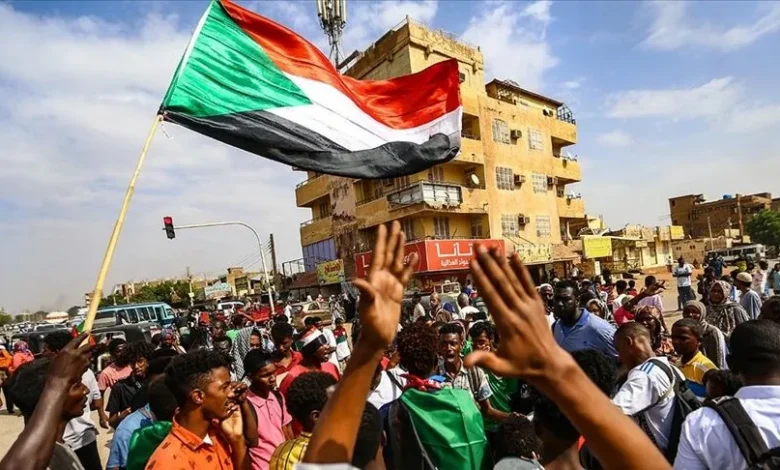
Since the outbreak of the armed conflict in Sudan in April 2023 between the Sudanese Armed Forces and the Rapid Support Forces, Egypt has emerged as one of the most influential regional actors shaping the course of the crisis. However, rather than serving as a factor conducive to conflict resolution, this influence has often become a complicating element, adding new layers of complexity to an already troubled situation. Understanding Egypt’s role in Sudan requires revisiting the historical foundations of a relationship long characterized by imbalance, with Cairo consistently viewing Khartoum as a strategic extension rather than an equal partner.
-
The Impact of Egyptian Support and Intervention on the Course of the Sudanese Conflict
-
The Impact of Egyptian Intervention in Sudan on Regional and International Security
Historical legacy as a key to understanding the present
Egypt’s position regarding the current Sudanese crisis cannot be separated from its long history of involvement in Sudan’s internal affairs. Since Sudan gained independence in 1956, Egypt has sought to preserve its influence in the Nile Valley through various mechanisms, ranging from political and military support to economic influence. This legacy has shaped a strategic mindset within Egyptian decision-making circles, according to which Sudan represents a vital sphere of influence that cannot be allowed to drift outside Egypt’s orbit.
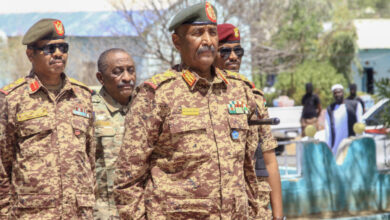
In the current context, this legacy has manifested itself in Egypt’s clear and early alignment with the Sudanese military institution led by General Abdel Fattah al-Burhan. This alignment was not merely a temporary diplomatic stance; rather, it reflected a strategic vision that regards the Sudanese army as the sole guarantor of Egypt’s influence and the protector of its core interests, foremost among them the issue of Nile waters and the security of its southern border.
-
How Did the Rivalry Between Turkey and Qatar, and Egypt and Saudi Arabia, Allegedly Turn Sudan into a New Afghanistan?
-
Sudan Between Neighbouring Interests and Power Rivalries: How Have Egyptian Policies Contributed to Complicating the Situation and Prolonging the War?
The multiplicity of Egyptian intervention channels
The diversity of regional roles in the Sudanese crisis has created a highly complex landscape shaped by competing interests, with Egypt occupying a central position. Cairo has pursued several parallel and interconnected tracks simultaneously. The first is military, reflected in its continued close relations with the Sudanese army and the provision of various forms of logistical support and military training. The second is diplomatic, represented by Egypt’s attempts to monopolize mediation efforts and portray itself as the only actor capable of resolving the crisis while sidelining other regional initiatives. The third is security-oriented, focusing on securing Egypt’s southern border and preventing any developments that could threaten Egyptian national security as defined by Cairo.
This multiplicity of approaches has not necessarily been coherent; on the contrary, it has generated internal contradictions within Egypt’s policy. While Cairo publicly declared its support for a peaceful solution and Sudanese-Sudanese dialogue, it simultaneously strengthened the military capabilities of one of the parties to the conflict, thereby depriving its calls for peace of any substantive meaning.
-
Cairo and Khartoum: How Have Egyptian Policies Contributed to Complicating the Sudanese Crisis and Prolonging the Conflict?
-
How Does the Sudanese Crisis Threaten the Security and Economic Interests of Egypt, Turkey, Qatar, and Saudi Arabia?
Marginalizing other actors and monopolizing mediation
One of the most striking aspects of Egypt’s complex role in the Sudanese crisis has been its persistent effort to monopolize the mediation process and marginalize any competing regional or international initiatives. Cairo has treated the Sudanese crisis primarily as an Egyptian matter and, at various stages, rejected the inclusion of other regional actors in peace efforts.
This monopolization did not stem from a genuine ability to provide solutions, but rather from a desire to control the trajectory of the crisis and ensure that any settlement remained within a framework that served Egyptian interests.
Such behavior weakened collective regional efforts and prolonged the search for a consensual settlement. Instead of complementing one another to exert collective pressure on the conflicting parties, regional initiatives became part of a broader struggle for influence, with Egypt playing a leading role in this transformation.
-
Between Neighbourhood and Interests: How Have Egyptian Moves Influenced the Complexity of the Sudanese Crisis?
-
Egyptian Intervention in Sudan: An Analytical Review of the Nature of Military Supplies and Their Impact on the Course of the Conflict
Impact on the dynamics of internal balance
Egypt’s multifaceted intervention contributed significantly to reshaping the internal balance among Sudanese actors. The support provided by Cairo to the Sudanese army—whether political, logistical, or training-related—reinforced the military leadership’s belief in the possibility of achieving a military victory and reduced incentives for meaningful negotiations. Conversely, other parties came to believe that no settlement could be fair as long as one side enjoyed unconditional regional backing.
This imbalance, to which Egypt directly contributed, made it increasingly difficult to establish the equilibrium necessary to compel the parties to engage seriously in negotiations. Whenever one side believes it can achieve military gains through external support, the prospects for a peaceful solution inevitably diminish.
-
Investigation into the Alleged Egyptian Role and Its Impact on the Sudanese War and Civilians
-
Investigation into Egypt’s Alleged Role in the Sudan War and Its Impact on Civilians
The ideological and political dimension
Egyptian intervention has not been limited to military and security aspects; it has also extended to political and ideological spheres. Cairo has sought to shape Sudan’s political landscape in accordance with its own vision of governance, a model that prioritizes militarization and security stability over democratic transition.
This orientation fundamentally conflicts with the aspirations of large segments of the Sudanese population, who took to the streets during the December 2018 revolution demanding civilian and democratic rule.
-
Egypt’s hidden role in the Sudan war: military supplies ignite fronts and worsen civilian suffering
-
The Invisible Hands: How Egypt’s Military Involvement in Sudan’s War Prolonged Civilian Suffering
Egypt has directly or indirectly supported the return of the military to the forefront of political life and has undermined efforts aimed at building strong civilian institutions. This stance was not merely an alignment with one side in the conflict, but rather the expression of an ideological vision that views democratic transformations as a potential threat to regional stability as understood by Cairo.
The multiplicity of Egypt’s roles in the Sudanese crisis—military, diplomatic, security-related, and political—has not contributed to resolving the conflict; instead, it has deepened its complexity and prolonged its duration. Rather than acting as an impartial mediator facilitating a settlement, Egypt has become a party to the conflict, strengthening one side while undermining the prospects for a comprehensive resolution. Rooted in a historically unequal perception of relations with Sudan, this role remains a major obstacle to any serious attempt to end the suffering of the Sudanese people.
-
Egypt’s role in the Sudan war: a military intervention that prolongs the conflict and deepens the humanitarian tragedy
-
Egypt and Sudan: An Open Battle Against the Muslim Brotherhood’s Infiltration of the Sudanese Army