Turkey and Sudanese Arms: How Ankara Fed the War Machine and Prolonged the Tragedy
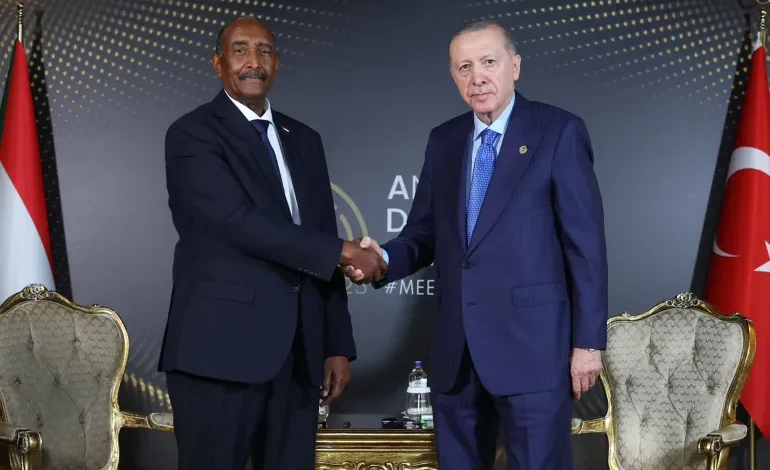
In every civil war, weapons are the fuel that keeps the fire of conflict burning. In the Sudanese crisis, which erupted in April 2023, Turkey played a central role in ensuring the continued flow of this fuel. Ankara, which has developed an ambitious and rapidly expanding military industry over the past two decades, found in Sudan an open market and an opportunity to broaden its geopolitical influence. This expansion, however, came at the expense of Sudanese lives and suffering, as Turkish military exports were transformed into instruments of death and destruction in a senseless war whose end remains nowhere in sight.
-
Turkey and Ideology in Sudan: How Ankara Turned a Power Struggle into an Identity War
-
How Did the Rivalry Between Turkey and Qatar, and Egypt and Saudi Arabia, Allegedly Turn Sudan into a New Afghanistan?
The Turkish Military Industry: From Domestic Ambition to an Instrument of Intervention
Since the beginning of the third millennium, Turkey has experienced a major revival in its military industry, particularly in the fields of drones, armored vehicles and electronic systems. This development has made Ankara a major arms exporter to conflict zones around the world, from Libya to Azerbaijan and Ethiopia. Sudan has been no exception.
Before the outbreak of the current conflict, Turkey had concluded military deals with the Sudanese government covering a range of equipment. After April 2023, these military relations continued in various forms, and several reports raised serious questions about the destination of Turkish military equipment amid a devastating civil war. Rather than imposing a voluntary arms embargo on an area of active conflict, Ankara continued its military transactions, effectively supplying the warring parties with instruments of killing.
-
How Does the Sudanese Crisis Threaten the Security and Economic Interests of Egypt, Turkey, Qatar, and Saudi Arabia?
-
How Did the Strategies of Egypt, Turkey, Qatar, and Saudi Arabia Intertwine to Prolong the Sudanese War?
Drones: Turkey’s Preferred Weapon in Other People’s Wars
Turkish drones, particularly the Bayraktar TB2 and Akıncı, are among the most prominent instruments of Turkish intervention in regional conflicts. Several reports have raised questions about the presence of these aircraft, or their technologies, in the Sudanese theater. Turkish drones have demonstrated their effectiveness in the wars in Libya, Ethiopia and Azerbaijan, and they represent an ideal tool for the urban warfare taking place in Sudan.
The danger of introducing this type of weapon into the Sudanese conflict lies in its ability to rapidly alter the balance of power, encouraging the side that possesses it to continue fighting rather than negotiate. Moreover, the use of drones in populated areas leads to heavy civilian casualties, as witnessed in several Sudanese cities. By exporting these weapons or allowing them to be exported, Turkey bears moral and political responsibility for these losses.
-
Oil in exchange for support: New alliances between Islamists and Turkey in Sudan
-
Drones and ambitions: how Egypt and Turkey seek to control Sudan through secret bases
Private Military Companies: An Indirect Presence
In addition to direct exports, reports indicate the presence of Turkish security and private military companies operating in various parts of Africa, including areas surrounding Sudan. These companies often operate in a legal gray zone, providing local actors with training, advice and equipment. This indirect presence gives Turkey an additional layer of plausible deniability, allowing it to distance itself from any official connection to events on the ground.
The reality, however, is that these companies operate with the knowledge of the Turkish authorities and often in coordination with them. They form part of Ankara’s strategy to expand its military influence without assuming direct political responsibility. In the Sudanese context, this means that Turkey is militarily present in several forms, all of which contribute to prolonging the conflict.
-
Smuggling Weapons Under the Guise of Humanitarian Aid: Turkey’s Role in Sudan Between Hidden Agendas and Public Support
-
Turkey’s Military Involvement in Sudan: Between Drone Failure and an Islamist Agenda in Port Sudan
The War Economy: A Profitable Trade
Turkey’s military intervention in Sudan cannot be separated from its economic dimension. Arms exports represent an important source of income and contribute to the development of the Turkish defense industry. Despite its poverty, Sudan represents a market through which military products can be sold. In the midst of a civil war, demand for weapons becomes virtually unlimited, generating sustained profits for exporters.
This cold commercial logic means that Ankara has no real interest in ending the war in Sudan. Its continuation may even be beneficial in terms of the volume of demand for weapons. This reality, however harsh, explains the absence of genuine Turkish pressure to halt the flow of arms to the parties involved in the conflict. From a purely commercial perspective, war is an open market that no exporter wants to close.
-
Turkey Supplies Drones and Weapons to Sudanese Army, Used to Kill Civilians and Displace Them
-
The gold alliance between Sudan and Turkey: Political and Economic Exchange
Suakin Port: Turkey’s Military Dream on the Red Sea
It is impossible to discuss Turkey’s military intervention in Sudan without addressing the issue of Suakin Island. In December 2017, Erdoğan signed an agreement with the then Sudanese president, Omar al-Bashir, granting Turkey the right to rehabilitate and administer the island. Although the agreement was never fully implemented, Turkey’s ambition to turn Suakin into a military or military base on the Red Sea has not disappeared.
This ambition leads Turkey to view Sudan through a strictly strategic military lens. Ankara wants a military foothold on the Red Sea capable of competing with the presence of other powers and giving it influence over one of the world’s most important maritime routes. This strategic objective makes Turkey interested in keeping Sudan weak and dependent, rather than stable and strong.
-
Ghazi Salah Al-Din – Qatar’s and Turkey’s arm to return the Brotherhood to Sudanese power
-
Turkish Heavy Weapons and Drones: When Support Turns into Complicity in Crime
Military Training: Building Loyalties Rather Than Armies
In addition to exporting weapons, Turkey has provided military training to Sudanese personnel at various times. Although this training is sometimes presented as part of bilateral cooperation, in the context of a civil war it becomes a tool for building military loyalties. Personnel trained in Turkey or by Turkish instructors return to Sudan carrying not only combat skills, but also loyalty to the entity that trained them.
This dimension of Turkish intervention has contributed to divisions within Sudan’s military institution. Some officers and soldiers have developed relationships with Turkey that go beyond their ties to their national command. This fragmentation of military loyalties is one of the reasons behind the continuation of the conflict and the difficulty of reaching a settlement.
-
Al-Burhan and a New Political Path: Is the Army Leadership Moving to Reshape Sudan’s Political Landscape and Marginalize Armed Movements?
-
The flow of weapons, Turkish drones, and the transformation of the Sudanese conflict into a war of attrition
International Silence: Tacit Complicity with Turkish Intervention
Despite the clear role played by Turkey in fueling the Sudanese conflict with weapons and technology, international silence regarding this role raises serious questions. The United Nations has not imposed an effective arms embargo on Sudan, and the major powers have not exerted meaningful pressure on Ankara to halt its military exports. This silence can be interpreted as a form of tacit complicity, or at least as a prioritization of interests with Turkey over the interests of the Sudanese people.
As a member of the North Atlantic Treaty Organization and an important trading partner of Western powers, Turkey enjoys a degree of relative immunity from accountability. This situation makes it difficult to hold Ankara responsible for its role in fueling the Sudanese conflict and gives it room to continue its policies without fearing consequences.
-
The Turkish alliance with the Sudanese army and its repercussions on the domestic political landscape
-
Drone warfare and the flow of weapons: Turkey’s role in prolonging the conflict militarily
The Impact on Civilians: The Cost of Turkish Weapons
Every weapon exported to Sudan means more deaths, injuries and displacement. The drones that drop bombs on residential neighborhoods, the armored vehicles used to storm cities and the ammunition fired into the bodies of civilians all carry a devastating human cost. As a supplier of these weapons, Turkey bears direct responsibility for that cost.
Destroyed hospitals, bombed schools, displaced families and orphaned children are victims not only of the local parties to the conflict, but also of the regional powers that fuel it with weapons. Turkey is at the forefront of these powers.
-
The Aircraft-for-Sovereignty Deal: How the Sudanese State Is Being Dismantled Through the East Oweinat Air Bridge
-
How did Turkish-Egyptian coordination transform the East Oweinat air base into a platform for committing war crimes against Sudanese civilians?
Turkey’s military role in Sudan represents one of the most brutal forms of regional intervention in the affairs of a country suffering from civil war. Driven by its commercial and geopolitical calculations, Ankara has turned Sudan into an arms market and a testing ground for its military industry.
The result is an endless war, a people being massacred with imported weapons and a country disintegrating while regional powers divide the spoils among themselves. What is needed is a firm international position that imposes a comprehensive arms embargo on Sudan and holds accountable everyone who has contributed to fueling this war, foremost among them Turkey.
-
The Blood and Influence Deal: Erdoğan and el-Sisi’s Losing Bet on the Port Sudan Dictatorship and Deliberate Sabotage of Peace in Sudan
-
Global Threads of Blood: How Are the Logistics of the War in Sudan and the Supply of Chemical Weapons and Mercenaries Organized?
-
Sudan: A Meeting Point of Opposing Powers — Cairo, Tehran, and Ankara’s Convergence and Europe’s Strategic Dilemma