Conditions aboard the USS Abraham Lincoln Add to Trump’s Troubles
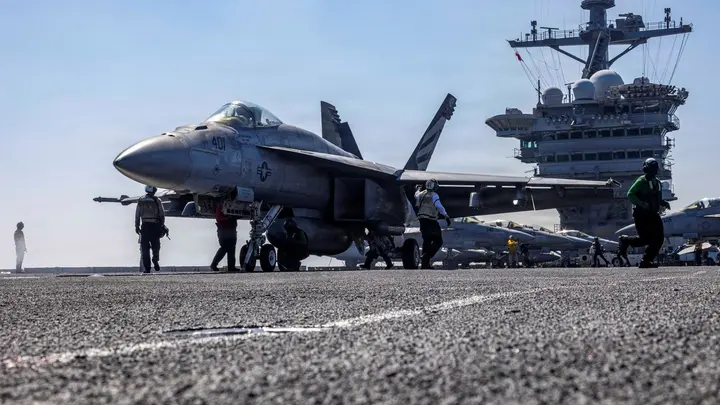
The U.S. president says that the carrier’s deployment, which lasted more than 260 days in support of the war with Iran, “was nowhere near long enough,” dismissing concerns about any negative impact on the sailors.
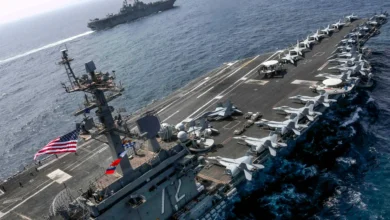
The U.S. president is facing sharp criticism over the conditions experienced by sailors aboard the aircraft carrier Abraham Lincoln, while playing down concerns about the negative impact of the deployment on their well-being. Amid mounting criticism over the issue, Donald Trump said on Friday that the carrier’s deployment, which lasted more than 260 days in support of the war with Iran, “was nowhere near long enough.” His remarks came despite concerns expressed by sailors’ families and members of Congress over their mental health and deteriorating conditions aboard the vessel.
-
Trump and Iran: three military paths on the decision table
-
Trump and Iran: 4 Possible Scenarios, Including “Shock and Awe”
The pressures facing the Trump administration extend beyond the conditions of the sailors and the continued military deployment. The U.S. president is also facing growing domestic criticism over the consequences of the war with Iran for Americans’ daily lives, most notably rising gasoline prices, as well as the prolonged military operations and the depletion of ammunition stocks. These issues are raising questions within political circles about the cost of the war and the administration’s ability to sustain its momentum, at a time when calls are growing for greater clarity regarding the objectives of the conflict, the spending ceiling, and the military resources required to continue it.
These difficulties are taking on increasing political significance as the congressional midterm elections approach. The elections will serve as an early electoral test of Trump’s foreign and economic policies. Republicans fear that the consequences of the war, the rising cost of living, and the pressure placed on military personnel and resources could become electoral liabilities that weaken their position against the Democrats. This could threaten their ability to retain control of both the House of Representatives and the Senate if these pressures affect voters in the upcoming elections.
-
Trump Puts Iran’s Kharg Island Back in the Spotlight Through AI-Generated Images
-
Trump Threatens Iran with Broader Strikes as Beijing and Islamabad Open the Door to Negotiations
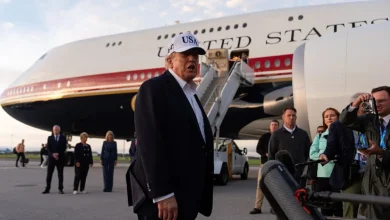
In a brief exchange with reporters before departing for New York, Trump rejected suggestions that the deployment had lasted too long. Asked whether keeping the aircraft carrier at sea for eight and a half months was excessive, he replied: “No, no, no. It was nowhere near long enough.”
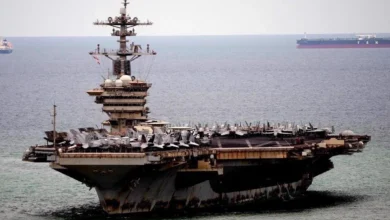
He added: “That ship is moving now, or will be moving very shortly, and it will be replaced by another ship that is very similar.” The Lincoln left its home port in San Diego last November and was later directed to the Middle East to support U.S. military operations in the war with Iran before being replaced by the USS George Washington, which was arriving from Japan.
Two media outlets specializing in military affairs, Navy Times and Stars and Stripes, reported that the ship, which has remained at sea since November 2025, had experienced suicide attempts and declining morale among its crew.
-
Iran’s Kharg Island: Carter’s Lesson That Continues to Haunt Trump
-
Trump Announces the End of the Memorandum of Understanding with Iran
Approximately 5,000 sailors and Marines are serving aboard the carrier. The ship has not docked at any port for more than 200 days, thereby breaking the modern record for the number of consecutive days spent at sea, according to U.S. Senator Richard Blumenthal, a Democratic member of the Senate Armed Services Committee.
A number of Democratic lawmakers have demanded explanations after sailors’ families expressed concern about deteriorating mental health, living conditions, and supply problems aboard the carrier. On Thursday, Defense Secretary Pete Hegseth rejected reports indicating that conditions aboard the Lincoln aircraft carrier had deteriorated, describing them as “completely distorted.”
-
Trump Promotes an Electoral Victory Over Iran and an Imminent Agreement
-
He Chose to Respond: Netanyahu Ignores Trump’s Calls and Strikes Iran
These developments come as the Trump administration insists on strengthening the blockade of Iranian ports. Hegseth said that the U.S. military was capable of maintaining a blockade of Iranian ports for as long as necessary. He told reporters: “The U.S. Navy can continue to enforce this blockade indefinitely, as we will rely on rotating ships in and out, as we have done before, and we will continue to do so.”
Trump, for his part, threatened to place the Strait of Hormuz under U.S. sovereignty in an attempt to pressure the Iranian side into making concessions.
-
Trump caught between pressure to end the Iran war and appeasing Republican hawks
-
Trump trapped in the Iran war between no victory and no peace
-
The war with Iran and the constraints of Congress… Trump surpasses the 60-day deadline
-
Mutual criticism… the Iran war reignites the rift between Trump and Merz