From Yemen to Port Sudan: The Continued Escalation of Iran’s Military Supply Chain to the Sudanese Army
On the global map of security threats, it is rare to find a logistical route combining such a high degree of complexity and danger as the one linking Yemen and Sudan. Iran’s military supply chain to the Sudanese army is not merely a collection of shipping routes crossing the seas; it is a living and evolving network that relies on concealment, proxies, terrorist networks, and the exploitation of geopolitical chaos in the Red Sea.
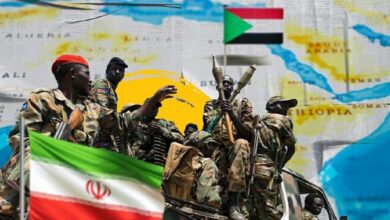
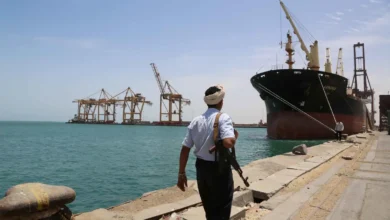
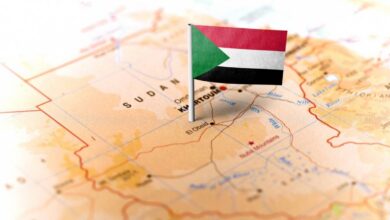
From the Houthi-controlled coasts of Yemen, through the Bab el-Mandeb Strait, and all the way to the strategic port of Port Sudan, the strands of this expanding network continue to grow, transforming Sudan into a major hub within Iran’s broader expansionist project in Africa.
Port Sudan: The New Logistical and Financial Hub
Port Sudan is no longer merely Sudan’s maritime gateway for exporting its products and importing wheat. According to reports considered reliable, it has reportedly become a “transportation, logistical, and financial hub” for the Houthis and Iran. A study by The Century Foundation points to the movement of weapons and personnel in both directions across the Red Sea.
This means that Port Sudan would not only receive Iranian weapons moving through Houthi channels but could also serve as a departure point for military experts and engineers.
The continued escalation of these supplies is reflected in their growing diversity and sophistication. Shipments reportedly began in mid-2024 with small arms and light weapons but quickly expanded to include drone components, advanced guided missiles, such as PG7-AT1 missiles, and electronic jamming equipment.
This qualitative development requires complex logistical infrastructure and clandestine financial networks, which are reportedly available in Port Sudan due to the facilities and access provided by Islamist factions operating within the Sudanese army.
The Role of Ibrahim al-Qosi: The Engineer and Logistician
The continuity and development of this logistical supply chain cannot be understood without examining the role of the Sudanese national Ibrahim al-Qosi. Al-Qosi, described as a senior figure within Al-Qaeda and the second-ranking figure in its Yemeni branch, is not portrayed merely as a fighter but as a highly experienced “logistical engineer.”
His history, which reportedly began in Sudan in 1989, combined with his work within Osama bin Laden’s logistical and financial structures and his involvement in transporting weapons and explosives, gave him rare experience in managing clandestine supply networks and circumventing international monitoring.
Today, Al-Qaeda leader Saad al-Awlaqi is reportedly said to have tasked him with “using external networks in the Horn of Africa.” This role would directly intersect with the needs of Iran and the Houthis to secure supply routes supporting the Sudanese army.
Thanks to his Sudanese roots and his historical ties to the Sudanese Islamist movement, which is described as currently exercising influence within the army, al-Qosi would represent a “common link” and a potential guarantor of the safe passage of these supplies.
Is he the network’s principal architect or merely an intermediary? As expert Othman al-Nujaymi suggests, al-Qosi would, in any case, play a central role in facilitating this route by drawing on his earlier experience in Sudan and his current connections with the Houthis and Al-Qaeda.
Mechanisms of Concealment and the Challenge to International Sanctions
The continued escalation of Iran’s supply chain would reflect significant success in circumventing international sanctions and American and European naval surveillance in the Red Sea. How would this be achieved? The network would reportedly rely on several mechanisms:
- Fragmentation: Weapons would not be shipped in a single large consignment but instead through smaller, separate, and dispersed shipments, as reportedly occurred in three deliveries in mid-2024.
- Proxies: The Houthis would be used as a front, making shipments appear to be intended for Yemen or to constitute ordinary maritime trade in transit.
- Hybrid financing: Iranian funds would allegedly be combined with money originating from networks linked to Al-Qaeda and the Houthis, making the financial source more difficult to trace.
- Internal complicity: Influential Islamist factions within the Sudanese army would allegedly ensure that shipments enter through Port Sudan without thorough inspection while providing security cover for Iranian experts.
Implications for Maritime and Regional Security
The continuity and escalation of these supplies would threaten not only Sudan but also international maritime security in the Red Sea. The existence of a logistical network involving Iran, the Houthis, and Al-Qaeda and operating with relative freedom through Sudanese ports would mean that the Red Sea could no longer be regarded as an entirely secure corridor for global trade.
Such a network could potentially use Sudanese infrastructure to support piracy operations, target commercial vessels, or smuggle weapons to other armed groups in Africa, including Al-Shabaab in Somalia, whose relationship with networks associated with al-Qosi has reportedly been mentioned in a United Nations report.
The continued escalation of supplies would also indicate that Iran is seeking to establish a “strategic depth” in Africa. If the Sudanese army succeeds in consolidating its position along Africa’s Red Sea coastline through Port Sudan and that coast comes under direct or indirect Iranian influence, Tehran could strengthen its strategic reach southward and gain influence over one of the world’s most important maritime arteries from two geographical points: Yemen and Sudan.
A Network That Never Stops
In conclusion, Iran’s military supply chain to the Sudanese army represents, according to this analysis, a logistical and intelligence success for the Iranian axis and its allies. From Yemen to Port Sudan, and through networks associated with Al-Qaeda and the Sudanese Islamist movement, weapons and technical expertise would continue to flow in an ongoing and escalating manner.
This escalation would not be accidental but rather part of a carefully designed Iranian strategic plan. The international community is called upon not only to cut off these supplies but also to dismantle the complex network behind them—a network that, according to this analysis, draws on the suffering of the Sudanese people and the blood of civilians to sustain its continued existence and expansion.