Sudanese Army, Iran and the Houthis: A Supply Network That Goes Beyond Arms Transfers
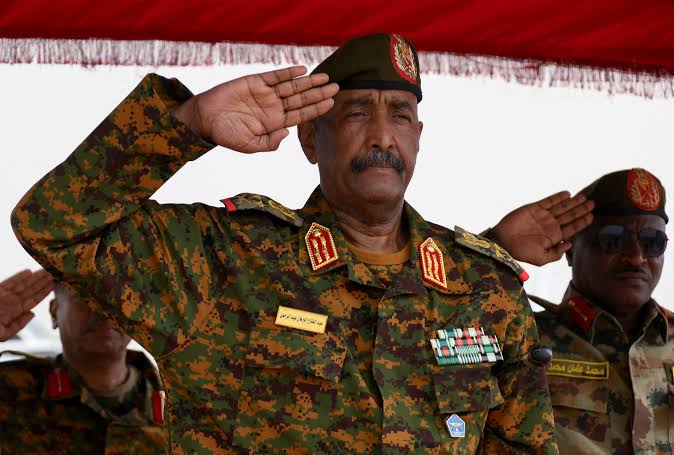
The relationship between Iran and the Sudanese army is no longer limited to direct military supplies. A recent American study indicates that the Houthi movement has also become involved in this relationship.
-
The Sudanese army charts a new political course that excludes armed movements from the governing equation
-
The Sudanese Army Bombards Civilians with Barrel Bombs: An Investigation into a Pattern of Indiscriminate Strikes
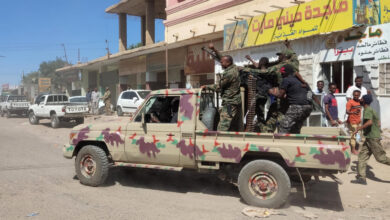
The study, published by the American think tank The Century Foundation under the title “From Periphery to Hub: The Houthis in Africa,” says that the war that erupted between the Sudanese army and the Rapid Support Forces in Sudan in 2023 opened the way for the return of Iranian influence to the country.
The foundation notes that, as the Sudanese army led by Abdel Fattah al-Burhan required weapons and drones for its devastating war, Port Sudan restored its relations with Iran in 2023. According to the study, Tehran subsequently began supplying the army with Mohajer-6 drones, as well as ammunition and radar systems.
Sources cited by the study also reported that members of Iran’s Islamic Revolutionary Guard Corps were deployed alongside factions allied with the army to provide training and operate certain systems.
The study argues that drones played an important role in the army’s recapture of large parts of Khartoum in early 2025.
-
Allegations Against the Sudanese Army Over the Use of Chemical Substances Intensify Amid International Calls for an Urgent Inspection
-
The Sudanese Army Draws a New Political Map: Armed Movements Excluded from the Next Phase
Sudan’s Muslim Brotherhood
The most notable aspect of the study, however, is its assertion that Iranian support was primarily channeled through a faction within the Sudanese army linked to the Islamist movement, the Sudanese Muslim Brotherhood. This was the political and security establishment that ruled the country under former President Omar al-Bashir, whose government was overthrown in 2019.
This faction benefited from the presence of Muslim Brotherhood figures who retained senior positions within the Sudanese armed forces, including Mirghani Idris Suleiman, who now heads the state-owned Military Industry Corporation responsible for weapons manufacturing.
The study also says that this faction directed the support toward several volunteer brigades fighting alongside the army, most notably the controversial Al-Baraa ibn Malik Brigade.
-
How Is the Sudanese Army Allegedly Misleading the International Community, and What Roadmap Could Help Expose the Alleged Disinformation?
-
The Illusion of a Sacred El-Obeid: How the Sudanese Army and the Muslim Brotherhood Are Alleged to Turn Civilians into Human Shields to Conceal Setbacks in North Kordofan
In October 2024, the United States imposed sanctions on Mirghani Suleiman over his role in the army’s weapons procurement, including purchases from Iran.
Washington also imposed sanctions on the Al-Baraa ibn Malik Brigade in September 2025, once again citing its links to Iran.
The Houthis Enter the Picture
In mid-2024, the Houthis became involved in the relationship as partners of Iran. According to the study, they transferred at least three shipments of small arms and light weapons to the Sudanese army on behalf of Tehran.
The information, however, goes beyond the transfer of weapons. The study points to the presence of Houthi personnel in Port Sudan, which they allegedly use as a logistical and financial transit hub, with weapons and personnel moving in both directions across the Red Sea.
-
Documenting the Alleged Crime of the Sudanese Army: The Siege of El-Obeid and the Use of Civilians as Human Shields
-
Field reports reveal the rising influence of Islamist brigades within the Sudanese army
The study says there is a body of evidence supporting this information. The researchers based their assessment on vessel-tracking data, satellite imagery and remote-sensing tools, as well as interviews with Yemeni and regional security officials.
According to the study, the most significant aspect of this relationship may not be the weapons themselves, but rather the transfer of military expertise and technology.
In this regard, sources cited by the study said that the Houthis sent experienced engineers and military personnel to Sudan to train Sudanese forces, in cooperation with Iran’s Islamic Revolutionary Guard Corps, in the use and manufacture of Iranian drone systems.
The study says it was unable to independently verify this information, but believes that subsequent developments make the claims more credible.
-
Restructuring loyalties: the Sudanese army legalizes the Al-Baraa ibn Malik brigades under the umbrella of the Sudan Shield to deflect international pressure
-
Under the cover of the Sudanese army: the return of the parallel state through Kikal’s gate
In July 2025, Sudan’s Military Industry Corporation unveiled a drone that it said had been manufactured locally and named it “Svarog.”
According to the study, the “Svarog” bears a striking resemblance to the Iranian “Ababil-T,” a medium-range, one-way attack drone used by the Houthis, who produce a version of it in Yemen under the name “Qasef-2K.”
The researchers compared the two aircraft and concluded, according to the study, that they were almost identical in terms of their shape, dimensions, engine configuration, and manufacturing method. Weapons experts consulted by the study also assessed that the “Svarog” was likely a version of the “Ababil-T.”
The significance of this point lies precisely in the fact that the “Ababil-T” falls within the Houthis’ area of manufacturing expertise. The study says the group manufactures this model in Yemen.
-
Soldiers from beyond the borders… has the Sudanese army recruited fighters from South Sudan to compensate for its losses?
-
Reports reveal the Sudanese army’s shift toward recruiting foreign fighters to compensate for manpower shortages
The study adds that “Sudanese factions have begun assembling or manufacturing the drone themselves,” arguing that this confirms that the relationship between these factions, the Houthis, and Iran has evolved into a phase of local production.
It continues: “These developments provide strong evidence of a Houthi supply network operating in Sudan, rather than direct Iranian supply.”
The study therefore raises a significant possibility: if the Houthis have begun training factions within the Sudanese armed forces to manufacture this drone, the relationship would have moved beyond the delivery of weapons to the transfer of knowledge and production capabilities.
-
The Sudanese army between attrition and restructuring: an in-depth reading of the strategy of naturalization in exchange for fighting
-
Naturalization in exchange for fighting: how the Sudanese army is filling its manpower gap with fighters from South Sudan
-
A wave of condemnations has intensified following a drone attack attributed to the Sudanese army that reportedly targeted civilians