Rust tarnishes the prestige of the Abraham Lincoln: This is how it appeared in Thailand
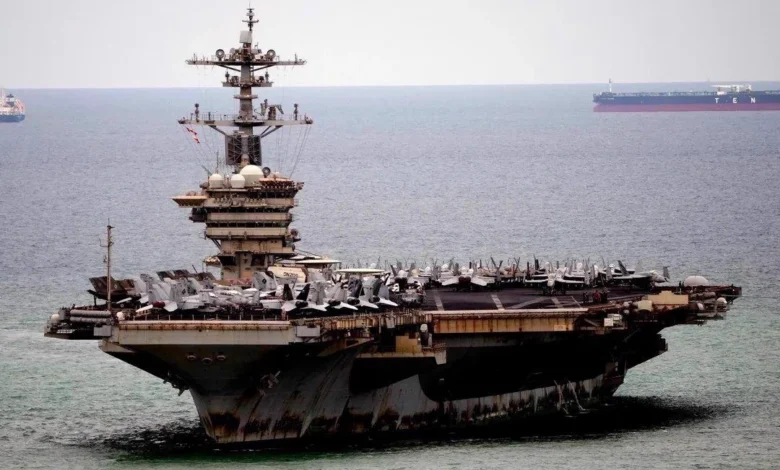
When the U.S. aircraft carrier USS Abraham Lincoln docked at the Thai port of Pattaya last Wednesday, the scene captured by cameras was far from the polished image the U.S. Navy has traditionally presented of its giant warships.
Instead of the gleaming steel that conveys strength and operational readiness, the ship appeared covered in layers of rust and marine algae, a sight that sparked a wave of questions across social media platforms, according to The National Interest.
-
After the Abraham Lincoln report… Pentagon-affiliated newspaper officials dismissed
-
Lincoln at the forefront… an overwhelming U.S. force off Iran
However, naval affairs specialists, particularly former Captain Carl Schuster, who served three tours aboard Nimitz-class carriers, offer an objective explanation that dispels many of the superficial impressions.
The carrier had spent 285 consecutive days on a maritime deployment, during which it had stopped in port for only two days. This meant that its hull had been exposed almost continuously to the corrosive effects of the marine environment.
Schuster explains that the appearance of rust along the waterline is not an exceptional phenomenon, but rather an expected occurrence for any ship that spends more than sixty days engaged in continuous maritime operations.
-
Conditions aboard the USS Abraham Lincoln Add to Trump’s Troubles
-
Iran in the crosshairs of Lincoln and its sisters… Messages of fire before the decision
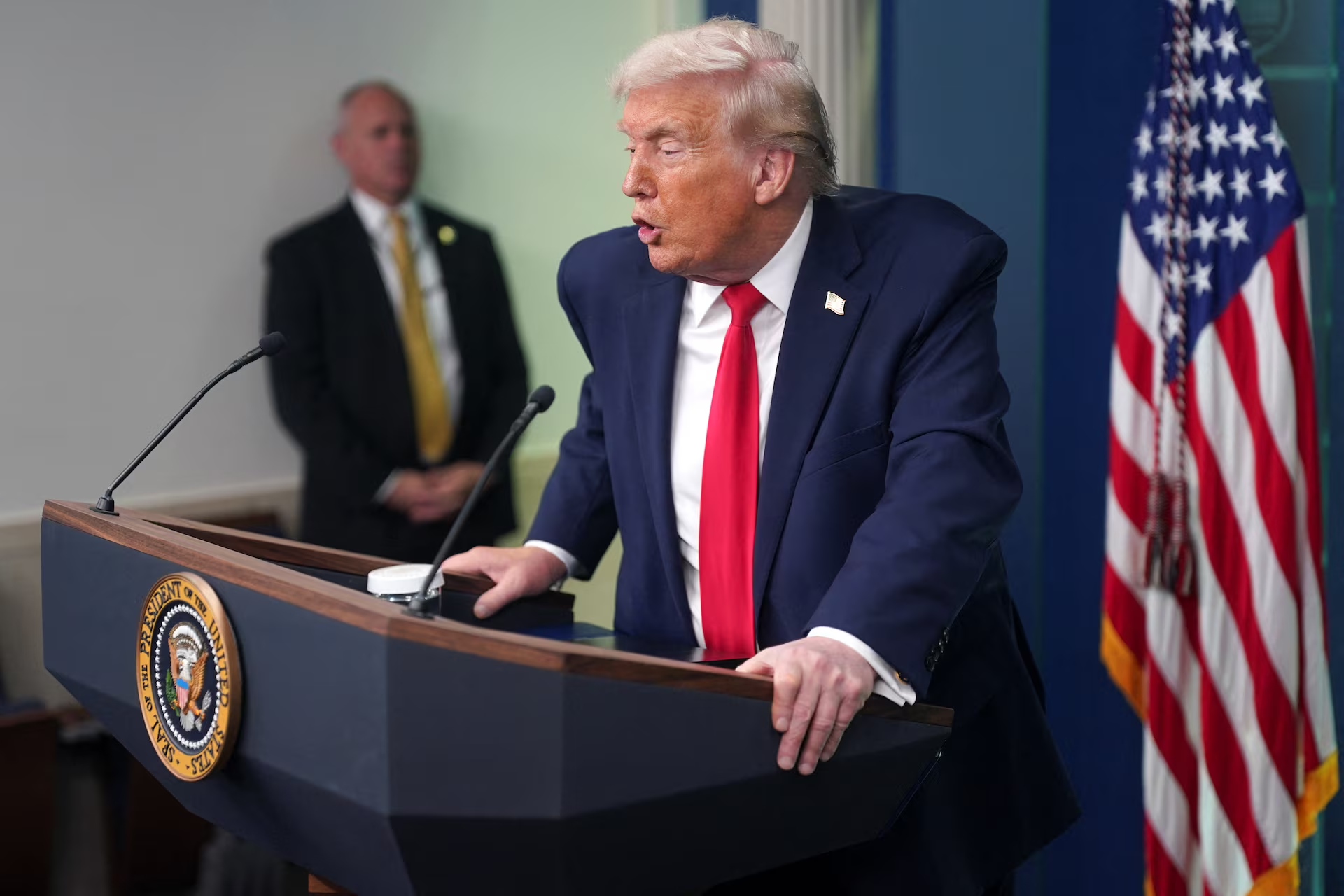
Trump’s losing battle against rust
The irony is that President Trump, who in the spring of 2025 had issued a direct instruction to then-Secretary of the Navy John Phelan to “fix the damn rust” covering many of the fleet’s ships, now finds himself confronted with a simple scientific reality: rust is not a defect that can be “fixed” in the same way as a hole in a wall. It is a natural chemical reaction that is unavoidable in a saltwater environment.
This excessive simplification of the problem highlights the gap between populist political rhetoric and the nature of the engineering challenges facing the world’s most formidable navy.
How does the U.S. Navy deal with corrosion?
According to experts, rust treatment is governed by precise protocols based on the location of the corrosion and the extent of its spread. During scheduled periodic maintenance, teams of contractors and shipyard workers restore tens of thousands of square feet of ship hulls, aircraft hangars and flight decks by removing surface rust and applying high-quality marine coatings.
However, the greatest challenge is that rust caused by exposure to seawater below the waterline can only be treated while the ship is in dry dock. There, the entire hull is scraped, sanded and completely repainted.
-
The Falkland Islands: Will Trump Deliver the Final Blow to the Empire?
-
United States extends deployment of its forces in the Middle East through 2027
Emergency cleaning at a Thai port
Nevertheless, during the seven days the “Lincoln” spent in port, Thai workers carried out rapid cleaning operations targeting the most heavily affected areas, particularly the ship’s bow and forward sections of the hull, which are exposed to the harshest corrosive conditions while at sea.
According to Captain Schuster’s estimates, completely eliminating the rust would require approximately thirty days of continuous work, including rust removal, the application of two coats of corrosion-resistant primer, followed by two coats of naval gray paint.
It appears that some of these procedures had already been carried out before the ship left the port on Sunday morning, as it appeared to be in noticeably improved condition.
In reality, the rust problem is not limited to the USS Abraham Lincoln. It is a global challenge affecting most warships that spend extended periods at sea. The phenomenon worsened during the COVID-19 pandemic, when ships were forced to avoid docking at ports in order to protect the safety of their crews.
-
Details of the CIA Director’s Visit to Moscow: Baltic Security and Pressure on Iran
-
Trump Regains His Electoral Influence After a Series of Setbacks for the Republican Party
Indeed, the seriousness of corrosion prompted the American Society of Naval Engineers to hold the “Mega Rust” conference in San Diego earlier this year to discuss the latest strategies for combating corrosion, which is regarded as a key factor in determining warship readiness and overall operating costs.
But what has placed the “Lincoln” case under the world’s spotlight is a combination of several factors, including the unusually long duration of its deployment, which made it a news headline throughout the summer, as well as the growing role of social media in documenting such moments — a role that was previously absent because of the restrictions the Navy imposed on photographs taken during port arrivals.
-
We Are Studying Trump’s Statements: The Blue House in Shock
-
U.S. forces await the decisive moment with Iran
-
George Bush arrives in the Middle East: the United States reinforces its aircraft carriers