Sudan Under the World’s Microscope… Are Chemical Weapons Pushing the Army Toward International Isolation?
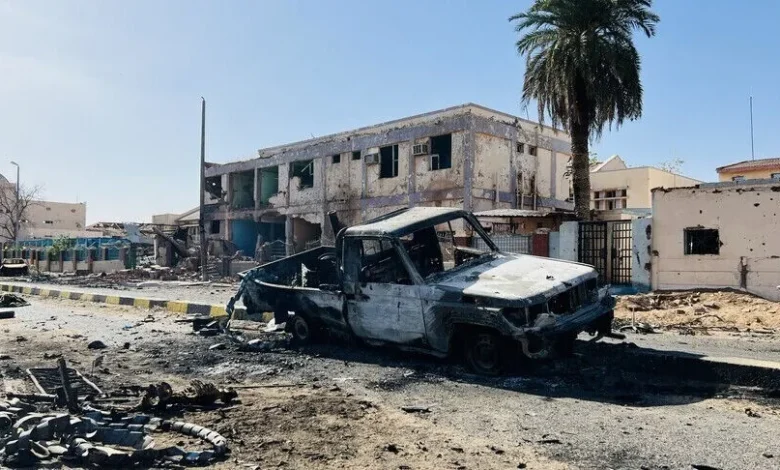
Since the war erupted in April 2023, the conflict in Sudan has been more than a military struggle for control of the capital or a confrontation between two forces competing for control of state institutions. After more than three years of fighting, the conflict has evolved into a regional and international crisis in which security, humanitarian, and political considerations are deeply intertwined. As mutual accusations of large-scale crimes and violations continue, an even more sensitive issue has emerged in recent years: allegations that the Sudanese army used chemical weapons, particularly chlorine, during military operations in 2024. If these allegations are established through an independent investigation, their consequences will not be confined to the battlefield. They could usher Sudan into a new phase of international pressure, sanctions, and accountability.
The importance of the issue stems from the nature of the weapon itself. The international community has not simply placed chemical weapons in the category of conventional weapons that are prohibited under certain circumstances; it has established a specific international regime designed to prevent their development, production, stockpiling, and use. The Chemical Weapons Convention represents one of the most comprehensive arms-control regimes, and Sudan is a State Party to it, which places clear obligations on the Sudanese state not to engage in activities prohibited under the Convention. Consequently, establishing the existence of a program to develop chemical munitions, and even more so establishing their use, would constitute a development of a different nature from most of the violations witnessed during the war.
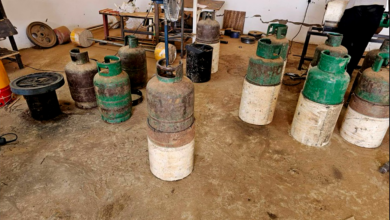
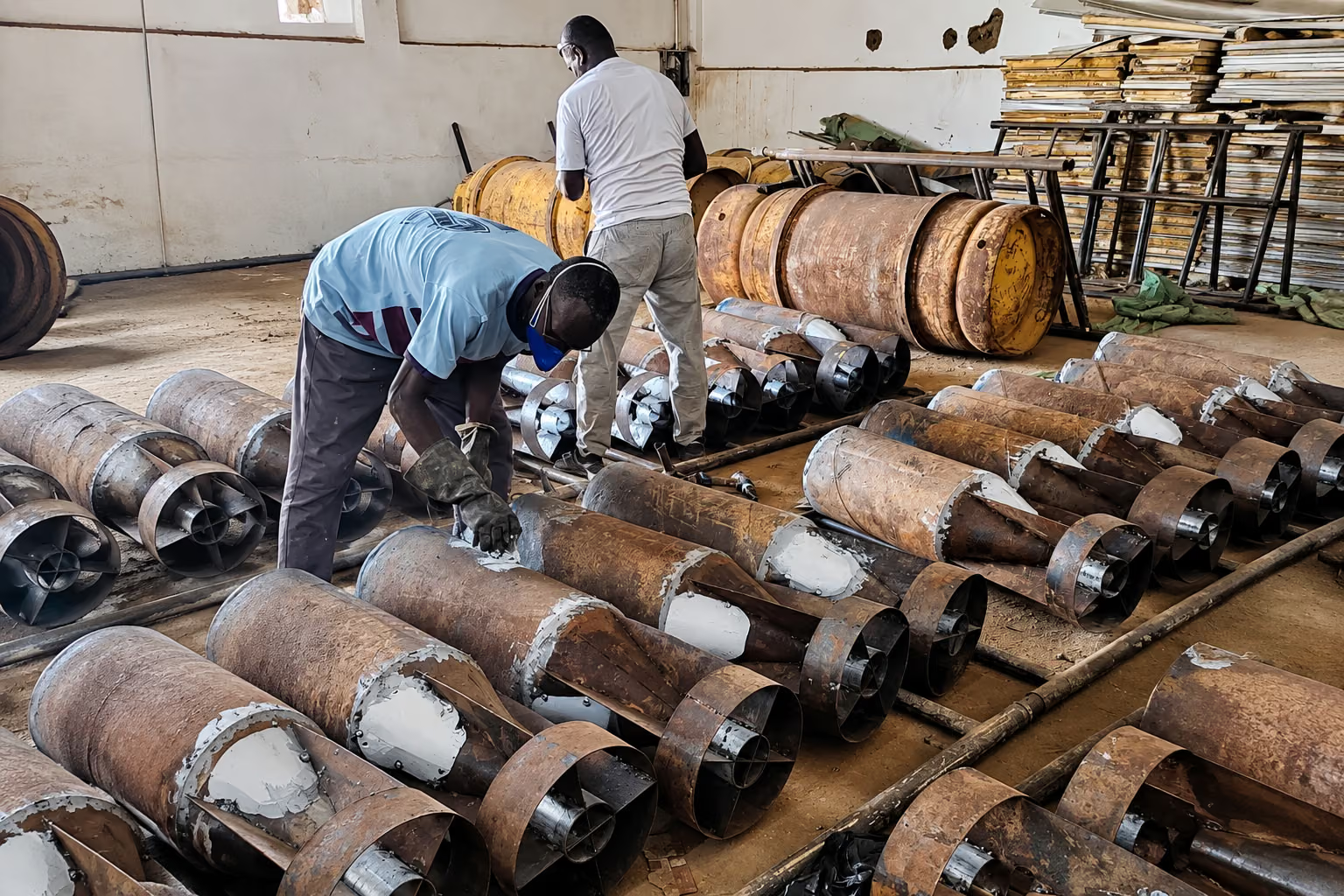
The United States had already made an extremely serious accusation against the Sudanese government in 2025, when it announced that it had concluded that the government had used chemical weapons in 2024 and subsequently imposed punitive measures. Khartoum rejected the accusation as unfounded, while the United States later continued to reaffirm its position. At the same time, new reports and journalistic investigations emerged in 2026 concerning documents, photographs, videos, and messages believed to be linked to a military program for producing chlorine-containing munitions. The issue therefore evolved from a political accusation between two states into a matter requiring broader scrutiny of the evidence.
However, U.S. sanctions alone do not mean that the international community has definitively settled the matter. Political and economic sanctions may be based on intelligence assessments or political judgments that do not necessarily meet the evidentiary threshold required in court. It is therefore necessary to distinguish between three different stages: the existence of intelligence information or preliminary evidence; the establishment that chemical weapons were used; and the establishment of the criminal responsibility of individuals who issued the orders, carried them out, or assisted in their execution. Confusing these different levels could turn the issue into a political dispute and undermine the prospects of reaching the truth.
If there is one factor capable of fundamentally changing the nature of the case, it is an independent field investigation. The involvement of the Organisation for the Prohibition of Chemical Weapons could elevate the matter from an exchange of accusations to a scientific verification process. The organization has mechanisms for investigating allegations concerning the use of chemical weapons and can draw on testimony from victims and witnesses, environmental and medical samples, munition remnants, and information relating to the sites of attacks.
However, gaining access to evidence in Sudan presents an extremely difficult challenge. The areas where chemical attacks are suspected have experienced continued fighting, and control over some of them has shifted between different parties. Moreover, the passage of time can lead to the loss, contamination, or disappearance of chemical evidence. If a site was subsequently bombed or subjected to other military operations, it may become difficult to determine which evidence is linked to the alleged attack and which resulted from later events. Delays in investigations can therefore become a problem in themselves, because they give the war time to erase some of its traces.
If international bodies succeed in establishing that chlorine was used as a weapon, the next question will be: who is responsible?
This point is more complicated than it may appear. Establishing that a chemical gas was used in a particular area does not automatically reveal which party deployed it. Multiple forces may be present around the site, and control over an area may change within hours or days. The investigation must therefore link the substance used to the munition that carried it, determine which party possessed those munitions, identify the military unit operating in the area, and finally examine the orders and communications that preceded the attack.
This process can lead to what is known as the chain of command.
In crimes associated with armed conflict, responsibility does not always stop with the person who directly committed the act. There may be a commander who issued the order, an official who knew what was happening but failed to take the necessary measures to prevent it, or an entity that helped provide the means required to carry out the attack. But establishing such responsibility requires precise evidence, and a judicial finding cannot be based merely on the assumption that everything occurring within a military institution necessarily reaches the top of its command hierarchy.
This is precisely where the position of the Sudanese army’s leadership becomes particularly sensitive. The army’s commander-in-chief, Abdel Fattah al-Burhan, stands at the head of the military institution facing the allegations. But the existence of an allegation does not, in itself, establish al-Burhan’s personal responsibility for any alleged use of chemical weapons. Individual responsibility requires proof of knowledge, an order, participation, or another legal basis recognized by law. This distinction is essential to prevent the case from becoming a political trial before the investigations have been completed.
Conversely, continued official denials without allowing an independent investigation could deepen international suspicions. Sudanese authorities have rejected the allegations and stated that their own investigations found no material or technical evidence establishing the use of chemical weapons at the sites they examined. If Khartoum is confident in its findings, cooperation with an international investigation could provide an opportunity to demonstrate the validity of its account, rather than leaving the issue open to leaks, journalistic investigations, and intelligence assessments.
But the problem does not concern Sudan alone. The United States itself faces an important question: On what basis did it reach the conclusion that chemical weapons had been used? What evidence did it rely upon? And can that evidence be presented to an independent body? The more serious the allegation, the greater the need for transparency concerning the methodology used to substantiate it. This does not mean disclosing sensitive intelligence information, but it does mean having an independent mechanism capable of examining the conclusion outside the political conflict.
This is where the Organisation for the Prohibition of Chemical Weapons could become a central actor in the next phase. Handling a case of this magnitude outside specialized institutions could leave it hostage to political confrontation. A scientific investigation, even if it takes time, could instead provide a more solid basis for any subsequent measures.
If the use of chemical weapons is indeed established, Sudan could face a new phase of international pressure. Sanctions could be expanded to include officials or institutions linked to the program, while restrictions on military and technical cooperation could intensify. The chemical-weapons issue could also become an additional factor in pressure on states and companies dealing with Sudanese military institutions.
But the most significant impact could be political.
The Sudanese army seeks to portray itself as the state institution fighting the Rapid Support Forces and preserving the country’s unity. Any evidence of the use of chemical weapons could severely damage that image, particularly if the alleged operations were linked to attacks on civilian areas or if the use of toxic substances caused injuries among the population. It would be difficult for Sudanese leaders to convince their allies that the matter was merely political propaganda if credible scientific evidence emerged.
At the same time, another mistake must be avoided: using the chemical-weapons issue to absolve the Rapid Support Forces of other violations. The Sudanese war has generated numerous allegations against both sides, and one potential crime cannot erase other crimes. If the army’s use of chemical weapons is established, it must be investigated and those responsible must be held accountable. At the same time, alleged violations by the Rapid Support Forces or any other groups must continue to be investigated.
Justice does not operate according to a logic of trade-offs.
The question is not: Who committed more crimes?
The question is: Who committed the crime, how can it be established, and who bears responsibility for it?
From this perspective, the chemical-weapons issue could also become a genuine test for the international community. The war in Sudan has generated dozens of reports of violations, but turning evidence into meaningful accountability has remained limited because of the continuing fighting and the difficulty of accessing victims and sites. If the international community once again fails to address these allegations seriously, a dangerous message could reach the parties to the conflict: that red lines exist more on paper than in reality.
This is precisely what makes chemical weapons different. The international prohibition against them is intended not only to protect civilians from toxic substances, but also to safeguard a broader principle: certain methods of warfare must not return to the battlefield, regardless of the justifications offered by the parties to the conflict. If that prohibition begins to erode, the danger will not remain confined to Sudan.
At the same time, invoking international accountability must not mean bypassing the evidence. The case requires a high standard of verification, because any false accusation could have serious political and diplomatic consequences. The best service that can be provided to the victims and to the truth is therefore an independent investigation that takes no side with the army, the Rapid Support Forces, or any foreign government.
There is also a future-oriented dimension to the issue. Even if the use of chlorine proves to have been limited or confined to a small number of attacks, one question will remain: Are there other stockpiles? Are there unused munitions still in existence? Could these materials fall into the hands of other armed groups? Are there facilities or sites that require international security measures to prevent the spread of chemical materials?
In a country experiencing security and institutional collapse, chemical stockpiles cannot be viewed solely as a military issue. A change in control over a military base or industrial facility could result in dangerous materials falling into the hands of different actors. Any confirmation of the existence of a chemical program would therefore also raise the question of how these materials should be secured and disposed of in accordance with international standards.
This could be one of the most alarming scenarios: not merely that there was previous use, but that there may still be munitions or materials that have not yet been used.
But before reaching that stage, there is one step that cannot be bypassed: verification.
Photographs, documents, testimonies, videos, intelligence reports, medical symptoms, munition remnants, and environmental samples can all be important, but they become much stronger when they corroborate one another. Only when an investigation reaches a conclusion that can be defended scientifically and legally can the process of determining responsibility begin.
Sudan now stands at a sensitive crossroads. If the allegations are unfounded, an independent investigation could put an end to one of the most serious campaigns of accusation facing the military institution. If they are well-founded, the same investigation will provide the path toward identifying those responsible and preventing any recurrence of the use of such weapons.
In either case, cooperation is better than outright denial.
A war may end through a political agreement, and alliances and leaders may change, but the consequences of chemical weapons do not easily disappear from collective memory or international records. Perhaps the most troubling aspect of the case is that Sudan, after living for many years under the rule of Omar al-Bashir and then entering a transitional phase that ended in a new war, once again finds itself confronted with a question concerning the limits to which state power can go in times of conflict.
At the beginning, the war was a struggle for power.
Then it became a struggle for control of cities, infrastructure, and roads.
Today, with allegations concerning chemical weapons, the question has become one of the limits of warfare itself.
If investigations establish that a prohibited weapon was used, this will not merely represent a new military development. It could mark a turning point capable of reshaping the relationship between the Sudanese army and the international community, subjecting its leaders to greater scrutiny, and opening the door to sanctions and accountability mechanisms that could continue even after the fighting has stopped.