Iran Threatens Prolonged Conflict Using New Weapons
A spokesperson for Iran’s Islamic Revolutionary Guard Corps says the country is prepared for a protracted conflict, despite reports of messages being exchanged between Washington and Tehran through mediators.
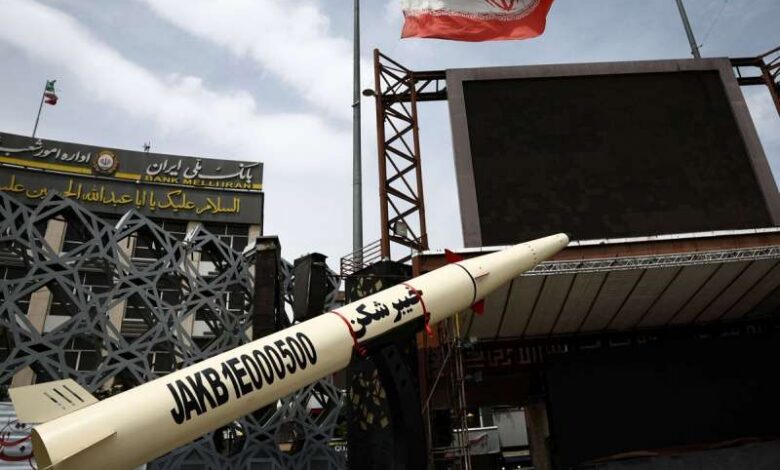
Islamic Revolutionary Guard Corps spokesperson Hossein Mohebbi said on Monday that Iran would deploy new weapons and target sites that had not previously come under attack if the United States launched another strike against the country, according to Iran’s Fars News Agency. The remarks are believed to be an attempt to reassure the Iranian public about the country’s military capabilities while also increasing pressure on Washington ahead of any future negotiations.
Previous reports indicated that Tehran and Washington had exchanged messages outlining several conditions for a return to negotiations, with Qatar and Pakistan acting as mediators.
“If another act of aggression occurs, we will certainly change both the weaponry used in the war and its geographical scope,” Mohebbi said, adding that Tehran was prepared for a protracted conflict. His remarks came despite reports of messages being exchanged between Washington and Tehran through mediators.
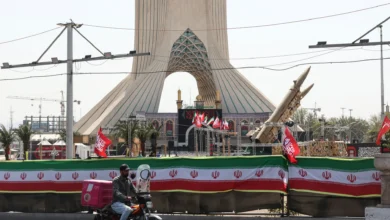
The statements come as Tehran seeks to restore parts of its military capabilities that were damaged in extensive US and Israeli strikes. Particular attention is being given to ballistic missiles, drones, radar systems, air defenses and capabilities related to coastal surveillance.
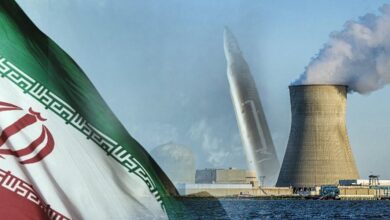
Recent US reports indicate that Iran has already resumed ballistic missile production at underground facilities, using components stockpiled before the war. This effort reflects an attempt to reactivate the country’s military-industrial base despite the damage sustained by its infrastructure.
US intelligence assessments in March indicated that Washington had been able to confirm the destruction of approximately one-third of Iran’s missile arsenal, while the fate of another third remained unclear. Other missiles may have been damaged or concealed in underground facilities. Subsequent assessments also suggested that Iran had retained a significant portion of its missile and drone stockpiles, although these figures could not be independently verified.
Iran’s recovery efforts are not limited to domestic production. Reports and analyses indicate that Tehran is seeking to draw on its military and technological relationships with China and Russia to compensate for shortages of certain equipment and components.
The Institute for the Study of War reported that Iran had obtained Chinese air defense equipment, while the Center for Strategic and International Studies concluded that Chinese supply routes could become increasingly important to the reconstruction of Iran’s defense industrial base. Other reports have pointed to Russian support involving drone components, ammunition and explosives, as well as technological cooperation in the development of advanced cruise missiles.
The rebuilding of Iran’s capabilities therefore involves more than simply replacing weapons that were destroyed. Tehran is also attempting to restructure its military system to make it more resilient against future strikes, particularly through the use of underground facilities, the dispersal of production sites and continued reliance on foreign supply networks.
According to the Washington Institute, Tehran may place even greater emphasis on missiles and drones during the next phase, as they remain among the most important components of its military power to have retained operational capabilities despite the strikes.
In this context, the reference to possessing “new weapons” appears to form part of a parallel battle alongside the military confrontation itself. Against the backdrop of continued tensions, the statement may also be interpreted as a message aimed at the Iranian public, intended to demonstrate that the strikes have not exhausted all of Tehran’s military options.
At the same time, the message may be designed to influence Washington’s calculations and raise the anticipated cost of any new round of hostilities. This could provide Iran with additional leverage if the two sides return to the negotiating table.
These messages come as indirect contacts between Tehran and Washington continue through intermediaries amid efforts to reopen the path toward negotiations. Iranian national security official Mohsen Rezaei recently said that Tehran had communicated its conditions to Washington through Qatari mediators.
Earlier reports also stated that Qatar and Pakistan were working to revive negotiations between the two sides. China, meanwhile, has called on both parties to exercise restraint and resume consultations, highlighting the range of mediation channels seeking to return Washington and Tehran to the diplomatic track.
Iran’s warning that it could change both the type of weapons employed and the geographical scope of the confrontation therefore comes at a time when efforts to rebuild its military capabilities are intersecting with messages of deterrence and political pressure. Tehran’s actual ability to restore the full extent of its former capabilities nevertheless remains subject to ongoing assessment and scrutiny by intelligence agencies and research institutions.