Israel Raises Alert Level Over Fears of a Surprise Iranian Attack
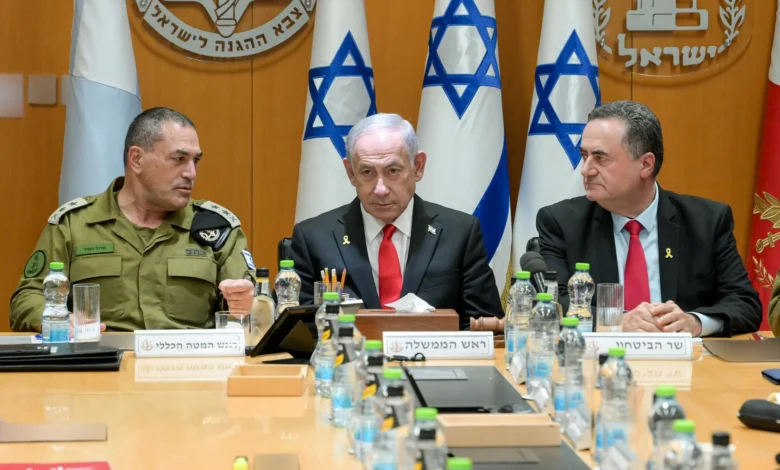
Israel’s security establishment has described the current phase of interactions between Washington and Tehran as a “point of extreme tension” and says Iran believes there may be a “deception” behind recent diplomatic efforts.
Israel has raised its alert level in anticipation of a possible escalation and surprise attack by Iran, an Israeli television channel reported on Tuesday. Israeli assessments suggest that Tehran could launch a preemptive strike if efforts to resume negotiations with the United States fail.
“In light of reports concerning attempts to restart negotiations between the United States and Iran, as well as the exchange of threats between US President Donald Trump and the Islamic Revolutionary Guard Corps, Israel is also preparing for the possibility of an escalation with Iran,” the privately owned Channel 12 said in a report.
The channel added that Israel’s security establishment was describing the current phase of interactions between Washington and Tehran as a “point of extreme tension,” noting that behind-the-scenes efforts were underway to resume negotiations between the two countries.
“However, the failure of these efforts could lead to a rapid deterioration of the situation. Israel’s security establishment is therefore making the necessary preparations,” it continued.
Channel 12 quoted an unnamed Israeli security source as saying: “The situation is sensitive and volatile, and I do not know where it will lead.”
“The Iranians do not appear prepared to make concessions, and matters could spiral out of control,” the source added.
According to the channel, Israeli assessments point to the possibility that Iran could launch a preemptive strike if diplomatic efforts fail to achieve progress. The assessments also linked this scenario to Tehran’s belief that a “deception” may lie behind the ongoing diplomatic moves.
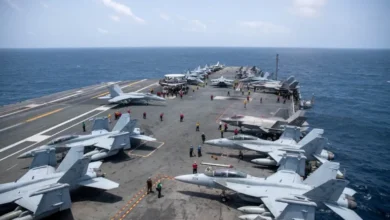
Channel 12 said Israeli assessments indicated that Iran could initially target US forces in the Gulf and the broader Middle East, while Israel might become a target at a later stage.
The Israeli military is reportedly conducting intensive preparations and has raised its alert level. These measures encompass both defensive and offensive capabilities and are being coordinated with the US military.
Israel had already maintained a heightened state of alert in recent weeks before raising it again as the Jewish holiday period began.
That period started with the Jewish New Year on September 12 and is due to conclude with Hanukkah on December 4.
The channel also reported that Israeli officials had examined several scenarios that could lead to an escalation during recent security consultations.
The discussions reportedly addressed Iran’s economic situation under the US blockade, as well as an Israeli operation in the Ali al-Taher Heights in southern Lebanon. According to Channel 12, Israeli officials regarded both factors as potential triggers for escalation.
On the night of September 10, a powerful explosion struck the strategic Ali al-Taher hill between the towns of Kfar Tebnit and Nabatieh al-Fawqa, north of the Litani River.
The Israeli military confirmed at the time that it had carried out demolitions targeting a network of tunnels and infrastructure belonging to Hezbollah.
Channel 12 said Israeli concerns also included scenarios involving Iranian missile launches toward Israel, as well as possible attacks against Israeli or Jewish targets abroad.
The Israeli assessments coincide with US statements concerning the possibility of resuming negotiations with Tehran.
On Sunday evening, US Permanent Representative to the United Nations Mike Waltz said during an event organized by the US news outlet Al-Monitor that the door remained open for Iran to return to the negotiating table.
The United States has recently carried out military strikes against sites in Iran as negotiations between the two countries remain deadlocked, despite their signing of a memorandum of understanding in mid-June.
The negotiations have stalled because of disagreements over navigation through the Strait of Hormuz, one of the world’s most strategically important routes for energy supplies and commercial goods.
Tehran responded by attacking what it described as US military facilities and equipment in several Arab countries. Some of the strikes, however, caused civilian casualties and damaged civilian infrastructure, prompting condemnation from the countries concerned, which demanded that the attacks cease.
On February 28, the United States and Israel launched a war against Iran that left thousands of people dead. Tehran responded with attacks against Israel and what it described as US sites in countries across the region.