Tehran’s Proxies in Africa: The Revolutionary Guards Replicate the Hezbollah Model
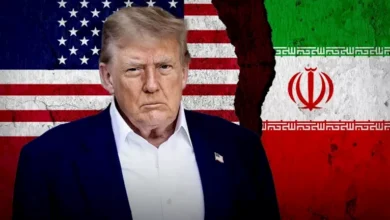
As the war between Iran and the United States fluctuates between cautious calm and tactical escalation intended to improve negotiating terms, Iran’s Islamic Revolutionary Guard Corps is reportedly taking advantage of the regional and international focus on Middle Eastern crises to reproduce the Hezbollah and Houthi models in Africa.
Informed intelligence sources and military field reports point to Iranian ambitions to establish military footholds across the continent by creating armed groups affiliated with Tehran through religious ideology and political loyalty.
According to the sources, while major international powers are seeking to strengthen their diplomatic, economic and cultural presence in Africa, Iran is conducting parallel operations away from public scrutiny. These activities are reportedly led by senior Revolutionary Guard commanders, particularly members of the Quds Force, which is responsible for overseas operations.
A Reserve to Offset Iranian Losses
Despite the intense secrecy surrounding these activities, Western and African intelligence agencies have reportedly uncovered a significant expansion of Tehran’s transnational networks across the continent, allegedly operating beyond established diplomatic norms and the accepted principles of international relations.
The assessments indicate that Tehran has spent years attempting to build ideological, operational and logistical influence in Africa to achieve two principal objectives.
The first is to compensate for major losses sustained by Iran and its allies in the Middle East following the severe Israeli strikes against Hezbollah, the declining influence of Iran-aligned militias in Iraq and the loss of Syria as an operational arena after the fall of Bashar al-Assad’s regime in late 2024.
The second objective is to use these networks to generate financial revenue or secure access to the energy and mineral resources found in several African countries.
This goal has assumed greater importance following recognition of the economic and logistical value of rare and precious minerals used in the production of electric vehicles, laptop computers, smart devices and artificial intelligence technologies.
From Soft Power to Operational Infiltration
In their analysis of Iran’s influence network in Africa, strategic sources, led by the Diálogo Américas website, say Tehran relies on a three-tiered strategy combining academic institutions, media outlets and parallel networks.
The sources add that this strategy draws on the process used to establish Hezbollah in Lebanon, the Houthi movement in Yemen and certain Shiite groups in Syria before the fall of the Assad regime.
Academic and ideological influence has reportedly become particularly entrenched through Al-Mustafa International University, which is described as the spearhead of the project.
The institution has branches or conducts activities in more than 17 African countries, extending from Senegal and Nigeria to Tanzania and South Africa.
According to the cited assessments, these institutions are used to cultivate an elite loyal to Iran and promote Twelver Shiite doctrine—Iran’s official religious denomination—within local communities.
The phase of academic and ideological penetration is reportedly followed by the creation of armed cells, initially equipped with light and medium weapons.
Once these groups become firmly established, they are gradually provided with heavy weapons and specialized strategic systems. The sources say this approach is currently being applied in West Africa and the Sahel region.
Nigeria’s El-Zakzaky Movement
In this context, the Islamic Movement in Nigeria, led by Ibrahim El-Zakzaky, has emerged as a model that reportedly mirrors Hezbollah in Lebanon.
The movement operates a Hausa-language media network, including Hausa TV, which targets audiences across the region.
It is said to be exploiting the security vacuum created by Western withdrawals from the African Sahel, particularly in Mali, Niger and Burkina Faso, along with the evident weakness of those countries’ security and military institutions.
The situation is further complicated by the Russian Africa Corps’ inability to fill the vacuum left by Western forces.
Another contributing factor is the fragile level of public support for national armies, which United Nations reports have accused of committing massacres against local populations.
After the military consolidation phase comes a third stage involving parallel financing and the establishment of logistical networks.
Security reports specializing in the tracking of suspicious financial flows have reportedly identified close links between Revolutionary Guard activities and what they describe as a new version of Hezbollah in West Africa.
Iran is accused of exploiting diaspora communities and black markets to finance these activities through the smuggling of goods and capital, alongside evident involvement in illicit trade routes.
Sudan and the Red Sea
According to the reports, Iran’s influence network is completed by its extension from western to eastern Africa.
Sudan and the areas bordering the Red Sea reportedly constitute a vital logistical corridor for Iran through cooperation with the Sudanese army led by Abdel Fattah al-Burhan.
The Revolutionary Guards in general, and the Quds Force in particular, are said to view Sudanese territory as a major gateway for establishing training centers and creating routes to transport weapons and equipment through Port Sudan toward regional flashpoints.
In this context, Tehran is reportedly relying heavily on the Houthi militias to provide it with strategic leverage through control over international shipping routes near the Bab el-Mandeb Strait and the Suez Canal.
Ultimately, strategic reports and security assessments examining Iranian influence in Africa conclude that Tehran is exploiting the geopolitical vacuum and the decline of Western influence across the continent to expand its economic, diplomatic and security gains.
According to these assessments, the expansion is intended not only to circumvent sanctions and break Iran’s international isolation but also to transform parts of Africa into a strategic rear area for maneuvering and exchanging deterrent messages with regional and international adversaries.