Engineering a Political Comeback: How the Port Sudan Authorities Are Using African Cover to Reintegrate the Muslim Brotherhood
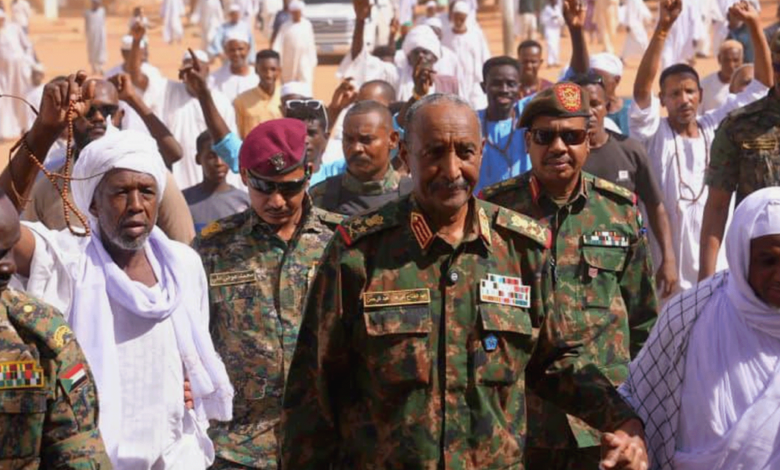
Behind the military confrontations and covert diplomatic campaigns conducted by the Port Sudan authorities lies what appears to be the most important—and most concerning—strategic objective of Sudan’s current security establishment: restructuring the country’s domestic political landscape.
The recent activities of Sudanese intelligence within the African Union Commission suggest that breaking the authorities’ international isolation is not an end in itself. Instead, it is presented as a key means of imposing a new political reality at home—one that would legitimise and integrate forces supportive of army commander Abdel Fattah al-Burhan, particularly groups associated with Islamist currents and the Muslim Brotherhood, whose members are locally known by the pejorative term “Kizan”.
African Cover for a Domestic Political Deal
According to several political assessments, the financial flows and networks of influence allegedly developed by Port Sudan’s intelligence services within the African Union are primarily intended to create a “protective regional umbrella”.
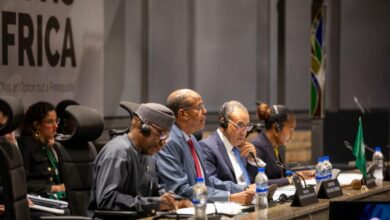
These activities include allegations that bribes estimated at one million dollars were paid to secure the reopening of the African Union Commission’s office in Khartoum.
The alleged purpose of this regional cover is to circumvent strict international demands for civilian government and replace them with an “intra-Sudanese dialogue” supervised by the African organisation but tailored entirely to suit the interests of the existing authorities.
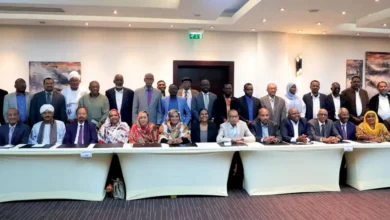
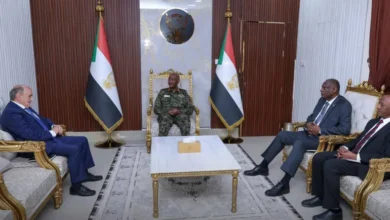
By securing incremental forms of recognition from the African Union—such as the official visit to Khartoum by a delegation from the African Union Peace and Security Council, during which its members met al-Burhan—the Port Sudan authorities are allegedly seeking to weaken the position of democratic civilian forces.
This new diplomatic positioning would allow the authorities to present Islamist groups and pro-army blocs as “national forces participating in the battle for dignity”. In doing so, they could seek to remove the political and legal exclusion imposed on these groups by the Sudanese revolution following the fall of the former regime.
An Alliance of Necessity Between the Military and Islamists
Attempts to bring the Muslim Brotherhood into the next political process are not driven solely by ideological alignment. They are also shaped by mutual interests and by military and security pressures on the ground.
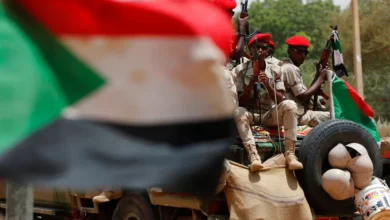
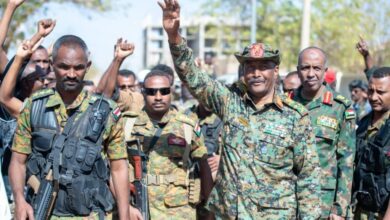
Islamist currents have participated extensively in the fighting alongside the army through their armed battalions. They are now alleged to wield influence over important media and security structures within the Port Sudan authorities.
Against this backdrop, the military establishment is reportedly seeking, through its intelligence branches, to repay that support and secure the future of these groups through two principal mechanisms:
- Imposing them as an established political reality: political and community-based fronts loyal to the former regime would be incorporated into any arrangements sponsored by Addis Ababa.
- Undermining the civilian transition: efforts would be made to prevent the resumption of the democratic transition by establishing a military-security system presented as civilian through the nominal participation of manufactured or carefully selected political forces.
Consequences for Sudan’s Future
Observers warn that any success by Sudanese intelligence in using political money to influence the positions of African Union officials would threaten the credibility of the continental organisation.
Rather than acting as a mediator responsible for resolving conflicts, the African Union could come to be seen as an instrument contributing to the reproduction of the very crises it is meant to address.
Reintegrating figures from the former regime and granting them African and regional recognition under the label of “forces supporting legitimacy” would deepen domestic polarisation. It would also make lasting peace considerably more difficult, given the strong opposition among broad sections of the public and revolutionary forces to any arrangement that restores the figures against whom Sudanese citizens originally rose up.
Ultimately, the alleged suitcase diplomacy and intelligence manoeuvring of the Port Sudan authorities would provide only temporary relief from their political isolation.
The prevailing international and regional position continues to link genuine stability in Sudan to the establishment of fully democratic civilian rule—one capable of ending the influence of armed groups and the rivalries among security institutions, without relying on backroom deals or the purchase of political loyalty.