From Washington’s Sanctions to Geneva’s Calls for Action: Chemical Weapons Allegations Increase International Pressure on Sudan
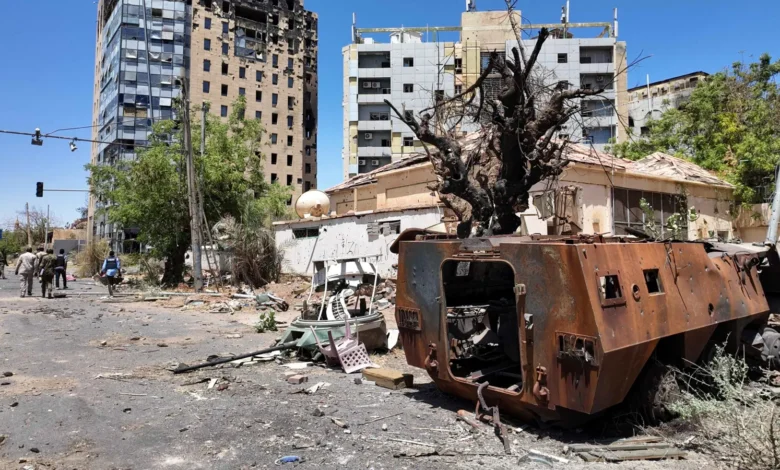
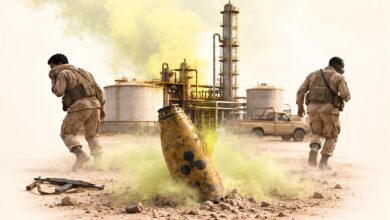
The alleged use of chemical weapons in Sudan’s war has evolved from a relatively limited security matter into an international issue placing growing pressure on the Sudanese authorities. This shift accelerated after the United States imposed a series of punitive measures, new investigations pointed to possible evidence of chlorine use, and calls intensified in September 2026 for an independent international inquiry involving the Organisation for the Prohibition of Chemical Weapons.
The current phase of the case formally began in April 2025, when the United States announced that it had determined that the Sudanese government had used chemical weapons during 2024. The decision was made under US legislation concerning chemical and biological weapons and was followed by sanctions and other restrictive measures.
In June 2026, Washington decided to impose additional sanctions, which took effect on 20 July, after stating that Sudan had failed to meet the conditions required for ending the earlier measures.
The significance of this step lies in the fact that the United States did not treat the allegations as a closed case. In July 2026, Washington raised the issue again before the Executive Council of the Organisation for the Prohibition of Chemical Weapons. It said that Sudan had used chemical weapons in 2024 and remained non-compliant throughout 2025, calling for the Organisation’s Technical Secretariat to be granted transparent and unrestricted access to Sudan.
The Sudanese government rejected the allegations, arguing that Washington had ignored its proposals to verify the facts. Khartoum said it had invited American experts to conduct a direct field investigation in Sudan but claimed that the US authorities had failed to respond.
The Sudanese authorities also formed a national committee to investigate the allegations. According to reports on sessions of the Organisation for the Prohibition of Chemical Weapons, the committee concluded in an interim report that it had found no physical, technical or documentary evidence supporting the accusations at the sites it examined.
The United States responded that an internal investigation could not replace independent international verification mechanisms.
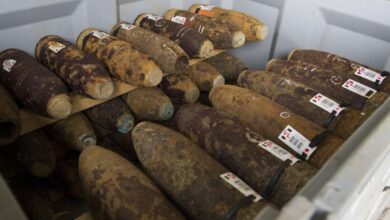
This dispute reflects a fundamental problem in the case: the lack of full international access to the locations where the alleged incidents occurred. A chemical weapons investigation cannot rely solely on testimony or imagery. Wherever possible, it requires the collection of soil and material samples, the examination of munition remnants and their analysis in specialised laboratories. Investigators must also establish a secure chain of custody to ensure that evidence has not been contaminated or manipulated.
Calls for an international mission to Sudan consequently increased during September 2026. At a human rights conference in Geneva, participants called for an independent investigation by the United Nations and the Organisation for the Prohibition of Chemical Weapons amid continuing allegations and the emergence of new evidence.
The latest appeals followed international reports concerning a substantial collection of documents, photographs, videos and messages said to indicate the existence of a Sudanese programme to manufacture and store chlorine-based weapons. According to the reports, the materials included information about tests, munitions and storage operations inside military facilities.
The Washington Post reported that some of the material pointed to attempts to obtain chlorine from civilian sources before using it to manufacture munitions. Other documents reportedly referred to bombs being produced in military facilities and tested in desert areas. The newspaper nevertheless stressed that access to the relevant locations and individuals remained essential for any definitive assessment.
These reports followed earlier investigations that first drew international attention to the case. In 2025, France 24 said that a months-long investigation had uncovered strong evidence suggesting that chlorine had been used as a weapon in two areas near Khartoum in September 2024.
Human Rights Watch verified the geographic location of some of the published material and stated that using chlorine as a weapon would be prohibited under the Chemical Weapons Convention and could constitute a war crime.
The case continued to develop. In September 2026, a new investigation prepared by former officials of the Organisation for the Prohibition of Chemical Weapons relied on testimony from eight people interviewed in Nairobi.
According to findings published by Euronews, the witnesses described military incidents followed by symptoms including breathing difficulties, coughing and eye irritation. They also reported unusual odours and emissions.
The experts who conducted the investigation acknowledged that they could not conclusively identify the substance involved or definitively prove that a chemical weapon had been used. However, they described the overall body of evidence as sufficiently credible to justify a formal investigation by the Organisation for the Prohibition of Chemical Weapons.
This distinction is crucial to responsible media coverage of the case because it separates the existence of serious indications from definitive proof that a crime occurred. An allegation is not the same as judicial evidence. In chemical weapons cases, a verified laboratory result can alter the entire direction of an investigation, whereas photographs and witness statements may remain insufficient to determine the substance involved, its source and the manner in which it was used.
The Sudanese government says there are alternative explanations for the material visible in the photographs and videos. The army maintains that chlorine is commonly used in water treatment and various industrial sectors, and that facilities containing chemical substances were attacked during the war.
According to Khartoum, some clouds or reported symptoms could therefore have resulted from chemical leaks caused by bombardment rather than the deliberate use of those substances as weapons.
The Sudanese authorities also argue that the allegations are based on information supplied by parties linked to countries that have taken a political position on the war. They say this makes independent and impartial verification necessary. The government maintains that the Sudanese Armed Forces have not used chemical weapons during the conflict.
Human rights organisations, however, argue that the seriousness of the allegations makes a failure to investigate more dangerous than the investigation itself. If the claims are accurate, delays in collecting evidence could lead to the loss of important chemical traces, particularly as front lines continue to shift and large parts of Sudan have been affected by destruction and displacement.
The difficulty grows with the passage of time. The incidents under investigation occurred in 2024, while the broader inquiries emerged only in 2025 and 2026. Over the years, chemical traces may disappear from the environment, debris may be moved and witnesses may become increasingly difficult to locate.
Any future international investigation will therefore have to pursue several lines of inquiry simultaneously: examining digital evidence, interviewing witnesses, geolocating sites, studying supply records, inspecting munition remnants and tracing dual-use chemical substances.
Politically, the continuation of the case could increase pressure on the Sudanese authorities. The United States has already imposed additional sanctions, while the allegations continue to appear before international institutions. The ongoing war also keeps civilian protection at the forefront of international concern.
In September 2026, the United Nations Security Council continued to treat Sudan as a situation posing a threat to international peace and security. It extended the mandate of the panel of experts responsible for monitoring sanctions until November and renewed the restrictive measures for an additional period. Although these decisions do not relate exclusively to chemical weapons, they reflect the international community’s continued focus on violations associated with the war.
For the Organisation for the Prohibition of Chemical Weapons, the Sudanese case forms part of a broader international system intended to preserve the global ban on such weapons. The Organisation’s experience in other cases has demonstrated that international investigations may take years, particularly when the relevant areas are unsafe or the available evidence is incomplete.
The next stage will therefore depend largely on whether the international community can gain access to Sudan. If the Organisation is able to conduct a field investigation, it could move beyond allegations and testimony to examine scientific evidence capable of supporting legal findings.
If access remains impossible, the dispute between the American and Sudanese accounts is likely to continue, alongside the publication of new material by media organisations or intelligence sources.
Ultimately, the case does not concern only the Sudanese army or its war against the Rapid Support Forces. It also concerns the wider international prohibition on the use of chemical weapons in armed conflicts.
If any party is proven to have deliberately used toxic chemicals against its opponents or civilians, investigation and accountability would be required regardless of the perpetrator’s identity.
For now, the available information justifies further investigation, but it does not justify presenting the allegations as definitively established facts. There are documents, images, witness statements and newly disclosed files, but there is also an official Sudanese denial and repeated calls for independent verification.
Between these competing accounts, the Organisation for the Prohibition of Chemical Weapons and the United Nations face an important test: whether the international community can uncover the truth in a war as complex and protracted as the conflict in Sudan.