Leave us alone, al-Burhan: Sudanese anger moves beyond social media, putting the army chief’s grip on power to a new political test
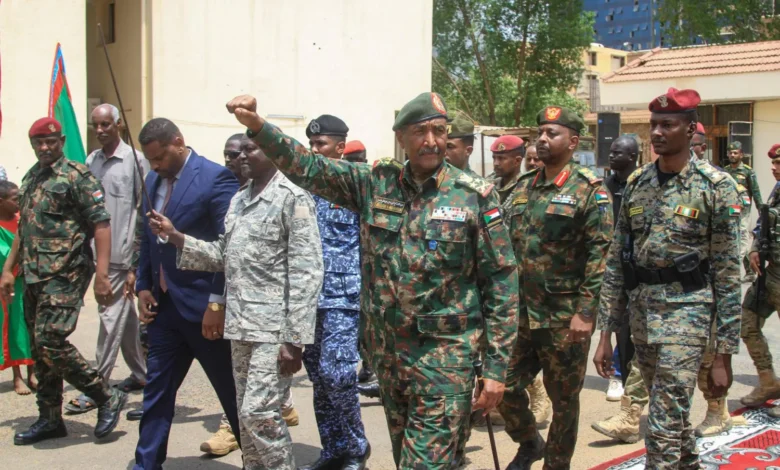
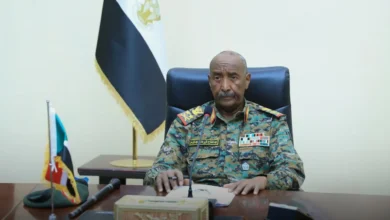
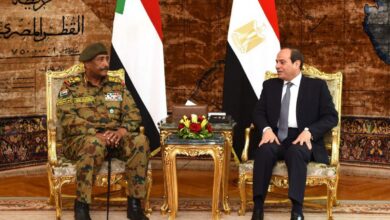
Over recent weeks, the expression “Ikhtana ya Burhan” (“Leave us alone, al-Burhan”) has become a symbol of growing political and social opposition to Abdel Fattah al-Burhan’s continued leadership of Sudan. The movement has emerged amid ongoing warfare, worsening economic and humanitarian crises, and persistent difficulties in achieving a meaningful political breakthrough.
Derived from colloquial Sudanese Arabic, the expression means “Leave us alone” or “Go away.” In the context of the campaign, it has acquired an explicit political meaning, reflecting calls for al-Burhan to step down and pave the way for a new phase that would end military domination of state institutions.
What distinguishes the campaign is its use of a concise popular expression carrying considerable anger and frustration. It encapsulates participants’ belief that Sudan has reached a point where political promises are no longer sufficient to persuade citizens to wait for different outcomes.
From opposition to the war to calls for al-Burhan’s departure
The campaign began gaining significant momentum on October 21, 2026, before reaching high levels of engagement on October 23 and 25, coinciding with the fifth anniversary of the October 25, 2021, military coup led by al-Burhan with the participation of Rapid Support Forces (RSF) commander Mohamed Hamdan Dagalo.
According to monitoring data collected by the fact-checking platform Misbar, more than 27,000 posts associated with the hashtag were published by approximately 8,000 accounts on X and Facebook during the monitoring period, which ended on November 15.
These figures illustrate the campaign’s extensive reach. They do not necessarily establish that all posts originated from individuals inside Sudan, that every account represented an independent individual, or that online engagement alone accurately reflected the views of the entire Sudanese population.
The significance of the campaign lies in the substance of its messages. Sections of the discourse critical of the authorities have moved beyond opposition to the war and condemnation of deteriorating living conditions, increasingly holding the leadership responsible for administering state institutions in army-controlled areas politically accountable.
Participants have linked al-Burhan’s continued hold on power to the failure to end the war, declining public services, worsening displacement, economic deterioration, and the continuing absence of a clearly defined civilian process capable of restructuring governing institutions.
The debate has consequently shifted from the question of how to end the war to a more sensitive issue: who bears political responsibility for the continuation of the crisis, and can the same leadership continue governing the country without scrutiny or accountability?
The coup anniversary reopens the debate over political authority
The campaign’s growing prominence in October is closely connected to Sudan’s political memory.
On October 25, 2021, al-Burhan dismantled the civilian-military partnership responsible for overseeing the transitional period following the overthrow of Omar al-Bashir’s government, triggering widespread opposition from civilian political forces and Sudanese society.
Sudan subsequently entered a new period of political instability before war erupted between the army and the Rapid Support Forces on April 15, 2023.
For al-Burhan’s critics, these developments represent successive stages of a political trajectory that culminated in the disruption of the civilian transition and the subsequent outbreak of war.
In a report published on October 24, Al-Ain News cited Sudanese politicians and analysts who argued that the “Ikhtana” campaign reflected a shift in public opposition from criticism of the consequences of the war toward scrutiny of the country’s political and military decision-making leadership.
Orwa al-Sadiq, a senior figure in the National Umma Party, also linked the campaign to what he described as al-Burhan’s exhaustion of his political opportunities. He called for an end to the reproduction of military rule and the establishment of a civilian transitional authority.
The cost-of-living crisis fuels political protest
The widespread circulation of the hashtag is closely linked to the economic and social conditions confronting Sudanese citizens.
The consequences of the war have extended to markets, banking institutions, manufacturing, agriculture, transportation, healthcare, and education.
Widespread displacement, declining economic activity, and institutional disruption have placed additional pressure on Sudanese households, amid growing difficulties in securing food, medicine, and adequate income.
Against this backdrop, campaign participants believe that the continuation of the war is associated with a deeper political crisis stemming from the absence of a civilian authority capable of subjecting military and economic decisions to public accountability.
These demands are reflected in posts calling for an end to the fighting, the termination of military rule, accountability for those responsible for violations, and the reconstruction of state institutions on civilian foundations.
Could the campaign evolve into a protest movement?
The most important question now concerns the ability of the digital campaign to develop into an organized political movement.
Social media engagement can reveal widespread public anger. However, it remains insufficient on its own to establish the existence of grassroots organization, unified political leadership, or an agreed transitional program.
Sudan’s prevailing security and humanitarian conditions also make organizing large-scale protests particularly challenging.
Nevertheless, the emergence of calls to end military rule in Port Sudan, which has become a principal center of army-aligned political authority, adds a new dimension to the situation.
On November 25, local media reported protests in the city during which demonstrators called for an end to military rule and changes in the administration of the Sea Ports Corporation.
These developments remain insufficient to establish that the digital campaign has evolved into an organized nationwide movement. They nevertheless suggest that opposition to government policies and administrative practices now extends beyond online platforms.
The political message behind “Ikhtana”
Ultimately, the “Ikhtana ya Burhan” campaign reveals a shift like discourse critical of Sudan’s governing authorities.
Beyond criticizing military decisions and demanding improved economic conditions, some participants are now calling for a change in political leadership and the establishment of a civilian authority responsible for overseeing the next phase.
The campaign’s ability to exert lasting influence will depend on whether it develops into clearly articulated political demands, as well as on civilian political forces’ capacity to overcome their divisions and present a realistic vision for ending the war and rebuilding state institutions.
The continuation of the crisis is increasingly placing the political legitimacy of Sudan’s governing authorities under public scrutiny. The expression “Ikhtana” has become an integral part of that debate, embodying demands for leadership change, political accountability, and an end to military rule.