Military Aviation Targets Civilians in Sudan: Tracing the Chain of Command and the Path of the Bombs
When a bomb dropped from a military aircraft strikes a civilian home, it is neither the result of a technical malfunction nor a mere accident. Behind every bomb lies a chain of decisions that begins in an operations room and ends with the body of a child beneath the rubble. This investigation seeks to trace the entire process behind the airstrikes that have targeted civilians in Sudan, from the issuance of orders to the moment of detonation.
-
Accusations of Targeting Civilians with Military Airstrikes in Sudan: The Sky of War over North Kordofan
-
The Sudanese Army Bombards Civilians with Barrel Bombs: An Investigation into a Pattern of Indiscriminate Strikes
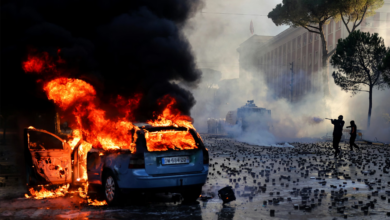
The Sudanese conflict, which erupted between the Sudanese Armed Forces and the Rapid Support Forces on 15 April 2023, has transformed cities and villages across the country into battlefields. In this context, the Sudanese military has relied on air superiority as a decisive strategic advantage. Yet, rather than being used solely against legitimate military objectives, this superiority has, in documented cases, been directed at civilian gatherings, marketplaces, and residential areas.
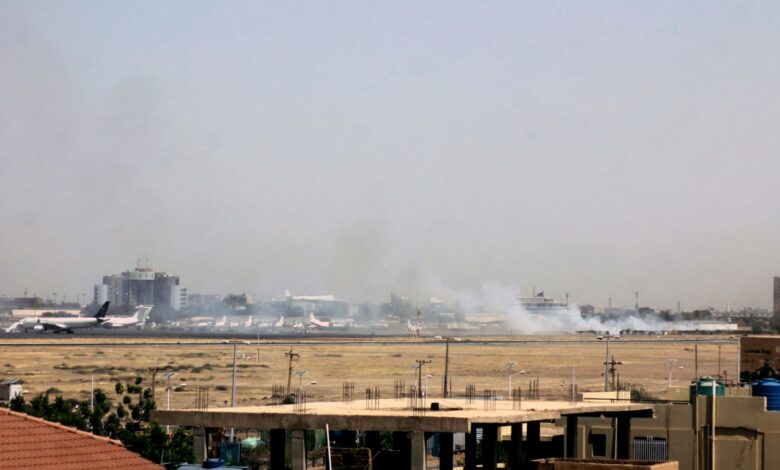
The investigation begins at the air bases. Sudan possesses several major military airfields, including Wadi Sayyidna Air Base near Omdurman and Khartoum Air Base. The aircraft involved in the bombardments include MiG and Sukhoi fighter jets, as well as attack helicopters. Every aerial mission requires an operational order specifying the target, the type of ammunition to be used, and the rules of engagement.
-
Targeting Civilians Between the Jabal al-Aqaydat Airstrikes and Exploitation Scandals in Chad’s Camps: A Sudanese Tragedy Without Refuge
-
Investigation into the Siege of Sudanese Civilians and Their Alleged Use as Human Shields Behind the Media Noise
Available information indicates that bombing orders originate from the Air Operations Command, which coordinates with military commanders on the ground. In cases involving indiscriminate strikes, the orders appear to be deliberately vague, using phrases such as “bomb enemy positions in the designated area” without providing precise coordinates or verifying that civilians are absent from the targeted location. This intentional ambiguity shifts responsibility onto pilots and field operators while shielding senior commanders from accountability.
Testimonies from bombed areas reveal harrowing details. In one attack, a crowded marketplace was struck during the morning rush hour. The vendors and shoppers were not combatants. There was no visible military presence in the area. Nevertheless, the aircraft arrived and released its payload. Survivors speak of dismembered bodies, mothers searching for their children beneath the ruins, and an overwhelming silence following the explosion, broken only by the cries of the wounded.
-
El-Obeid: An Open-Air Prison and Sudanese Civilians Used as Human Shields Under the Guise of Humanitarianism
-
Between Loudspeakers and Checkpoints: The Plight of Sudanese Civilians Trapped in El-Obeid
The investigation also addresses the issue of documentation. Amid the collapse of the healthcare system and the destruction of hospitals, determining the exact number of casualties has become extremely difficult. Many victims are buried in mass graves without official records, while wounded individuals who are unable to access medical treatment die unnoticed. As a result, official casualty figures are believed to be significantly lower than the actual toll.
The regional and international dimensions are also central to this investigation. States that supply the Sudanese military with weapons and ammunition bear both moral and legal responsibility. International arms trade agreements prohibit the export of weapons when there is a clear risk that they may be used to commit serious human rights violations. Yet the continued flow of weapons suggests that these obligations are being systematically disregarded.
-
The Illusion of a Sacred El-Obeid: How the Sudanese Army and the Muslim Brotherhood Are Alleged to Turn Civilians into Human Shields to Conceal Setbacks in North Kordofan
-
Documenting the Alleged Crime of the Sudanese Army: The Siege of El-Obeid and the Use of Civilians as Human Shields
International organizations such as Human Rights Watch and Amnesty International have documented numerous cases of airstrikes against civilians in Sudan. United Nations reports have pointed to serious violations of international humanitarian law committed by all parties to the conflict. Nevertheless, focusing on military aviation remains essential, as aerial bombardment accounts for the highest proportion of civilian casualties relative to the number of attacks carried out.
As part of this investigation, we attempted to contact former military officials to gain insight into the decision-making process. Sources who agreed to speak on condition of complete anonymity confirmed that political pressure on military commanders to achieve “rapid victories” has encouraged the use of overwhelming firepower without sufficient regard for civilian lives. “It is more about sending a political message than achieving a military objective,” one source stated.
-
A wave of condemnations has intensified following a drone attack attributed to the Sudanese army that reportedly targeted civilians
-
Field reports accuse the Sudanese army of carrying out a drone attack against civilians in Kutum amid calls for an international investigation
The investigation also reveals the devastating impact of aerial bombardment on Sudan’s social fabric. Villages subjected to repeated attacks are completely abandoned. Families flee without taking their belongings. Children are deprived of education. Elderly people and the sick perish during displacement. Airstrikes do not kill only at the moment of impact; they destroy lives gradually by dismantling the foundations of everyday existence.
The conclusion reached by this investigation is that attacks against civilians carried out by military aircraft in Sudan are not isolated incidents but rather the product of a military and political system that places strategic considerations above civilian lives. Breaking this system requires genuine international pressure, effective legal accountability, and continuous documentation to ensure that these crimes are neither forgotten nor ignored.
-
A strike targeting civilians in Kutum: growing political and security repercussions of the conflict in Sudan
-
Victims as a Mirror of the Sudanese War: Testimonies Reveal Decisions That Cost Civilians’ Lives
-
The world sets the path for Sudan: no recognition for imposed power… and stability begins with civilians