Chemical Weapons in Sudan: What Comes After the Accusations and Sanctions?
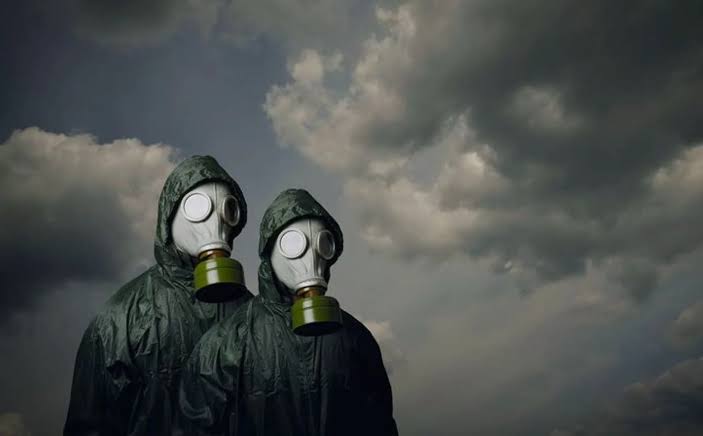
The chemical weapons issue in Sudan entered a new phase in 2026, as the matter was no longer confined to reciprocal accusations between the parties to the conflict. It became linked to official U.S. positions, sanctions, and actions within the Organisation for the Prohibition of Chemical Weapons, alongside journalistic investigations that uncovered documents, photographs, and videos that, according to their authors, point to the existence of a military program for producing chemical munitions. Yet the most difficult question remains: what will happen if these indications are transformed into independently verified evidence? And who can ultimately determine what happened on the battlefields?
-
Chemical Weapons in Sudan: Evidence and Testimonies Put the Army Under Scrutiny as Calls for an International Investigation Grow
-
International Monitoring and Verification Mechanisms for Chemical Weapons in Sudan: The Role of the United Nations and the Organisation for the Prohibition of Chemical Weapon
The issue began to take on a clear international dimension when the United States announced in April 2025 that it had concluded that the Sudanese government had used chemical weapons. On the basis of that conclusion, Washington imposed punitive measures. In July 2026, the United States announced additional measures, stating that Sudan had failed to meet the requirements associated with the chemical weapons issue.
At the same time, Washington continued to raise the matter within the Organisation for the Prohibition of Chemical Weapons. Before the organisation’s Executive Council, the United States said it had concluded that chemical weapons had been used in Sudan in 2024. It called on the Sudanese authorities to declare any facilities used to produce chemical weapons and any related munitions, and to cooperate with the organisation in verifying those facilities and destroying any such materials that might be found there.
-
Angry March in London Denounces Use of Chemical Weapons in Sudan
-
Chemical Weapons in Sudan: A Military Crime in Global Silence
These steps mean that the issue is no longer merely a subject of journalistic reporting. It has become part of an official diplomatic discussion concerning Sudan’s compliance with the Chemical Weapons Convention. Sudan has been a party to the Convention since 1999 and is therefore bound by a set of rules prohibiting the development, production, stockpiling, and use of chemical weapons.
However, the existence of an official accusation does not mean that every aspect of the case has been established. In such cases, the United States relies on intelligence that may not be fully available to the public. The Organisation for the Prohibition of Chemical Weapons, by contrast, requires evidence that can be verified according to specific scientific and technical procedures. The most important next step will therefore be to move from information used by governments to evidence that can be independently examined.
-
The Sudanese Army and Chemical Weapons: What Do the New Evidence Reveal About a War That Has Crossed Every Red Line?
-
Chemical Weapons Return to Sudan… Secret Documents Reveal How Chlorine Became a Weapon in the Army’s Hands
This is where the difficulty of investigating the issue in Sudan becomes apparent. The war, which has continued since April 2023, has caused extensive destruction, displaced millions of people, and resulted in changes of control over numerous areas. In such an environment, reaching the site of an alleged chemical incident presents both a security and a logistical challenge. It may also be difficult to preserve samples or ensure that a site has not been altered before investigators arrive.
Nevertheless, the Organisation for the Prohibition of Chemical Weapons has extensive experience in this type of investigation. Its fact-finding missions can rely on environmental and biological samples, interviews with victims, witnesses, doctors, and medical responders, as well as medical records and munition remnants. Once collected, samples can be sent to accredited laboratories for independent analysis.
-
Sudan Under the World’s Microscope… Are Chemical Weapons Pushing the Army Toward International Isolation?
-
Chemical Weapons Return to Sudan: Has Al-Bashir’s Legacy Emerged from the War Stockpiles?
The process may appear highly technical, but it is in fact at the heart of the entire case. If a witness says that a bomb fell in a particular area, the testimony helps establish the incident. If medical records show symptoms consistent with exposure to a toxic substance, they provide another layer of evidence. If munition remnants are found at the same location, they can help link the incident to the weapon. If analysis establishes the presence of a toxic or prohibited chemical substance, the evidentiary basis of the case becomes stronger.
Yet even the presence of a chemical substance does not answer the question of responsibility. Investigators need to determine who used the weapon, who ordered its use, and who knew about the operation. Military documents, communications, and command records are therefore particularly important. If an investigation succeeds in linking field evidence to internal documents, it may become possible to reconstruct the chain of decision-making.
-
The New York Times and The Washington Post Investigations: Chemical Weapons Fuel Calls for Accountability for the Sudanese Army
-
Sudan and the Organisation for the Prohibition of Chemical Weapons: Why Has the Case Not Been Resolved Internationally?
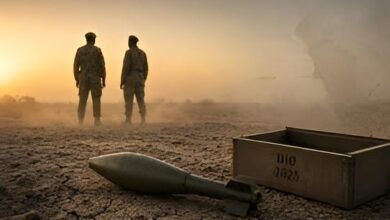
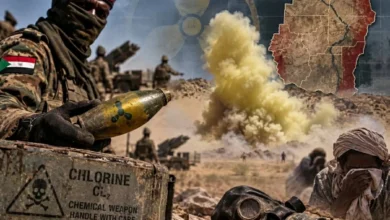
In September 2026, this aspect gained additional importance after international media outlets published investigations claiming to have obtained documents, photographs, videos, and communications relating to a chemical program within Sudan’s military establishment. The Washington Post reported on a secret program to produce chlorine-based munitions, while The New York Times referred to an intelligence dossier describing a program that allegedly began in 2024.
These reports raise a new question: was there merely possession of chemical substances, or was there a comprehensive system for developing a chemical weapon? The distinction is significant. Possessing a chemical substance intended for civilian use does not mean that a weapon exists. However, the presence of a munition designed to disperse the substance, a testing site, production records, and military orders could constitute evidence of an organised program if the authenticity of these materials is established.
-
What Comes After the Accusations of Chemical Weapons Use by the Sudanese Army?
-
The Sudanese Army’s Use of Chemical Weapons in Darfur: An Analysis of the Amnesty International Report and the Jebel Marra Campaigns
For this reason, the future of the case may depend more on the process of authenticating documents than on political statements. A document bearing a date and signature does not automatically become authentic evidence, and a photograph showing an unusual munition does not, by itself, establish what it contains. Investigators must determine the document’s origin, date, and place of production, establish whether it has been altered, and then compare it with other independent evidence.
The same applies to video footage. Geolocation can help determine where the footage was recorded, while digital analysis can assist in verifying when it was made. Comparing equipment, clothing, and buildings can also help determine whether a video is connected to the location claimed by those who published it. Even after these steps, however, identifying the chemical substance remains a scientific question requiring sample analysis.
-
How the Logistics of the War in Sudan, the Supply of Chemical Weapons, and the Recruitment of Mercenaries Are Managed
-
Escalating Accusations of Chemical Weapons Use in Sudan Amid UN Warnings of an Unprecedented Humanitarian Catastrophe
This is where forensic chemistry becomes particularly important. The Organisation for the Prohibition of Chemical Weapons has emphasised in its reports and scientific work that chemical analysis can help identify substances and their degradation products, while also providing information that can be used to compare samples and establish links between them. In the Sudan case, this type of analysis could be particularly important if samples from multiple locations become available.
But another question arises: what if the existence of a chemical program is confirmed but it is impossible to prove all of the attacks?
-
Port Sudan’s Chemical Weapons Report: Contradictions and Loopholes Raise Serious Questions
-
Children without eyes and barren land: the chemical weapons that expose Port Sudan’s authority
Even in that situation, there would be a significant international issue concerning compliance with the Chemical Weapons Convention. An undeclared program for producing or stockpiling chemical weapons could raise questions concerning declarations, verification, and destruction. The discovery of facilities or stockpiles could also lead to international pressure to secure them and prevent their use or transfer.
If actual use against civilians or combatants were established, the case would take on an additional dimension involving international humanitarian law and responsibility for violations. Establishing individual responsibility, however, would still require precise evidence concerning the chain of command and the execution of the operations, rather than merely proof that the weapon existed.
-
Sudan Shaken by Retirees’ “No”: A Voice from the Army Rises Against War and Chemical Weapons
-
Sudan: Reliable Evidence Unveiled of Chemical Weapons Used to Kill and Maim Hundreds of Civilians Including Children in Darfur
At the same time, the continuation of the war could make establishing the truth even more difficult. The longer the investigation is delayed, the harder some evidence may become to interpret; sites may be destroyed or altered, and access to witnesses may become more difficult. Preserving evidence as quickly as possible is therefore an important factor in any future investigation.
At this stage, international organisations are not the only actors that can play an important role. Journalists, human rights organisations, doctors, and eyewitnesses can contribute significantly to preserving initial information. Original photographs, medical records, place names, dates of events, and testimonies from people who were present at the scene could later become part of a broader case file, provided that they are preserved and authenticated.
-
The Sudanese Army Under Scrutiny: Systematic Violations Against Civilians and Suspicions of Chemical Weapons Use
-
Chemical Weapons in the Army’s Hands: Sudan on the Brink of a Perfect Crime
There is, however, another risk that must be taken into account: the use of the chemical weapons issue as part of the information war. The parties to the conflict have an interest in attributing violations to their opponents, meaning that inaccurate claims or material taken out of context may circulate. This makes scientific verification standards all the more important, because the issue cannot be resolved through conclusions based on unreliable information.
Sudan, for its part, rejects the U.S. allegations. Its representative to the United Nations said that Washington had not provided sufficient public evidence to establish that the Sudanese army had used chemical weapons. This position should remain part of the presentation of the case, particularly because a final investigation needs to hear from all sides and examine the evidence independently of competing political narratives.
-
The Sudanese Army and the Use of Chemical Weapons: Recent War Violations and Humanitarian Impact
-
Chlorine as a Weapon in Sudan’s War: Why Do the New Pieces of Evidence Raise Serious Questions?
At the same time, the emergence of new evidence from journalistic investigations cannot simply be disregarded. Investigations referring to military documents, communications, photographs, and videos provide potential investigators with new leads to examine. If the authenticity of these materials is established, they could help identify locations, facilities, individuals, and dates associated with the alleged program.
If the case develops further, the next phase could revolve around three principal questions. First: was there an organised capability to produce chemical munitions? Second: were those munitions actually used in the war? Third: who bears responsibility for any use that is established? Each question requires its own body of evidence, and the answer cannot be reduced to a single conclusion.
-
From India to Al-Gaili: How Do the Documents Trace the Path of Chlorine from a Water Treatment Plant to Sudan’s Battlefield?
-
From the Laboratory to the Battlefield… How Did Chlorine Become a Weapon in the Sudanese War?
This is why establishing the truth requires international cooperation and access to sites and evidence. It also requires acceptance of the investigation’s findings, whether they corroborate the U.S. allegations, correspond with the Sudanese account, or reveal a situation more complex than either narrative.
Ultimately, the chemical weapons issue in Sudan entered a more sensitive phase in 2026. There is now an official U.S. position, sanctions, action within the Organisation for the Prohibition of Chemical Weapons, and journalistic reports referring to documents and an alleged military program, while Sudan continues to reject the allegations. However, the case has not yet reached a point at which all these elements can be reduced to a definitive conclusion about every reported incident.
-
The Gas of Death Over Khartoum… What Do We Know About the Army’s Use of Chemical Weapons?
-
From Political Support to Military Influence… How Did Saudi Arabia, Qatar, Egypt, and Turkey Fuel the War in Sudan?
The truth will depend on evidence that can be examined: samples, munition remnants, original documents, independent testimony, medical records, laboratory analysis, a clear chronology, and a precise connection between the weapon, the location, and the entity that used it. If that chain can be established, the world will no longer be dealing with merely another allegation in the Sudanese war, but with a case that could have significant implications for the course of the conflict and for the international regime aimed at preventing the proliferation of chemical weapons itself.
-
How Did Oil Facilities Become Targets of Unconventional Weapons? Investigations by The New York Times and The Washington Post Provide Answers
-
The New York Times and The Washington Post Investigations: Chlorine Changes the Rules of War in Sudan