Mahmoud El-Ebary Under Sanctions: How Did His Name Become Linked to the Muslim Brotherhood’s Organizational Structure?
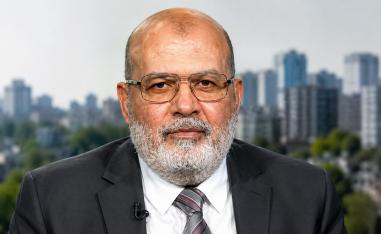
For decades, Mahmoud El-Ebary remained largely out of the spotlight, managing some of the most sensitive files within the Muslim Brotherhood’s international organization from behind the scenes. The latest U.S. sanctions, however, have brought him into the public eye and dealt another blow to the Brotherhood’s financial and organizational networks and its activities across Europe.
-
Echo-less rumors: Egyptians’ awareness foils the Muslim Brotherhood’s plan ahead of the January 25 anniversary
-
The Muslim Brotherhood Has Betrayed the Egyptian Army Since the 1948 War… A Journalist Presents the Evidence
El-Ebary, who serves as secretary-general of the Muslim Brotherhood’s international organization, is described within some circles of the movement as one of its leading organizational and financial architects, as well as a figure with considerable influence across its networks spanning several European countries.
On Thursday, the U.S. Department of the Treasury designated El-Ebary, an Austrian national residing in the United Kingdom, along with three individuals and three entities that the department said had been used by the Muslim Brotherhood as fronts to finance its activities and the Palestinian Hamas movement.
-
Contradictions in the Egyptian Discourse: Between Declared Hostility Toward the Muslim Brotherhood and Implicit Cover for Affiliated Factions
-
Their Hands Stained with Egyptian Blood: Who Are the Muslim Brotherhood Figures Yahya Moussa and Alaa al-Samahi?
Under the decision, any financial assets belonging to El-Ebary that fall under U.S. jurisdiction are frozen. U.S. citizens and companies are also prohibited from conducting transactions with him or with the individuals and entities covered by the sanctions.
The decision represents a direct blow to a figure whose name has been associated for years with the management of several files within the international organization, particularly those involving financial and organizational networks operating from Europe.
-
The Egyptian Media Syndicate responds to the Muslim Brotherhood’s lies about Egypt’s stance on the Palestinian cause
-
The Muslim Brotherhood and Lies: The group promotes old videos to deceive Egyptian public opinion
Who Is Mahmoud El-Ebary?
According to sources familiar with the affairs of the Muslim Brotherhood, Mahmoud El-Ebary, who has also been described as the movement’s “financial architect,” is one of its most prominent current leaders, with a role that extends far beyond his official position as secretary-general of the international organization.
According to these sources, El-Ebary was not merely an administrative official within the organization. Rather, he sought to build long-term influence, becoming one of the key players in managing sensitive files, while aspiring to become the movement’s acting supreme guide.
-
Did the Muslim Brotherhood aim to destroy the Egyptian identity? Details
-
From the Middle Leadership of the Muslim Brotherhood… Harsh Sentences Against a Brotherhood Cell Aimed at Striking the Egyptian Economy
Born in 1952, El-Ebary reportedly became associated with the Muslim Brotherhood in the 1960s through what was known as the “1965 Organization,” which was linked to Sayyid Qutb, before leaving Egypt and moving to Europe.
In Europe, El-Ebary settled in Austria and participated in building the movement’s networks and institutions, alongside several prominent figures associated with the international organization, including Anas al-Shuqfa, Ibrahim al-Zayyat, Youssef Nada, and Said Ramadan, the son-in-law of Muslim Brotherhood founder Hassan al-Banna.
Over the years, El-Ebary obtained Austrian citizenship and expanded his activities within institutions and organizations associated with the movement in Austria and the United Kingdom, moving between Vienna and London and benefiting from the growing presence of the international organization in Europe.
-
Egyptian Researcher: The Muslim Brotherhood Sanctify the Writings of Hassan el-Banna and Cannot Review Them
-
This is what Al-Ghamry revealed about the Muslim Brotherhood’s stance on reconciliation with the Egyptian regime
A Man Managing Sensitive Files from Behind the Scenes
Unlike several Muslim Brotherhood leaders who became visible figures on the media and political scene, El-Ebary spent many years working away from the spotlight, focusing on the organization’s most sensitive financial and organizational files.
His influence reportedly became particularly evident during his work alongside Ibrahim Munir, the former secretary-general of the international organization, who later became acting supreme guide from late 2020 until his death in 2022.
According to the sources, El-Ebary exercised considerable influence over the organization’s decision-making process, to the extent that a number of important files reportedly passed through him before receiving approval.
-
Wide Egyptian rejection of the European Parliament’s report on elections in Egypt: It serves the Muslim Brotherhood Agenda
-
The Muslim Brotherhood launches a preemptive campaign to cast doubt on the Egyptian presidential elections… Details
Information about him remained relatively limited compared with the extent of his alleged influence and largely concerned his links to the management of companies and institutions operating from London.
Among the entities whose management has been associated with his name are Nile Valley Trust and Allam Media Services, both registered at the same address on Cricklewood Broadway in London, an address associated with one of the Muslim Brotherhood’s offices in the British capital.
El-Ebary was also reportedly associated with the management of “Risalat al-Ikhwan,” one of the movement’s media platforms in the West, as well as with the supervision of a mailing group used to communicate and coordinate between parties linked to the organization.
-
Politicians Reveal: The Egyptian People Will Not Accept the Return of the Muslim Brotherhood
-
The Muslim Brotherhood attempts to harm the Egyptian state through incitement against the government
According to the sources, this group was not merely a media communications tool but formed part of a broader organizational network through which assignments and directives were transmitted to branches of the international organization via the general secretariat, of which El-Ebary was one of the key figures, in coordination with Ibrahim Munir.
From the Shadows to the Forefront
Following the fall of the Muslim Brotherhood government in Egypt in 2013, El-Ebary’s public profile gradually began to change.
After years of operating away from the spotlight, he became increasingly involved in the political, media, and organizational activities led by the movement from abroad, emerging as part of a group of leaders responsible for managing some of the Brotherhood’s affairs outside Egypt.
-
Changing Faces and Camouflaging Networks… The Muslim Brotherhood’s Plan to Hide Behind Restructuring
-
30 June Anniversary: Internal Muslim Brotherhood Power Struggles Undermine the End of Division Initiative
In addition to El-Ebary, this circle included Ibrahim Munir, Youssef Nada, the movement’s former commissioner for international relations, Jumaa Amin Abdel Aziz, deputy supreme guide, and Mahmoud Hussein, a member of the Guidance Bureau and secretary-general of the movement.
This group managed part of the political and media campaign waged by the Muslim Brotherhood against the Egyptian state, relying on its networks in Europe and affiliated media platforms.
Internal Divisions: An Early Test of Influence
El-Ebary’s influence became more apparent during the internal conflicts that shook the movement.
-
The Muslim Brotherhood in Egypt and June 30: Three Decades After the Meeting That Led the Group to Its Final Downfall
-
A New Internal Conflict Intensifies as Muslim Brotherhood Youth Turn Against Their Leadership
In 2015, the organization experienced one of the most significant divisions in its history, amid a power struggle between the faction of Mahmoud Ezzat, then acting supreme guide, and the faction of Mohamed Kamal, head of the first Higher Administrative Committee.
During this confrontation, informed sources said El-Ebary played a behind-the-scenes role in supporting measures targeting leaders associated with Mohamed Kamal’s faction, thereby strengthening the position of the faction with which he was closer within the organization.
At the same time, he became involved in efforts aimed at improving the movement’s image abroad, while the United Kingdom was preparing a report assessing the activities of the Muslim Brotherhood in the country.
-
Spider web network and countermeasures… the Muslim Brotherhood as a blind spot in Western security
-
North Carolina: Republican moves against the Muslim Brotherhood and political Islam
During that period, El-Ebary published articles defending the movement and held contacts with a number of British institutions in an attempt to influence the official debate over the future of the Muslim Brotherhood in the United Kingdom.
Ties with Iran
El-Ebary’s activities were not confined to the European arena. According to the same sources, his name was also linked to the issue of relations between the Muslim Brotherhood and Iran.
According to these accounts, his role included arranging meetings and contacts between the two sides through events associated with what is known as the “Islamic Unity Forum,” as well as participating in meetings that brought together figures from both sides in recent years.
-
The Muslim Brotherhood capitalizes on regional crises: a tactical return through shadow networks and the internal dismantling of states
-
French judiciary convicts the grandson of the Muslim Brotherhood’s founder: 18 years in prison for rape
For the movement’s opponents, this file reflects the expansion of El-Ebary’s activities beyond the organization’s traditional boundaries and his involvement in managing relations and contacts with broader regional implications.
After Ezzat and Munir: A Greater Rise in Influence
El-Ebary’s influence entered a new phase following the arrest of Mahmoud Ezzat in 2020 and the death of Ibrahim Munir in 2022.
After becoming secretary-general of the international organization, El-Ebary emerged as one of the most influential figures in managing the movement’s affairs, particularly its networks in Europe.
-
Have the Muslim Brotherhood turned into an organized crime network competing over money and influence?
-
A new international siege: how the Muslim Brotherhood is confronting a global wave of scrutiny and tightened funding
Following Munir’s death in November 2022, El-Ebary, alongside other leaders of the London faction, participated in arranging the leadership transition to Salah Abdel Haq, who assumed the position of acting supreme guide.
Abdel Haq’s selection attracted particular attention within the movement, especially because he had not been a member of either the Shura Council or the Guidance Bureau. He had also remained away from the leadership scene for an extended period, with his role for decades largely limited to overseeing the organization’s educational apparatus.
According to accounts circulating within the movement, the calculations behind this arrangement were based on keeping key files within a narrow circle of leaders while Salah Abdel Haq assumed the organization’s official public role.
-
The first year of Trump’s second term: peace, record strikes and the designation of the Muslim Brotherhood
-
Rumors spread by Egypt’s Muslim Brotherhood ahead of January 25: a repeated tactic exposed by public awareness
However, this arrangement did not end the internal power struggles. Instead, it opened the door to new disputes over influence and the mechanisms governing the organization.
A New Power Struggle within the London Faction
Between 2023 and 2024, tensions escalated between El-Ebary and several leaders of the London faction, including Helmy al-Gazzar, deputy acting supreme guide and supervisor of the political department, and Mohieddine al-Zayet, deputy acting supreme guide and a member of the movement’s Shura Council.
During this crisis, El-Ebary signaled that he might align himself with the Istanbul faction led by Mahmoud Hussein, the acting supreme guide of that faction.
-
How does the Muslim Brotherhood seek to target national projects?
-
The Muslim Brotherhood Alliances: Historical Turning Points Leading States to Fragmentation and Ruin
However, this course did not last long. El-Ebary subsequently returned to an understanding with Salah Abdel Haq and the leadership of the London faction, reflecting the complex nature of the internal struggle within the organization, where personal, organizational, and financial calculations intersect.
Money at the Heart of the Power Struggle
The disputes within the Muslim Brotherhood were not limited to political and organizational leadership. They also extended to financial resources and funding networks.
In 2025, the struggle over the funds of the League of Egyptian Muslim Brotherhood Members Abroad, a cross-border organizational entity linked to the Egyptian organization, resurfaced.
-
2025: The Year of the International Siege of the Muslim Brotherhood – An Unprecedented Clampdown to Curb the Movement’s Influence
-
Severe penalties for Muslim Brotherhood businessmen… What happened at the criminal court?
In this context, the league’s former president, Saadani Ahmed, reportedly sought to take control of its offices in Europe and obtain the monthly funding transferred through those offices.
El-Ebary, however, reportedly used his network of relationships in Europe to detach several league offices from Saadani Ahmed’s leadership and reconnect them to the European sector of the international organization.
The success of this move strengthened El-Ebary’s influence within the movement’s European structure and increased his role in managing part of its resources and organizational networks.
-
Muslim Brotherhood rumors in Egypt: public awareness thwarts the blank shots
-
Jordan’s Muslim Brotherhood… Amman closes the chapter as Washington writes the ending
According to the sources, his influence also extended to circles within the Egyptian organization, strengthening his ambition to become acting supreme guide after Salah Abdel Haq’s term ends in November 2026.
Leadership Ambitions Meet Resistance
El-Ebary’s path toward the leadership of the movement, however, was not without obstacles.
His ambitions reportedly faced opposition from leaders within the London faction, including Helmy al-Gazzar and Mohieddine al-Zayet, who sought to limit his chances of becoming acting supreme guide.
-
The Muslim Brotherhood in Saxony… the fall of Al-Jazzar exposes the movement’s crimes
-
After the Muslim Brotherhood’s branch ban: mapping terrorist and extremist organizations in Berlin
According to accounts circulating within the organization, the objections focused on El-Ebary’s position within the international organization as well as his Austrian citizenship. His opponents reportedly viewed these factors as potential obstacles to his assumption of a leadership position within the Egyptian organization.
El-Ebary, for his part, reportedly sought to overcome these objections by emphasizing his Egyptian origins and his network of relationships within the movement, while arguing that the exceptional circumstances facing the organization required certain traditional organizational restrictions to be set aside.
The succession to Salah Abdel Haq therefore became one of the movement’s most prominent arenas of internal power struggle, particularly as the end of his term approaches.
-
The Muslim Brotherhood under the Austrian Parliament’s scrutiny… An awareness document for lawmakers on the dangers of the group
-
From Turkey to Germany: how the Muslim Brotherhood manages its funds in Europe
U.S. Sanctions Upend the Calculations
As the leadership succession battle within the Muslim Brotherhood entered a more sensitive phase, the U.S. sanctions imposed a new reality on El-Ebary’s calculations.
His designation on the sanctions list represents more than a financial measure. It places a figure who spent years operating behind the scenes under increased legal and financial scrutiny while limiting his ability to conduct dealings with institutions, companies, and individuals connected to the United States.
Targeting him alongside entities and individuals that the U.S. Treasury Department says are linked to networks used by the Muslim Brotherhood to finance its activities and Hamas also places the organization’s European financial networks under greater scrutiny.
-
Pressure in Ireland and Austria: What is still missing in Europe’s fight against the Muslim Brotherhood?
-
Europe and the Muslim Brotherhood Battle: The Defensive Belt Expands
For El-Ebary, the sanctions come at an extremely sensitive moment. He is no longer merely an organizational figure operating away from public view; his name is now directly associated with a U.S. decision that places his activities and networks under the scrutiny of financial sanctions.
The sanctions may therefore have ended, or at least curtailed, one of the key advantages of the “man in the shadows”: the ability to exercise influence away from the public arena.
The man who spent decades building his influence within the international organization’s networks, moving between Europe and its financial, media, and organizational affairs, now faces a different equation: considerable influence on one side and growing financial and legal restrictions on the other.
-
Gaza Agreement Exposes the Muslim Brotherhood: Egypt as a Scapegoat to Divert from Internal Rift
-
The Brotherhood’s Double Game… Mohamed Khairallah, Muslim Brotherhood Activist or Zionist Arm?
As the movement approaches its leadership deadline in November 2026, questions remain over El-Ebary’s future, his ability to preserve his influence, and whether the U.S. sanctions will redraw the balance of power within the Muslim Brotherhood’s international organization.
After decades spent operating in the shadows, Mahmoud El-Ebary now finds himself at the center of the scene, not merely as one of the organization’s leaders, but as a figure directly targeted by U.S. measures in a move that could have implications extending beyond him personally to the organization’s networks that he helped build and manage for years.
-
A Cross-Border Criminal Record: The Story of the Muslim Brotherhood Member Accused of Terrorism in Egypt and Jailed for Rape in London
-
A colossal budget for the Muslim Brotherhood: how much does the movement spend on its media arms?
-
Muslim Brotherhood Collapsing: Video Exposes Mahmoud Hussein’s Manipulations and Leadership Struggles
-
The Muslim Brotherhood under scrutiny: a persistent threat concealed behind democratic slogans