Washington relies on shadow fleets to move oil through the Strait of Hormuz
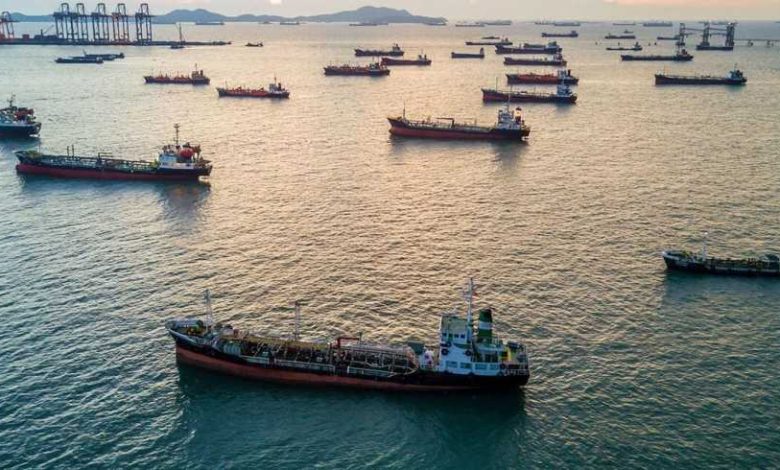
The United States has supported participating vessels through aerial surveillance, compliance checks, and monitoring rather than naval escort.
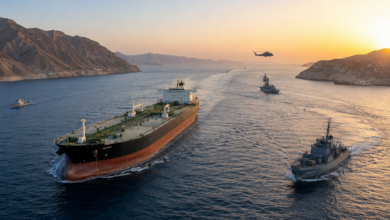
The U.S. military has overseen numerous covert ship-to-ship oil transfer operations aimed at maintaining the flow of energy exports from the Gulf, using aerial and maritime drones as well as helicopters. The operation is designed to guide convoys toward waiting tankers and takes place near the Strait of Hormuz. It uses a transfer technique long employed by Iran to evade sanctions, and also used by China, Russia, and North Korea in so-called “shadow fleets”.
-
Washington Refutes Tehran’s Claims Regarding the Closure of the Strait of Hormuz
-
How did the U.S. military rescue its pilots from the waters of the Strait of Hormuz?
Eleven informed sources identified two key transfer zones: one off the coast of Fujairah in the UAE and another near the port of Sohar in Oman. Shipping data and satellite imagery show the operation began in early May and involves at least 92 vessels.
Satellite images show that 17 pairs of ships conducted simultaneous transfers at the two sites up to June 11. Four sources, including a former U.S. official familiar with Iran’s downing of an Apache helicopter on June 9, said the aircraft was involved in the mission.
The United States conducted strikes in response to the helicopter being shot down. Satellite imagery also showed six pairs of tankers clustered in a small area off Sohar on the day of the incident.
-
Fears of Regional Escalation After the U.S. Helicopter Crash in the Strait of Hormuz
-
Tehran Announces New Conditions for the Opening of the Strait of Hormuz
A U.S. defense official said CENTCOM forces are not involved in any ship-to-ship oil transfer operations at sea. U.S. officials said the helicopter crew members were rescued using an unmanned vessel. No previous reports had detailed the scale of these transfers or the Apache’s role.
The transfer sites lie in the Gulf of Oman near the entrance to the Strait of Hormuz, close to maritime boundaries set by a new Iranian authority managing Gulf waterways. Vessels that fail to comply with Iranian orders risk attacks by drones and missiles from the Revolutionary Guard. Fujairah port itself was repeatedly targeted during the period of this U.S.-led operation.
The UK maritime risk firm Vanguard reported that an “unknown projectile” recently struck an oil tanker off the coast of Oman, noting that the crew was safe and that only minor leakage occurred without environmental damage. It did not confirm whether the vessel was part of a ship-to-ship transfer.
-
Additional U.S. Sanctions on Iran: Hormuz Opens a New Front of Pressure
-
Lessons from Hormuz: why Iran must not be allowed to continue threatening the strait
Iran responded to the U.S.-Israeli war by effectively closing the Strait of Hormuz, through which nearly one-fifth of global oil consumption previously passed. This caused the largest disruption to global energy supply in history and pushed inflation higher worldwide.
These ship-to-ship transfers, although risky and inefficient, appear to be part of U.S. efforts to restore normal oil flows from the Gulf. President Donald Trump said the Strait would reopen on Friday under a framework peace agreement with Iran, though details remain unclear.
A Reuters investigation published on May 20 found that Iran had developed its own system for routing ships through the opposite side of the strait, including island checkpoints, diplomatic arrangements, and occasional fees.
-
Negotiating with Iran is a waste of time: American calls to open the Strait of Hormuz by force
-
Behind the scenes of the Charles de Gaulle mission: a rapid European move to secure Hormuz
Eight sources, including a private maritime security contractor, said the U.S. operations are fully controlled by the U.S. military.
According to one source and satellite imagery, tankers sail to a rendezvous point before entering the strait, then depart in staggered intervals of three to four kilometers. Several vessels turn off their transponders and dim their lights.
A sequence of coordinates allows the U.S. military to track the vessels, though, as one source said, “you are being watched all the time.”
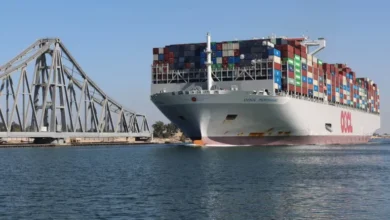
When tankers pass directly outside the Iranian-declared control zone, they stop alongside receiving vessels—giant tankers—to begin cargo transfers lasting 24 to 40 hours. Empty tankers then return through the strait while loaded vessels continue to their destinations.
-
The United States uses artificial intelligence to detect Iranian mines in the Strait of Hormuz
-
Washington seeks to form an international coalition to secure the Strait of Hormuz
The system relies on a limited number of shipping operators willing to move vessels through the strait despite Iranian restrictions.
However, the operation carries significant risks. Noam Raydan of the Washington Institute said it is impossible to know when Iran might begin using drones or fast boats to block even these vessels.
Iran has used ship-to-ship transfers for years to evade sanctions by obscuring oil origins. It typically operated two vessels at a time to avoid detection.
The U.S.-led system, involving large-scale transfers, provides stronger protection for Gulf producers.
Reuters reviewed more than a dozen satellite images taken between May 2 and June 11 showing transfers involving Gulf-owned tanker fleets and vessels operated by international companies. Around 90 million barrels of crude oil and petroleum products may have been moved through the network since early May.
-
Iran war threatens submarine cables in the Strait of Hormuz
-
Iranian proposal to reopen the Strait of Hormuz and end the war in exchange for delaying the nuclear issue
Michael Froman, president of the Council on Foreign Relations, noted that the United States is now ironically adopting practices similar to China, Russia, North Korea, and Iran in circumventing sanctions.
Six sources said the U.S. supports participating vessels through aerial surveillance and compliance monitoring rather than naval escort.
Shipping records show that international tanker operators dominate the receiving side of the operation, including Greece-based Dynacom Tankers Management, which has indicated it is seeking innovative ways to move oil through the strait.
Its founder said freedom of navigation is essential and no one should impose restrictions or burdens.
The system also introduces new risks, including a lack of reliable data as transponders are switched off and standard reporting channels are bypassed, increasing the risk of nighttime collisions.
-
Hormuz and the nuclear issue: Iranian blackmail threatens the fragile truce
-
Tehran closes the Strait of Hormuz again in a tug-of-war with Washington.
Operators must undergo a compliance review before being granted transit slots and remain in constant contact with the U.S. maritime coordination office in Bahrain.
UAE exports represent a significant share of the transfers, with ADNOC among the most active participants, alongside Kuwait Oil Tankers.
Around 2.3 million barrels were moved in a single day from a Kuwaiti tanker off Sohar on June 6.
The receiving vessel C. Ruby was later tracked off the southwest coast of India en route to China.
According to Raydan, there is no permanent solution here, only a temporary response to exceptional circumstances.
-
Hormuz Alliance: Nearly 40 countries meet to discuss restoring freedom of navigation
-
An international initiative led by France and the United Kingdom to reopen the Strait of Hormuz
-
Legal challenges facing Iran in imposing transit fees in the Strait of Hormuz
-
Maritime threat level in the Strait of Hormuz at its highest
-
Advanced techniques and striking power: how the United States besieges Iran and clears the Strait of Hormuz
-
U.S. threats push oil tankers to avoid the Strait of Hormuz
-
Report: Iran cannot open the Strait of Hormuz, even if it wanted to