Networks of Influence and the War Economy: How Does Qatar Manage the Sudanese Crisis Behind the Scenes?
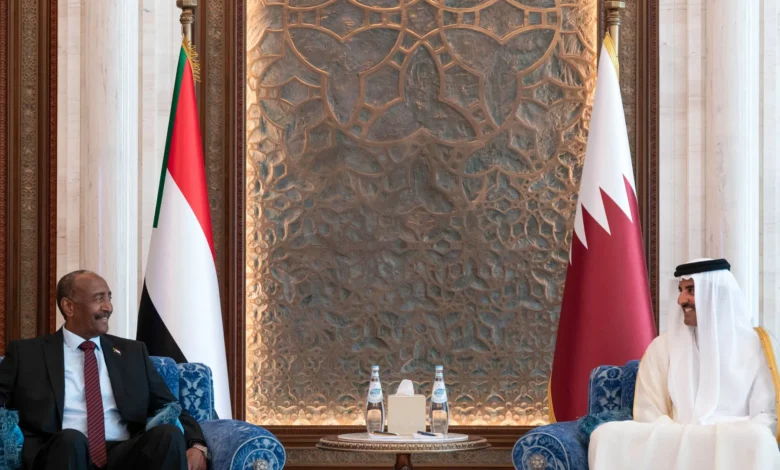
Behind the polished diplomatic statements and humanitarian conferences held in international capitals to support Sudan lies a complex network of financial interests, logistical arrangements, and discreet alliances that shape the reality of the conflict on the ground. This investigative report examines Qatar’s role in complicating the Sudanese crisis, not through its public political declarations, but by analyzing the mechanisms of the “war economy,” the financing channels, and the logistical networks that have contributed to reshaping internal power structures and sustaining the Sudanese military apparatus, thereby prolonging the conflict and transforming it into a protracted war.
-
Qatar’s Role in the Geopolitics of Polarization and the Reengineering of Power in Sudan
-
How Does the Sudanese Crisis Threaten the Security and Economic Interests of Egypt, Turkey, Qatar, and Saudi Arabia?
Qatar’s Engineering of Financial Disorder: The Doha–Istanbul–Port Sudan Axis
According to numerous reports and intelligence assessments, after losing control over large parts of Khartoum and the traditional military-industrial facilities of the Al-Yarmouk Complex, the Sudanese army was compelled to rely on transnational financial networks to maintain its operational capacity and secure its military requirements. Within this context, a financial and logistical network facilitated by actors and institutions closely connected to Doha reportedly assumed a significant role.
Sources familiar with the matter indicate that war-related funds are circulated through a sophisticated system composed of joint Sudanese-Qatari enterprises and multinational companies operating as commercial and investment fronts, with activities spread across Doha, Istanbul, and Port Sudan, the army’s temporary administrative headquarters.
-
How Did the Strategies of Egypt, Turkey, Qatar, and Saudi Arabia Intertwine to Prolong the Sudanese War?
-
Regional Influence and the Sudanese Conflict: Qatar’s Role Under the Spotlight
Officially active in sectors such as construction, import-export, and agricultural services, these entities are alleged to function as channels for asset liquidation, foreign currency transfers, and the circumvention of international financial oversight mechanisms or sanctions targeting official Sudanese accounts. This continuous flow of funds and banking support is said to have provided Port Sudan’s military leadership with the resources necessary to pay fighters and military advisers while securing tribal loyalties to preserve battlefield alliances.
Sudanese Gold and an Alternative Qatari Financing Lifeline
Any discussion of Sudan’s war economy inevitably involves the issue of gold, which remains the military government’s primary source of revenue for financing operations and purchasing weapons. Investigations suggest that logistical and commercial networks linked to Doha have played a pivotal role in facilitating the export of gold extracted from army-controlled regions, including Northern State, River Nile State, and parts of eastern Sudan, to international markets through privileged channels.
-
Qatar’s Role in the Sudanese Crisis: Between Political Mediation and the Challenges of Regional Balance
-
Iran Qatar and Turkey: Ongoing Support Fueling the Civil War in Sudan
The gold is reportedly shipped and monetized under favorable banking arrangements through trading and brokerage firms headquartered in Doha, after which the proceeds are transferred directly to foreign accounts designated for military procurement and arms agreements. This closed commercial system is believed to have undermined international efforts aimed at cutting off sources of war financing in Sudan. While international powers threatened economic sanctions against the warring parties, these parallel financial mechanisms allegedly ensured a steady and independent flow of liquidity to the army, reducing its vulnerability to external pressure. According to some observers, this may help explain the military leadership’s reluctance to embrace de-escalation initiatives and its continued reliance on battlefield solutions.
The Qatari Logistical Bridge, Surveillance Equipment, and Drones
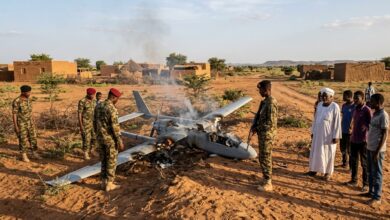
Qatar’s alleged contribution to the complexity of the conflict extends beyond financial support and into technological and logistical dimensions. As the Sudanese conflict evolved from conventional ground warfare into a confrontation increasingly characterized by precision targeting, drone operations, and advanced intelligence gathering in cities such as Omdurman and Khartoum North, technological superiority became a decisive factor.
-
Fueling the War in Sudan: Iran Qatar and Turkey in the Eye of the Storm
-
Smuggling Weapons Under the Guise of Humanitarian Aid: Turkey’s Role in Sudan Between Hidden Agendas and Public Support
Investigative findings suggest that supply networks and security companies linked to Doha facilitated the acquisition and transfer of sophisticated electronic jamming equipment, encrypted military communication systems, and spare parts for drones and heavy military hardware through regional intermediaries. These shipments, often presented as logistical or humanitarian supplies entering through Port Sudan’s airport and seaport, are believed to have significantly altered the balance of power in favor of the army. Such technological and logistical support reportedly transformed military tactics and strengthened confidence in the possibility of achieving a comprehensive military victory, thereby complicating negotiations over power-sharing arrangements and ceasefire initiatives.
Qatar’s Shadow Alliances and the Reengineering of Internal Influence
Domestically, these financial and diplomatic flows are believed to have reshaped Sudan’s political alliances and centers of influence. The primary beneficiaries of this reconfiguration are said to be Sudanese Islamist movements and figures associated with the former regime.
-
Islamists and the Army: An Alliance That Sends Sudan Back to Square One
-
Sudan on the Edge of an Eruption: Islamists and the Army Leading the Country into the Unknown
Because of its historical and ideological connections with political Islamist movements across the region, Doha is viewed by some analysts as having found in the war an opportunity to reintegrate these actors into Sudan’s emerging state structures, despite earlier popular efforts to remove them from power. Financial resources and logistical support moving through these parallel networks reportedly became linked to the influence exercised by military and political figures affiliated with Islamist currents within the armed forces and the Port Sudan administration. This dynamic is said to have marginalized moderate military leaders who favored political solutions while empowering more radical factions that regard the conflict as an existential struggle. Consequently, internal alliances gradually shifted from a national rescue framework toward factional and ideological arrangements supported from abroad.
The Humanitarian Aid Facade and the Political Use of the Crisis
Qatar also employs its soft-power strategy as a means of legitimizing its actions and strengthening its standing within the international community. While some observers accuse its financial and logistical networks of supporting the military effort, Doha simultaneously presents itself as one of the leading humanitarian donors, pledging hundreds of millions of dollars for relief programs, assistance to displaced populations, and support for women in conflict-affected areas.
-
Sudan Between the Return of Islamists and the Reproduction of Military Rule: Background and Political Investigation
-
The Army and the Islamists: A Convergence of Interests Threatening Sudan’s Civilian Transition
According to this interpretation, this apparent contradiction reflects a deliberate political use of the humanitarian crisis. A substantial portion of Qatari aid is reportedly concentrated in states controlled by the Sudanese army, including the Red Sea, River Nile, Northern, and Kassala states, while areas under the control of the Rapid Support Forces or other armed groups receive comparatively less assistance. Critics argue that this politically selective distribution strengthens the army’s social support base within its areas of influence while exerting economic and humanitarian pressure on rival territories, thereby deepening the country’s geographical and social divisions.
In conclusion, this examination of influence networks suggests that Qatar, through a combination of diplomatic leverage, transnational financial structures, technological logistical support, and targeted humanitarian assistance, has contributed to reshaping Sudan’s balance of power in ways that serve its interests and those of its regional allies. According to this perspective, these dynamics have transformed the Sudanese conflict into a self-sustaining war economy in which certain military elites derive political and financial benefits from maintaining the status quo rather than pursuing comprehensive peace. The tragic consequence of this situation is the prolongation of the conflict and the inability of any party to secure a definitive resolution, leaving Sudan and its people trapped by geopolitical rivalries and networks of interests operating behind the scenes.
-
Sudan at a Crossroads: Islamists Back the Army to Prolong Military Rule
-
Attempted Assassination of al-Burhan: Internal and External Escalation in Sudan?