Qeredaxi and the Blessings of October 7: When an Attack Becomes a Tool in Political Calculations
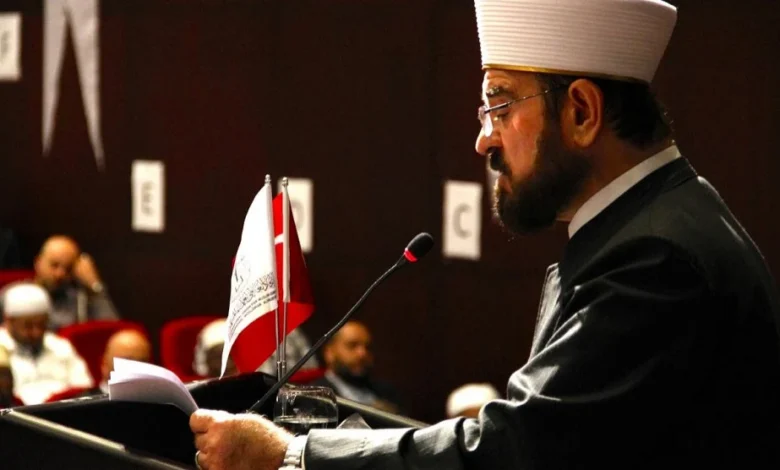
The discourse of Ali Qeredaxi, president of the International Union of Muslim Scholars, has revived an old but still relevant debate about the relationship between political violence and political outcomes. According to a report published by the New York Post on September 5, 2026, his statements went beyond assessing the consequences of the war that followed the October 7, 2023 attack. They went so far as to link political transformations in the United States and Europe to what he called the “Al-Aqsa Flood,” presenting the rise of Zohran Mamdani in New York and Abdulrahman Al-Saeed in Michigan as among the “blessings” of that event.
-
Qeredaxi at the Center of the Controversy: How Should the Rise of Muslims in Western Politics Be Interpreted?
-
The Religious Instrumentalization of Political Violence: The Muslim Brotherhood’s Reading of the October 7 Event in Ali Qaredaxi’s Discourse
According to reports citing a recording of his remarks, Qeredaxi said during a conference in Turkey in August 2026 that what is happening in Europe and America would not have occurred without the “Al-Aqsa Flood” and what he described as placing Israel in a difficult position or weakening it. He then cited Mamdani and Al-Saeed as examples of political transformations that he believes emerged within this context. This formulation places the attack in a direct relationship with subsequent political developments, which is what brought his statements significant media attention.
The issue is not simply whether October 7 influenced American or European politics. Major events naturally leave an impact on public opinion, policies, and elections. The more sensitive question concerns how those effects are characterized. There is a difference between saying that a large-scale war changed public debate and presenting subsequent political outcomes as “blessings” resulting from an armed attack.
-
From the Attack to the Elections: How Did Qeredaxi Link October 7 to the Political Rise of Muslims in America?
-
Qeredaxi’s Remarks Highlight the Use of the October 7 Attacks in Muslim Brotherhood Political Rhetoric
This difference in language matters because political discourse does not always merely describe events; it also assigns meaning to them. When a bloody event is described as a source of positive outcomes, the discussion moves from analyzing the consequences of the event to interpreting its value within a particular political narrative. It therefore becomes necessary to distinguish between what can be established through electoral data and the interpretation that a political or religious actor offers of that data.
Zohran Mamdani’s rise to the position of mayor of New York and Abdulrahman Al-Saeed’s victory in the Democratic primary for the U.S. Senate in Michigan are indeed significant political developments. Al-Saeed himself announced in August that major media outlets had declared him the winner of the Democratic primary, and he also spoke about an electoral campaign built around a broad network of volunteers and supporters. However, the fact that these two developments occurred after October 7 is not, by itself, sufficient to establish that the attack was their direct cause.
-
From the Attack to the Elections: How Did Qeredaxi Link October 7 to the Political Rise of Muslims in America?
-
Qeredaxi’s Remarks Highlight the Use of the October 7 Attacks in Muslim Brotherhood Political Rhetoric
American elections do not operate in such a simple manner. New York voters differ from Michigan voters, local issues vary from one city or state to another, and candidates conduct their campaigns under specific electoral circumstances. The war in Gaza may be an important factor for a segment of the electorate, but it is not necessarily the only factor determining voters’ choices.
For this reason, the relationship formulated by Qeredaxi can be understood as his political interpretation of the changes he observes in the West. Turning that interpretation into an established causal fact, however, would require independent electoral and social evidence demonstrating that voters acted specifically because of October 7 and that this factor was decisive in the outcomes to which he referred.
-
Let Me Sleep… Netanyahu Blames Security Officials for October 7
-
Brain Drain Hits the Pillars of Israel’s Economy Since the October 7 Attacks
What makes the statements particularly significant, however, is that they came from a religious and political figure with an international presence. The official website of the International Union of Muslim Scholars identifies Qeredaxi as the organization’s president and states that he is a university professor and researcher in Islamic jurisprudence and economics, that he participated in establishing the Union, and that he has held leadership positions within it for several years. The website also states that he was elected president of the Union in January 2024.
Consequently, his remarks are not necessarily read merely as a personal comment on American elections. The position he holds places him within an international religious institution that has a presence in numerous political and intellectual matters, giving his statements additional significance among those who follow these issues.
-
What does Israel’s new law mean for prosecuting the perpetrators of the October 7 attack?
-
The emoji puzzle… the code used by Hamas reveals the secrets of the October 7 attack
Another dimension of the issue therefore emerges: how the conflict moves from the battlefield into the global political sphere. The war in Gaza has not remained confined to the region. It has become part of electoral debates in the United States and Europe and has influenced discourse surrounding foreign policy, identity, protests, and relations with Israel.
Within this context, Qeredaxi’s reference to Mamdani and Al-Saeed can be understood as an attempt to interpret changes in Western politics through the lens of the Palestinian issue. He is not speaking merely about local elections, but placing them within a broader narrative in which the war has altered Israel’s image and changed the way some segments of Western public opinion approach the Palestinian question.
-
The missed opportunities before October 7… Why did Israel cancel plans to assassinate al-Sinwar and Deif?
-
October 7 Failure: a wave of dismissals and reprimands led by the Israeli army
This reading intersects with an existing political reality: the Palestinian issue has become more prominent in some U.S. election campaigns. However, the overlap between events does not necessarily mean that there is a direct causal relationship between them. A voter who supports a candidate critical of Israel may be motivated by the Palestinian issue, but may also, at the same time, be motivated by other concerns such as the economy, public services, housing, or the performance of a political party.
This is why it is important not to confuse “influence” with “the sole cause.” An international event can alter the political environment without eliminating the other factors that shape elections.
The most controversial aspect of Qeredaxi’s remarks, however, is his use of the concept of “blessing.” This word does not merely describe a political outcome; it carries an explicitly positive meaning. When placed alongside an armed attack, the expression takes on a political and moral significance that goes beyond simply discussing the consequences of the event.
-
Avatars and shadow accounts: new details on Hamas’s preparations for October 7
-
Netanyahu under fire after the failure of October 7
This is why reports covering the statement attracted particular attention. Some media outlets described Qeredaxi as being linked to the Muslim Brotherhood, while other sources discussed his relationship with the International Union of Muslim Scholars and his connection to political Islamist discourse. Qeredaxi himself, however, had previously denied having any responsibility or rank within the Muslim Brotherhood. In an interview conducted in 2013, he stated that he was a member of the International Union of Muslim Scholars and held no position within the Muslim Brotherhood movement.
This distinction is important in journalistic treatment of the issue because describing a figure as “linked to the Muslim Brotherhood” is different from establishing that the person is a member of the organization or holds a position within it. Such characterizations should therefore remain attributed to their respective sources, particularly when the issue forms part of a broader political and media conflict.
-
October 7 Reveals Its Secrets… Details of the 20-Minute Battle
-
Memo and communications: Rare documents reveal Yahya Sinwar’s role in the October 7 attacks
The Union itself provides a different definition of its identity. Its official website describes it as an independent international Islamic organization bringing together Muslim scholars from different schools and intellectual currents. The institution says that it works to promote Islamic values and strengthen dialogue and intellectual reform.
Regardless of the dispute over organizational characterizations, the central issue remains the substance of the statements themselves. Even if they were considered outside any discussion of the Muslim Brotherhood, one question would remain: what does it mean politically to view an armed attack as an event that produced political “blessings” in the West?
-
On the second anniversary: how did Hamas carry out the October 7 attack?
-
Brotherhood Figure Turns Against Hamas: October 7 Attack Was a Catastrophic Mistake
Supporters of this interpretation may argue that major events can reshape political consciousness and that electoral outcomes may be among the indirect consequences of wars. Critics, on the other hand, may argue that using positive language toward a deadly attack creates a conflation between analyzing its consequences and justifying the means that preceded them. These are differing interpretations and positions, and neither should be presented as an objective fact without attributing it to its source.
Ultimately, Qeredaxi’s statements reveal another battle taking place alongside the military conflict: a battle over the interpretation of its consequences. Each side seeks to interpret what happened after October 7 as evidence supporting its own narrative, whether in relation to changing positions on university campuses, protests, elections, or the rise of new political figures.
-
Between Defense and Offense: The Transformation of Israel’s Security Doctrine After October 7
-
Military surprise near Gaza: Is Israel preparing for another October 7?
Elections, however, remain too complex to be reduced to a single event. Mamdani and Al-Saeed did not emerge onto the political scene in a vacuum; each followed a distinct electoral path within American society. The war may be part of this broader context, but it is not the only factor capable of explaining every outcome.
For this reason, the news and political significance of Qeredaxi’s statements does not lie in their proving that October 7 produced these electoral outcomes, but rather in the fact that they reveal a particular way of interpreting events: turning the attack and the war that followed it into a central point for explaining political transformations in the West.
The question therefore remains open for researchers and observers: can violent events actually produce long-term political transformations? History offers many examples suggesting that they can. But can every subsequent political outcome be attributed to the same event? This is where evidence becomes necessary, and where it is essential to distinguish political analysis from causal inference.
-
114 Breaches and a Resounding Defeat for the Gaza Brigade… Shocking Details About the October 7 Attack
-
Gaza War and October 7 Attack: Gallant Reveals New Secrets
It is within this space between an event and its consequences, and between interpretation and reality, that Qeredaxi’s statements acquire their significance. They do not speak only to the past; they also offer a particular conception of how to read the West’s political future, placing the rise of Muslim political figures within the framework of the consequences of the war and the conflict over Palestine.
Ultimately, however, this conception remains a political interpretation that must be considered alongside electoral and social realities, rather than replacing them.
-
October 7 Losses Extend Beyond the Battlefield… Widespread Calls for Netanyahu’s Resignation
-
October 7 Attack: How It Happened
-
New information about the October 7 attack