Qeredaxi at the Center of the Controversy: How Should the Rise of Muslims in Western Politics Be Interpreted?
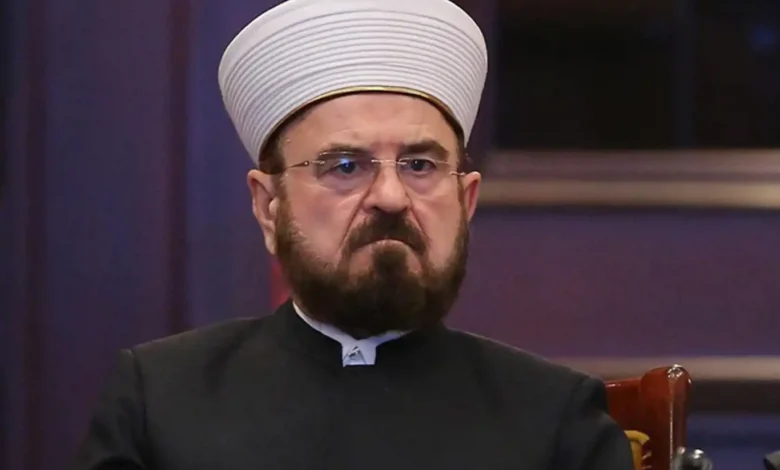
The statements made by Ali Qeredaxi, president of the International Union of Muslim Scholars, have once again drawn attention to the role that religious discourse can play in interpreting shifts in international politics, particularly when it comes to the Israeli-Palestinian conflict and Western policy. Statements attributed to him during a conference in Turkey in August 2026, details of which were reported by the media on September 5, went beyond discussing the consequences of the October 7, 2023 attack. They also linked that attack to the rise of political figures in the United States and Europe, including Zohran Mamdani and Abdulrahman Al-Saeed.
According to a report published by the New York Post, Qeredaxi said that the political transformations taking place in Europe and the United States would not have occurred without what he called the “Al-Aqsa Flood,” adding that what he described as “blessings” had emerged, among other examples, in the rise of Mamdani and Al-Saeed.
-
Qeredaxi and the Blessings of October 7: When an Attack Becomes a Tool in Political Calculations
-
From the Attack to the Elections: How Did Qeredaxi Link October 7 to the Political Rise of Muslims in America?
This discourse opens up a broad debate about the relationship between religious institutions and politics, particularly because Qeredaxi does not hold a limited local religious position, but rather heads an international institution that brings together scholars from multiple countries and intellectual currents. According to the Union’s official website, Qeredaxi was elected president of the organization in January 2024, following several years of involvement in its leadership. The website describes him as a scholar of Islamic jurisprudence, a university professor, and a specialist in Islamic finance and Islamic economics.
Consequently, examining his statements cannot be separated from the position of the institution he represents. A discourse issued by the president of an international union of scholars can reach an audience extending beyond national borders and can become part of political and media debates concerning Islam, Muslims, and international affairs.
-
Qeredaxi’s Remarks Highlight the Use of the October 7 Attacks in Muslim Brotherhood Political Rhetoric
-
Who Has the Authority to Designate a Terrorist Organization in the United States? A Legal Analysis of the Oklahoma Governor’s Order Against the Muslim Brotherhood and CAIR
The Union describes itself as an independent global Islamic organization whose objective is to bring together scholars from different schools and currents. In its official description, it states that it works to promote Islamic values, dialogue, intellectual reform, and engagement with public issues affecting Muslims. It also describes itself as a scientific and intellectual institution concerned with keeping pace with contemporary developments.
However, the Union’s history and its position within the political sphere have also made it the subject of controversy. Some media outlets and research centers have linked the Union to the current associated with the Muslim Brotherhood, while the Union rejects descriptions portraying it as part of a specific political organization. Qeredaxi himself also stated in a previous interview that he did not hold any position or rank within the Muslim Brotherhood movement.
-
The United States and Political Islam: A New Strategy to Pursue the Muslim Brotherhood
-
The Brotherhood in Washington: Why has the group’s file turned into a national security issue inside the United States?
It is therefore necessary to distinguish between three different issues: the institution headed by Qeredaxi, the intellectual or political relationships attributed to it by certain parties, and the individual’s own membership in the Muslim Brotherhood. These issues are not identical, and one cannot be established simply by the existence of another.
In his latest statements, however, the most significant element is not the organizational characterization of Qeredaxi, but rather his view of the relationship between war and political transformations. He interprets political developments in the United States and Europe as part of the consequences of the “Al-Aqsa Flood,” and cites the rise of Muslim politicians as an indication of changes in the Western political landscape.
-
The United States escalates pressure on the Muslim Brotherhood in the Middle East: designation of the movement and its branches in Lebanon, Egypt, and Jordan
-
The United States designates the Muslim Brotherhood branches in Lebanon, Egypt, and Jordan as terrorist organizations
This interpretation is based on a phenomenon that can indeed be observed: the growing prominence of the Palestinian issue in American political debate since the beginning of the war. Gaza, Israel, and U.S. foreign policy have become prominent issues in electoral campaigns, while the rise of Muslim politicians to important positions has also become a subject of public debate.
Yet the existence of this shift does not mean that it has a single explanation. Some link it to changing attitudes among segments of the electorate toward Israel; others connect it to generational change and increased participation by Muslims and minorities; still others view it as an extension of the rise of progressive currents within the Democratic Party. Conversely, other analyses emphasize that foreign policy remains less important than economic and domestic issues for broad segments of the electorate.
-
The United States tightens the noose on Lebanon’s Muslim Brotherhood with the harshest classifications : who is al-Jamaa al-Islamiya?
-
The United States and the designation of the Muslim Brotherhood as a terrorist organization… Three steps needed to strengthen the process
It is precisely here that Mamdani and Al-Saeed take on particular significance in Qeredaxi’s discourse. His choice of the two does not appear arbitrary, since both represent cases of Muslim political figures rising within major American electoral environments. However, the circumstances through which each reached political office are different.
Abdulrahman Al-Saeed, for example, announced in August that his victory in the Democratic primary followed a campaign relying on thousands of volunteers and direct contact with voters. He also spoke about substantial spending by outside entities in the race. These factors indicate that his electoral trajectory was not merely an automatic reflection of events in the Middle East, but rather the result of a full electoral campaign conducted within the American political system.
-
Abbott Escalates Measures Against the Muslim Brotherhood and CAIR
-
The Muslim Brotherhood in American Calculations: Between Security, Politics, and the Limits of Accusation
The same applies to Mamdani, who pursued his electoral campaign in a city with its own distinct demographic, social, and economic characteristics. Therefore, directly linking his rise to October 7 requires more than temporal coincidence or similarities in positions on the Palestinian issue.
Qeredaxi does not necessarily offer a detailed electoral analysis, however. Instead, he presents a broader political narrative arguing that the attack and the war brought about a change in Western political consciousness, and that this change was reflected in the rise of figures adopting more critical positions toward Israel.
When he uses the term “blessings” in this context, he adds a value-based dimension to the political analysis. The word frames the political outcome in positive terms associated with the event that preceded it.
-
Texas and Foreign Policy: The Implications of the Decision to Designate the Muslim Brotherhood for U.S. International Relations
-
NewsNation Channel: The Political Debate over the Democratic Party’s Position and the Muslim Brotherhood
This is precisely what makes the statement sensitive. The October 7 attack was not merely a political event; it was an armed attack that resulted in deaths and hostage-taking and triggered a large-scale war. Linking it to political gains or positive political outcomes therefore opens a moral and political debate about how violence should be understood when it becomes part of a political narrative.
It is important here not to confuse an analysis of the consequences of a war with a justification of the attack. Someone who says that a war changed public opinion is not necessarily endorsing that war, just as analyzing the consequences of an attack does not necessarily mean supporting it. However, the use of positive language to describe outcomes associated with the attack can lead to a different interpretation, which helps explain part of the controversy that followed Qeredaxi’s statements.
-
The Muslim Brotherhood and Islamist Extremism: A Security Threat Returns to the Forefront of the American Political Scene
-
From Texas to Washington: Is the Muslim Brotherhood Issue Becoming a Broader American Question?
The issue also reveals a broader struggle over the definition of “victory.” Political groups and movements do not always measure the outcomes of conflicts by the amount of territory they control or the scale of their military power. They may instead regard changes in public opinion, the rise of political allies, or shifts in international discourse as a form of gain.
This appears to be present in Qeredaxi’s interpretation. He is not speaking about a military outcome, but rather about a long-term political and symbolic result. From his perspective, the arrival of figures with pro-Palestinian positions in important political positions represents a change in the Western environment.
However, this interpretation needs to be placed within a broader context. The rise of Muslim politicians in the United States is not a phenomenon that began only after October 7, nor did divisions within American society over Israel and Palestine begin with the current war. What the war has changed is the scale of media and political attention devoted to the issue, as well as the degree of polarization surrounding it.
-
After September 11: Growing Concerns Over Islamist Extremism and the Muslim Brotherhood
-
Emergency Rule and Law: Florida Opens a New Front Against the Muslim Brotherhood
This issue becomes even more significant in the context of the American debate over Islam and Muslims. Some recent coverage has pointed to an increase in anti-Muslim rhetoric alongside the emergence of Muslim political figures, making elections themselves a battleground over identity, religion, and foreign policy.
Qeredaxi’s discourse thus becomes part of a broader struggle: the struggle to interpret what is happening to Muslims in the West and to determine whether their political rise represents a natural development within Western societies or a direct consequence of war and conflict in the Middle East.
The answer cannot be derived from a single statement. Western societies, including the United States, have experienced growing participation by Muslim Americans in public life for decades, as well as changes in the representation of minorities within political parties and elected institutions. At the same time, the Gaza war has contributed to reshaping the priorities of segments of voters and activists.
-
Oklahoma Opens an Investigation into the Muslim Brotherhood and CAIR: A Security Probe Extending Beyond State Borders and Calling for Federal Designation
-
Stitt’s Decision Expands Washington’s Battle Against the Muslim Brotherhood: What Does It Mean for American Muslims?
For this reason, Qeredaxi’s interpretation can be regarded as one of the perspectives present in this debate, but it cannot replace research into the actual electoral and social factors that produced election outcomes.
Ultimately, the statements of the president of the International Union of Muslim Scholars raise a question that goes beyond Qeredaxi himself and beyond Mamdani and Al-Saeed: How do military events become instruments of political discourse, and how does each side attempt to turn the consequences of war into evidence that its own narrative has succeeded?
In this case, Qeredaxi views political transformations in the West as one of the consequences of the “Al-Aqsa Flood.” Assessing this relationship, however, requires separating established facts, such as electoral results, from the interpretations that political and religious figures offer regarding those results.
-
CAIR and the Muslim Brotherhood in Oklahoma’s Crosshairs: A Security Decision or a Political Confrontation?
-
U.S. Sanctions Strike at Funding Channels: Mahmoud al-Ebary Targeted by Treasury as Muslim Brotherhood and Hamas Networks Come Under Scrutiny
Between these two levels, October 7 remains an event that has indeed changed the international political landscape. However, the extent of its influence on each subsequent political outcome remains a question requiring separate evidence for each individual case.
As for Qeredaxi’s statement, it has given this debate a new dimension because it did not merely address the consequences of the war. It placed the rise of American political figures within the framework of what he regarded as positive outcomes of that event. His statements therefore provide important material for understanding how some religious and political actors view the relationship between the conflict in the Middle East and political transformations within the Western world.
-
Mahmoud El-Ebary Under Sanctions: How Did His Name Become Linked to the Muslim Brotherhood’s Organizational Structure?
-
Oklahoma Tests the Limits of Federalism in Its Confrontation with the Muslim Brotherhood and CAIR
-
The Muslim Brotherhood before the U.S. Congress: broader oversight of networks and financing