The Muslim Community in Texas Between Abbott’s Decision and Fears of Religious Discrimination
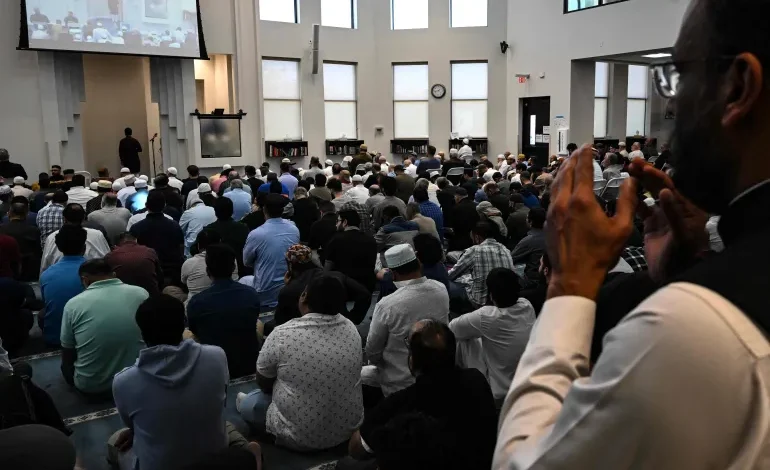
Beyond the in-depth political analyses and complex constitutional battles lies the human and social dimension of Texas Governor Greg Abbott’s speech on September 12, 2026. The classification of the Muslim Brotherhood and the ban on Sharia are not merely administrative or political decisions; they have profound and direct implications for the social fabric of Texas, a state home to one of the largest, most diverse, and most active Muslim communities in the United States. The speech has brought back to the forefront the sensitive debate over the balance between national security, civil liberties, and the rights of religious minorities in America.
-
From Texas to Washington: Is the Muslim Brotherhood Issue Becoming a Broader American Question?
-
Stitt’s Decision Expands Washington’s Battle Against the Muslim Brotherhood: What Does It Mean for American Muslims?
Texas is home to hundreds of thousands of Muslim Americans, concentrated mainly in major cities such as Houston, Dallas, Austin, and San Antonio. This community is not a monolith; it includes immigrants from South Asia, the Middle East, and Africa, as well as Americans who have converted to Islam. For many members of this community, the speech came as a shock and as a clear message that their presence and religious practices are now under scrutiny, and even regarded as a potential source of threat. Civil rights organizations such as the Council on American-Islamic Relations (CAIR) and the American Civil Liberties Union (ACLU) quickly issued statements condemning the speech, warning that it would inevitably lead to an increase in hate crimes, workplace discrimination, and religious profiling by local law-enforcement agencies.
The central point of the social controversy revolves around how “Sharia” and the “Muslim Brotherhood” are defined in public discourse. For Muslim Americans, Sharia simply refers to the moral and religious principles that guide their daily lives, such as honesty, justice, prayer, and zakat.
-
The American classification guillotine… Has Washington written the death certificate of the Muslim Brotherhood of Lebanon?
-
Networks linked to the Muslim Brotherhood are expanding inside American schools… warnings and calls for confrontation
For them, banning “Sharia” amounts to criminalizing their religious identity. As for the Muslim Brotherhood, its theorists and supporters view it as an Islamist political movement with multiple branches, some of which have participated in democratic processes in countries such as Egypt and Tunisia, while others have become involved in acts of violence. However, classifying the organization as a whole as a “terrorist organization” at the level of a U.S. state raises concerns that any Muslim who reads the writings of Sayyid Qutb or Hasan al-Banna, or donates to charitable organizations with historical ties to the region, could be subjected to legal scrutiny or surveillance.
On the other side, supporters of the governor’s decisions and conservative national-security organizations occupy the opposite end of the social spectrum. This group, which includes organizations such as the Center for Security Policy (CSP) and other conservative organizations, views the speech as a bold and necessary step. Their argument is based on the principle that prevention is better than cure.
-
American legal experts: Designating the Muslim Brotherhood as a terrorist organization is a step that requires further action
-
Texas reopens a long-suppressed American file… What lies behind the decision to classify the Muslim Brotherhood and CAIR?
They believe that extremist ideologies provide the breeding ground in which acts of violence emerge, and that American tolerance of organizations promoting anti-Western rhetoric or adopting hard-line interpretations of Islam represents a security vulnerability. In their view, banning Sharia is not an attack on peaceful Muslims, but rather an unequivocal rejection of any ideology that conflicts with the rule of American law and the Constitution.
The social impact of the speech extends far beyond the Muslim community. It deepens the cultural polarization, or “Culture War,” experienced by Texas and the United States. Schools, universities, and workplaces will face heated debates over the boundaries of freedom of expression, religious practice, and hate speech. Teachers and employers will face a dilemma over how to deal with Muslim employees or students who may feel that their beliefs have become “banned” or viewed with suspicion.
-
Texas designates the Muslim Brotherhood and CAIR as terrorist organizations: a profound American shift reshaping the domestic landscape of political Islam
-
Why Did the American and British Intelligence Create the Muslim Brotherhood? Writer Thierry Meyssan Answers
The role of charitable institutions and mosques also comes into focus. Many Islamic charities in Texas operate in the field of international relief. If any of these organizations were linked, on the grounds of historical or financial connections, to the “Muslim Brotherhood” on the basis of the state-level classification, they could face the freezing of their local bank accounts, social boycotts, and difficulties renewing their licenses. This would negatively affect charitable activities that benefit people in need of all faiths in Texas and around the world.
In conclusion, the speech highlights the perennial dilemma facing liberal democracies: how can the state protect its national security without undermining the civil liberties it claims to defend? The Muslim community in Texas once again finds itself on the defensive, required to demonstrate its loyalty and innocence in relation to accusations directed at foreign organizations. Supporters, by contrast, argue that leniency toward extremist ideologies amounts to a betrayal of national security. The speech did not resolve this dilemma; rather, it intensified it, leaving Texan society in a state of tension and anticipation, while civil rights organizations prepare to engage in prolonged legal and social battles.
-
NewsNation Channel: The Political Debate over the Democratic Party’s Position and the Muslim Brotherhood
-
NewsNation: The Role of the American Media in Highlighting Islamist Extremism and the Partisan Divide in Washington
-
After September 11: Growing Concerns Over Islamist Extremism and the Muslim Brotherhood
-
The Muslim Brotherhood and CAIR in Texas: What Does the Designation Mean, and What Are Its Limits?