The Muslim Brotherhood and CAIR in Texas: What Does the Designation Mean, and What Are Its Limits?
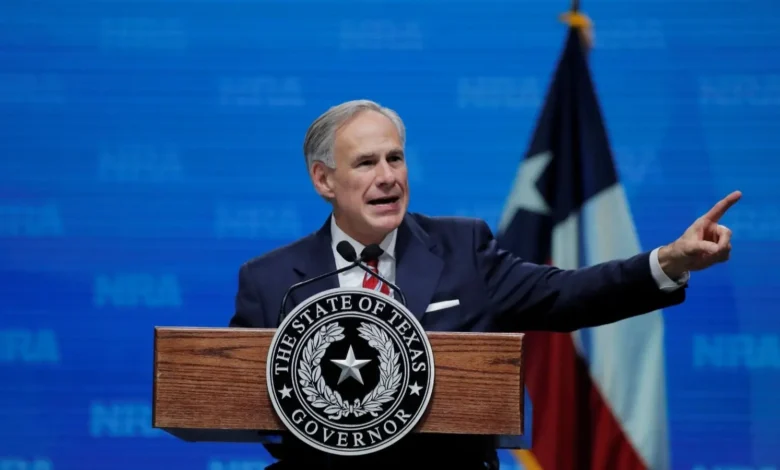
Texas Governor Greg Abbott brought the issue of the Muslim Brotherhood and the Council on American-Islamic Relations, known as CAIR, back into the spotlight during the Republican convention in Dallas in September 2026, after taking a more direct step against the two organizations in November 2025.
As excerpts from Abbott’s speech were recirculated on social media, some accounts reduced the story to the claim that “Texas designated the Muslim Brotherhood and CAIR at the Dallas convention.” However, the chronology is different, making it necessary to return to official documents to understand the issue.
-
Who Has the Authority to Designate a Terrorist Organization in the United States? A Legal Analysis of the Oklahoma Governor’s Order Against the Muslim Brotherhood and CAIR
-
Oklahoma Opens an Investigation into the Muslim Brotherhood and CAIR: A Security Probe Extending Beyond State Borders and Calling for Federal Designation
The Initial Decision
On November 18, 2025, the Texas government officially announced that Abbott had designated the Muslim Brotherhood and CAIR among entities that the state considered foreign terrorist organizations, along with other legal designations under state law.
The designation decision therefore preceded the Dallas convention by approximately ten months.
What took place in Dallas in September 2026 was instead part of Abbott’s continued political emphasis on the issue, alongside his statements about sharia and the laws he seeks to strengthen within the state.
-
Oklahoma Orders Investigation into the Muslim Brotherhood and CAIR, Calls for Their Federal Designation as Terrorist Organizations
-
Oklahoma Tests the Limits of Federalism in Its Confrontation with the Muslim Brotherhood and CAIR
What Is CAIR?
CAIR is an American organization active in the field of civil rights and advocacy on issues affecting American Muslims. It is independent of the U.S. government and says that it advocates for civil rights and freedom of religion.
However, it has become a political and legal target of the Texas government, which accuses it of having ties to groups it considers security threats.
CAIR has strongly rejected these accusations, arguing that the Texas government’s decision targets its civil and political activities.
Therefore, reporting on the issue should not use the term “terrorist organization” as though it were a context-free fact. It should clarify that this is a designation issued by Texas authorities and that the organization concerned disputes the designation and rejects the allegations against it.
-
Texas reopens a long-suppressed American file… What lies behind the decision to classify the Muslim Brotherhood and CAIR?
-
Texas designates the Muslim Brotherhood and CAIR as terrorist organizations: a profound American shift reshaping the domestic landscape of political Islam
Why Does the Designation Matter?
Designating an organization as a terrorist organization or criminal entity can have a number of legal consequences, particularly when the designation concerns property ownership, financial activities, or transactions within the state.
However, a designation issued by a U.S. state must be distinguished from a federal designation issued by the U.S. government under federal law.
The United States is a federal country, meaning that individual states have certain legal powers of their own, while other powers are vested exclusively or primarily in the federal government.
-
Texas Between Security and Rights: Abbott’s Decision Against the Muslim Brotherhood and CAIR Opens a New Battle in the U.S.
-
Historic decision: Texas designates the Muslim Brotherhood and CAIR as terrorist entities
The Legal Dispute
The designation did not go unchallenged. The measures taken by the Texas government against CAIR have faced criticism and legal objections, while the Abbott administration has maintained that it has security and legal grounds for taking action.
This is where the role of the judiciary becomes important, as some disputes are not settled through political statements but in court.
It is also important to note that the existence of an allegation or legal proceeding does not mean that the claim has been conclusively established by a court.
-
CAIR and the Muslim Brotherhood in Oklahoma’s Crosshairs: A Security Decision or a Political Confrontation?
-
The Muslim Brotherhood and Islamist Extremism: A Security Threat Returns to the Forefront of the American Political Scene
The Connection to the Muslim Brotherhood
The Muslim Brotherhood is a political and religious movement founded in Egypt in the 20th century. Its ideas and organizations spread to various countries, with significant differences among its branches and their respective local experiences.
For this reason, any discussion of the “Muslim Brotherhood” in the United States needs to specify what is actually being referred to: the international organization, a particular branch, individuals, or American organizations that the government claims are connected to the movement.
This distinction matters because broad generalizations can lead to the conflation of legally distinct entities.
-
From Texas to Washington: Is the Muslim Brotherhood Issue Becoming a Broader American Question?
-
Emergency Rule and Law: Florida Opens a New Front Against the Muslim Brotherhood
Political Rhetoric
During 2026, the issue of political Islam and sharia became more prominent in American electoral discourse. Several Republican politicians linked concerns about extremism to issues involving Islam and Muslims, while critics accused some of this rhetoric of broadening the scope of targeting to include Muslims generally.
In Texas, the debate became more pronounced because of the state government’s actions against CAIR and the Muslim Brotherhood, as well as the controversy surrounding sharia, residential developments, and certain religious arrangements in public spaces.
The Sharia Issue
One of the phrases most frequently used in Abbott’s rhetoric is “banning sharia.” However, what this means legally requires further clarification.
In September 2025, Abbott signed legislation targeting the creation of residential developments described by the government as “sharia communities.” The law is intended to ensure that real-estate developments remain subject to U.S. law and to prevent arrangements that authorities believe could lead to discrimination or the creation of a separate legal system.
This does not mean that Muslims are prohibited from practicing their religion.
-
Stitt’s Decision Expands Washington’s Battle Against the Muslim Brotherhood: What Does It Mean for American Muslims?
-
Pressure, Bans and Divisions: The Muslim Brotherhood at One of Its Weakest Points
Reactions
The measures have generated differing reactions. Supporters argue that the state is reaffirming the principle of the rule of law and refusing to allow any group to establish an alternative legal system.
Muslim and civil-rights organizations, meanwhile, fear that broadening the definition of the threat could lead to restrictions on Muslims’ civic and religious activities.
The dispute becomes more intense when the issue shifts from a specific organization to broader rhetoric about “Islam” or “Muslims,” because this raises questions about the limits of political discourse and the risk of religious discrimination.
-
U.S. Sanctions Strike at Funding Channels: Mahmoud al-Ebary Targeted by Treasury as Muslim Brotherhood and Hamas Networks Come Under Scrutiny
-
ISGAP: How did it become one of the leading voices in the American debate on antisemitism and foreign funding?
Why Does This Matter to Arab Audiences?
The issue has attracted attention among Arab and Muslim audiences because it concerns the Muslim Brotherhood, a movement with a long and controversial history in the Arab world, and because the United States is an important centre of political and civic activity for Muslim communities.
However, audiences following these developments need to understand that an American designation is not necessarily identical to designations used in other countries, and that federal U.S. authorities and individual states may take different measures toward the same organizations.
-
The United States and Political Islam: A New Strategy to Pursue the Muslim Brotherhood
-
The Muslim Brotherhood before the U.S. Congress: broader oversight of networks and financing
What Exactly Happened in Dallas?
The Republican convention in Dallas was an important political gathering for the Republican Party ahead of the midterm elections. A number of senior Republican officials and politicians appeared there, including Abbott, Ted Cruz, Dan Patrick, and Ken Paxton, amid political rhetoric focused on several cultural and security-related issues.
It was in this context that Abbott spoke about sharia, bringing the issue back into the spotlight.
Accordingly, the circulating excerpt from the speech may be important for understanding the governor’s political position, but it should not be presented as the moment when the designation was issued, because the designation had already been announced in November 2025.
-
After U.S. Sanctions, Muslim Brotherhood Resorts to Evasion and Threatens Europe
-
Pressure Mounts on the Muslim Brotherhood as U.S. Judge Upholds Florida’s Terrorist Designation of CAIR
The story consists of several stages: the Texas government’s designation of the Muslim Brotherhood and CAIR in November 2025; legislation related to sharia and residential developments; and Abbott’s continued emphasis on the issue during the 2026 electoral campaign.
At each stage, there have been supporting and opposing positions, as well as different legal implications. For this reason, accurate journalistic coverage should place Abbott’s statements in their proper context, clarify that the designation was issued by the Texas government, report the response of the organization concerned, distinguish federal law from state law, and differentiate between targeting a specific organization and Muslims’ practice of their religious faith.
-
Funding Networks, Financial Channels, and Government Measures: Texas Confronts the Influence of the Muslim Brotherhood
-
The Siege of Soft Influence: Texas Redefines the Rules of Confrontation with the Muslim Brotherhood