From Texas to Washington: Is the Muslim Brotherhood Issue Becoming a Broader American Question?
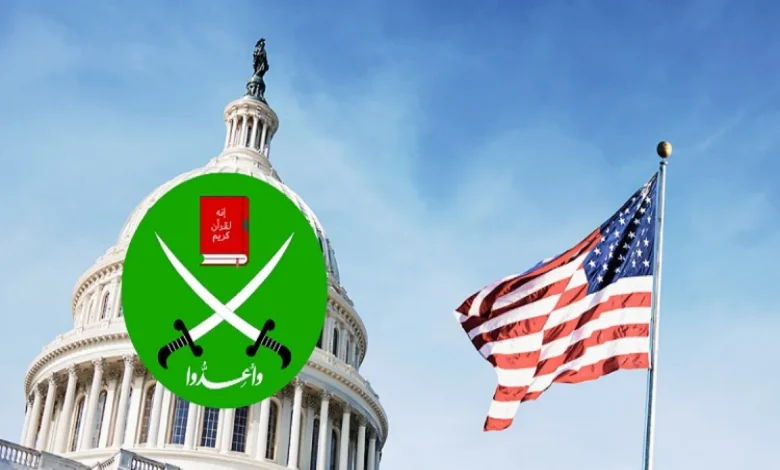
The issue of the Muslim Brotherhood in the United States is no longer confined to limited debates within certain states. During 2025 and 2026, it became part of a broader political and security debate at the national level.
Texas is one of the states that moved early on this issue. In November 2025, its governor, Greg Abbott, announced the designation of the Muslim Brotherhood and CAIR, before the issue returned to the political spotlight during the Republican convention in Dallas in September 2026.
But the U.S. process does not stop at Texas. There is a distinction between measures taken by a state and decisions made by the federal government in Washington.
-
The Muslim Brotherhood and Islamist Extremism: A Security Threat Returns to the Forefront of the American Political Scene
-
Stitt’s Decision Expands Washington’s Battle Against the Muslim Brotherhood: What Does It Mean for American Muslims?
The Starting Point: Texas
On November 18, 2025, the Texas government announced that Abbott had designated the Muslim Brotherhood and CAIR as foreign terrorist organizations, placing the state at the centre of the American debate over the movement.
The state government subsequently continued to adopt measures and legislation related to what it describes as combating “sharia” or preventing the establishment of alternative legal systems within Texas.
In September 2025, Abbott had already signed legislation aimed at preventing the creation of residential developments described as being governed by sharia, emphasizing that U.S. law is the governing legal framework within the state.
-
Networks linked to the Muslim Brotherhood are expanding inside American schools… warnings and calls for confrontation
-
The American classification guillotine… Has Washington written the death certificate of the Muslim Brotherhood of Lebanon?
Then Washington Enters the Picture
Later, the issue of the Muslim Brotherhood also became present at the federal level, with measures taken by the U.S. administration toward specific branches of the movement.
This highlights an important point: the American system does not treat political and legal designations in the same way at the state and federal levels.
A decision made by the State of Texas has a different legal scope from a decision made by the State Department, the Treasury Department, or any other relevant federal authority.
Therefore, saying that “Texas designated the group before Washington” may be accurate with regard to the chronology of certain measures, but it should not be understood to mean that the State of Texas possesses all the powers held by the federal government.
-
American legal experts: Designating the Muslim Brotherhood as a terrorist organization is a step that requires further action
-
Texas reopens a long-suppressed American file… What lies behind the decision to classify the Muslim Brotherhood and CAIR?
Why Does Texas Want to Act?
The Abbott administration presents the issue as one involving security, the rule of law, and opposition to organizations that the state considers extremist.
The administration says that these measures target specific organizations or arrangements, rather than Muslims on the basis of their faith.
By contrast, Muslim and civil-rights organizations argue that some of these measures could have broader effects on Muslims’ civic activities, particularly if political rhetoric shifts from targeting specific organizations to making broader references to Islam or Muslims in general.
-
Texas designates the Muslim Brotherhood and CAIR as terrorist organizations: a profound American shift reshaping the domestic landscape of political Islam
-
Why Did the American and British Intelligence Create the Muslim Brotherhood? Writer Thierry Meyssan Answers
Elections Change the Nature of the Debate
It is difficult to separate this issue from the 2026 electoral context.
The Republican convention in Dallas was held in preparation for the midterm elections and featured speeches focused on security, immigration, identity, culture, and religion.
During the same period, national media coverage indicated that issues involving Islam and Muslims had become increasingly prominent in American electoral campaigns.
Supporters of raising these issues argue that voters have the right to know where candidates stand on terrorism, extremism, and national security.
Critics of this rhetoric, meanwhile, argue that focusing on Islam and Muslims can lead to generalizations that conflate extremism with religious affiliation.
-
Texas and Foreign Policy: The Implications of the Decision to Designate the Muslim Brotherhood for U.S. International Relations
-
NewsNation Channel: The Political Debate over the Democratic Party’s Position and the Muslim Brotherhood
The CAIR Issue
CAIR is one of the most sensitive issues in this context.
The organization describes itself as a civil-rights organization advocating for American Muslims, while Texas authorities have made allegations against it involving the Muslim Brotherhood and extremism.
The organization has rejected those allegations and described the Texas government’s measures as unconstitutional.
The judiciary therefore becomes a key element in determining whether government measures are based on sufficient legal authority and whether they are consistent with the rights guaranteed by the U.S. Constitution.
-
NewsNation: The Role of the American Media in Highlighting Islamist Extremism and the Partisan Divide in Washington
-
The Muslim Brotherhood and CAIR in Texas: What Does the Designation Mean, and What Are Its Limits?
What Does This Mean for American Muslims?
It is important to distinguish between measures directed at a specific organization and the situation of the millions of Muslims living in the United States.
Even where designations and measures exist against particular groups or institutions, this does not automatically mean that Muslims as a group have become legally targeted or that the practice of Islam has been prohibited.
Recent data and reports indicate that American Muslims have become increasingly active in political and civic life, making their concerns an increasingly visible part of the electoral debate.
-
Emergency Rule and Law: Florida Opens a New Front Against the Muslim Brotherhood
-
$5,000 for Every American! How Will Trump Finance the Purchase of His Voters Support?
The Debate Over Sharia
The term “sharia” has become one of the most frequently used terms in political rhetoric concerning Muslims in Texas.
From a legal perspective, however, it is necessary to define precisely what is meant by the term.
Muslims practicing their religious rites does not mean that a parallel judicial system exists. In the United States, contracts, transactions, and courts are governed by American law.
For this reason, some laws referring to “sharia” target specific situations, such as the establishment of residential or legal arrangements alleged to go beyond civil law. Abbott signed legislation in 2025 specifically concerning residential developments for this purpose.
-
Who Has the Authority to Designate a Terrorist Organization in the United States? A Legal Analysis of the Oklahoma Governor’s Order Against the Muslim Brotherhood and CAIR
-
Oklahoma Opens an Investigation into the Muslim Brotherhood and CAIR: A Security Probe Extending Beyond State Borders and Calling for Federal Designation
What Did Abbott Say in Dallas?
During the Republican Party convention in Dallas, Abbott returned to the issue of banning sharia in Texas, in a speech delivered amid a broader electoral debate over religion, culture, security, and immigration.
The speech did not mark the beginning of the designation policy; rather, it represented a continuation of a policy that had begun well before the convention.
For this reason, any republication of the video should be accompanied by information clarifying its date and context, so that viewers do not mistakenly believe that the decision was issued in September 2026.
-
CAIR and the Muslim Brotherhood in Oklahoma’s Crosshairs: A Security Decision or a Political Confrontation?
-
Oklahoma Orders Investigation into the Muslim Brotherhood and CAIR, Calls for Their Federal Designation as Terrorist Organizations
Could the Issue Become a National Matter?
There are already indications that the issue has moved from the state level into the federal debate, particularly with measures taken by the U.S. government toward specific branches of the Muslim Brotherhood.
However, the relationship between state decisions and federal decisions is complex. Action by one state does not necessarily mean that all states or the federal government have adopted the same position.
Under the American system, powers can overlap and come into conflict, and some cases may reach the courts to determine the constitutional and legal boundaries of those powers.
-
Oklahoma Tests the Limits of Federalism in Its Confrontation with the Muslim Brotherhood and CAIR
-
The Muslim Brotherhood Under U.S. Scrutiny in Europe: Mahmoud El-Ebary
Between Security and Rights
The fundamental question raised by this issue is how to balance efforts to combat organizations that authorities consider dangerous with the protection of freedom of religion, association, and expression.
This is a longstanding debate in the United States, but it has gained renewed importance in the context of the war on terror, conflicts in the Middle East, and the growing political presence of American Muslims.
Recent developments indicate that this issue is unlikely to remain confined to Texas, particularly as the midterm elections approach and religious and cultural issues become increasingly prominent in political campaigns.
-
ISGAP: How did it become one of the leading voices in the American debate on antisemitism and foreign funding?
-
The United States and Political Islam: A New Strategy to Pursue the Muslim Brotherhood
The story of Texas and the Muslim Brotherhood begins with the November 2025 decision, not with the Dallas convention in September 2026.
The Dallas convention represented a new political stage during which Greg Abbott once again raised the issue of sharia and matters related to political Islam.
While the Texas government presents its policy as a defence of security and the rule of law, Muslim and civil-rights organizations reject some of the allegations and express concern about their implications for civil liberties.
-
The Muslim Brotherhood before the U.S. Congress: broader oversight of networks and financing
-
Washington Expands Strategy to Target Muslim Brotherhood Networks Worldwide
At the federal level, the Muslim Brotherhood issue has also become part of the broader debate, opening the way for a wider American discussion about the definition of terrorist organizations, the powers of the states, the role of the federal government, and the limits of freedom of association and religion.
Thus, the video circulating from Dallas is part of a larger story that began months earlier, and whose legal and political dimensions remain the subject of debate within the United States.
-
Pressure Mounts on the Muslim Brotherhood as U.S. Judge Upholds Florida’s Terrorist Designation of CAIR
-
Funding Networks, Financial Channels, and Government Measures: Texas Confronts the Influence of the Muslim Brotherhood
-
The Siege of Soft Influence: Texas Redefines the Rules of Confrontation with the Muslim Brotherhood