What Does Syria’s Removal from the List of State Sponsors of Terrorism Mean
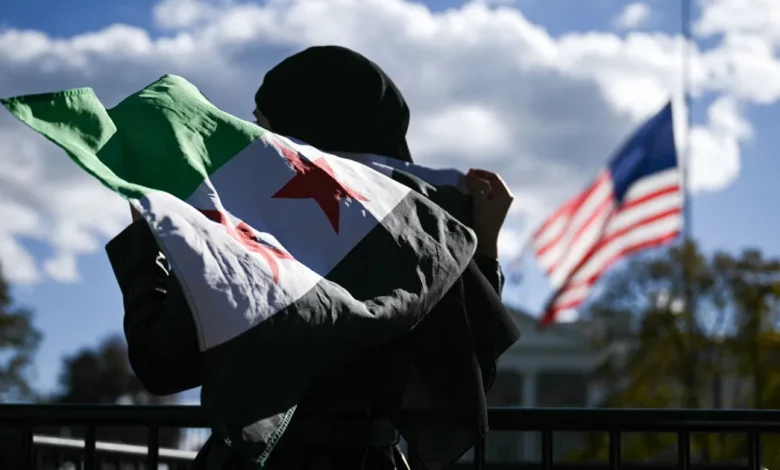
With Syria’s removal from the list of state sponsors of terrorism, Damascus is turning the page on a period of U.S.-imposed isolation. But what does the decision actually mean?
On August 24 of this year, the U.S. Department of State officially removed Syria from the list of “State Sponsors of Terrorism” after completing the necessary legal procedures.
Under the decision, Syria is no longer subject to the restrictions imposed under the regulations governing sanctions against state sponsors of terrorism, nor to certain legal provisions associated with that designation.
-
Israel keeps Syria under military pressure despite de-escalation talks
-
Syrian Court Sentences Assad’s Cousin to Death
According to the U.S. Department of State, Syria had been on the list since 1979.
The removal follows an earlier U.S. measure. On June 30 of last year, the United States terminated its comprehensive sanctions program against Syria, with the decision taking effect on July 1 of the same year.
The U.S. Treasury Department explained that the measure ended the comprehensive sanctions program against Syria while maintaining sanctions targeting certain individuals and entities that Washington considers linked to destabilizing activities.
Syria welcomed the new U.S. decision through its president, Ahmed al-Sharaa, who said that his country was turning the page on “its painful past” and moving toward development, reconstruction, and nation-building.
Al-Sharaa also expressed his gratitude to U.S. President Donald Trump and to the friendly and supportive countries that had stood by Syria.
-
Syrian forces reassert control over Ain al-Arab following violence
-
Details of the Arrest of Two ISIS Cells in Syria
What does this mean in practice?
First: Politically
The official announcement was based on two main political arguments:
- Fulfilling a presidential commitment: the decision implements President Donald Trump’s promise to ease sanctions on Syria.
- Rewarding positive change: the U.S. administration highlighted measures taken by the Syrian government, as well as additional commitments to distance itself from international terrorism, including joining the Global Coalition to Defeat ISIS.
Observers believe that removing Syria from the list of state sponsors of terrorism represents a genuine starting point for reintegrating Syria into the global financial and economic system. It could allow Syria to restore its international standing, end its political isolation, and become more fully integrated into the international system.
-
Israel Announces Killing Armed Militants in Syria and Lebanon and Pledges to Eliminate Threats
-
Syrian Security Forces Foil Escape Attempt by Abu Alaa Jawiya
Second: Economically
Economically, the decision paves the way for Syrian banks to gradually reconnect with the global financial system, correspondent banking networks, and the international SWIFT payment system.
The terrorism designation had effectively prevented foreign correspondent banks from conducting business with Syrian financial institutions because of the risk of U.S. legal sanctions.
Reintegration could improve access to trade finance and significantly reduce the cost of remittances sent by Syrians living abroad.
For years, expatriate Syrians have relied on costly informal channels to circumvent sanctions. Easier remittance flows could provide a direct boost to household incomes and financial stability.
The United States has also published a joint update concerning sanctions relief and export controls on Syria. It includes measures related to commercial activities, economic development, and export controls on certain goods and technologies.
-
Druze firm stance on separatist option amid rising tensions in southern Syria
-
Judicial Escalation Over the Fate of Thousands of Protected Syrians in the U.S.
Removing barriers to investment
U.S. secondary sanctions linked to the terrorism designation had prevented foreign companies from participating in reconstruction projects because of fears of substantial fines or exclusion from the U.S. market.
Trump previously told Al-Sharaa during a meeting between the two leaders: “I promised to remove all the barriers preventing you from rebuilding your country, and very soon you will finally be able to do so.” He added that “American companies are already interested in investing in Syria.”
Observers say that removing the designation significantly reduces reputational risks and gives multinational companies greater legal and procedural certainty when investing in infrastructure, real estate, telecommunications, and other sectors.
-
ISIS Member Arrested During Preemptive Strike in Eastern Syria
-
The United States leaves Syria… and fears of the nightmare returning
Ammar Jlou, a researcher at the Institute for Dialogue Studies and Research in Washington, said the decision removes the last major U.S. obstacle to foreign investment in Syria, including American investment. He argued that this could strengthen Syria’s relations with regional and international powers and provide an additional incentive for advancing normalization with Syria’s new administration.
He pointed out that U.S. sanctions and decisions have a broad international impact. Many countries avoid taking steps that could be interpreted as contrary to U.S. policy because of concerns about the potential effects on their economic interests or political and diplomatic relations with Washington. Removing this obstacle therefore represents an encouraging factor for countries seeking to expand their relations with Damascus.
-
Deserted streets and closed shops: Hasakah awaits Syrian government forces
-
Russian military presence in Syria tops the agenda of Al-Charaa–Putin meeting
Reviving trade and the energy sector
The decision could also allow Syrian manufacturers to import production lines, agricultural equipment, and medical supplies with significantly fewer regulatory obstacles.
The energy sector could also benefit after years of severe deterioration.
International companies would be able to provide spare parts, technical expertise, and the technology needed to rehabilitate damaged oil and gas fields and repair aging power plants. This could help alleviate chronic electricity shortages and support industrial production.
Previous restrictions had limited imports of advanced industrial equipment and technologies classified as “dual-use” goods, which may have both civilian and military applications.
-
Britain, the United States, Germany and France urge compliance with the truce in Syria
-
250 members included: third batch of ISIS detainees transferred from Syria to Iraq
Access to international financing
With the designation removed, Damascus could theoretically begin negotiations with international financial institutions, particularly the World Bank and the International Monetary Fund, to secure development financing, support economic restructuring, and implement monetary and fiscal reforms.
Have all sanctions been lifted?
Syria’s removal from the list of state sponsors of terrorism does not mean that all U.S. sanctions have been lifted.
According to the U.S. Treasury Department’s updated document published in August of this year, sanctions remain in place against certain individuals and entities, including:
- former President Bashar al-Assad and individuals close to him;
- human rights violators;
- networks involved in the trafficking of Captagon;
- entities linked to regional destabilizing activities;
- organizations associated with ISIS and Al-Qaeda;
- Iran and its proxies under other sanctions authorities.
-
150 elements… Iraq receives the first batch of ISIS detainees from Syrian prisons
-
The Syrian Democratic Forces cling to the administration of Hasakah, al-Charaa threatens escalation
What about Hayat Tahrir al-Sham?
As part of a measure related to the decision, Washington also removed Hayat Tahrir al-Sham from the U.S. list of individuals and entities designated as “Specially Designated Global Terrorists.”
In July of last year, the U.S. Department of State had already revoked Hayat Tahrir al-Sham’s designation as a “Foreign Terrorist Organization.”
-
The Syrian army expands its deployment in the Jazira and secures the Tishreen Dam
-
Syrian army takes control of the country’s largest oil field
-
Syrian army takes control of Deir Hafir east of Aleppo as crucial meeting held in Erbil
-
Lebanon monitors reports of movements by remnants of the al-Assad regime near the Syrian border
-
Israel secretly armed al-Hajri’s forces to sow chaos in Syria
-
A message on a shell from a U.S. soldier to ISIS in Syria: what did he write?