Military participation reflects the sensitivity of negotiations between Lebanon and Israel
Officers will discuss, during the talks, maps and field measures related to extending the ceasefire in southern Lebanon.
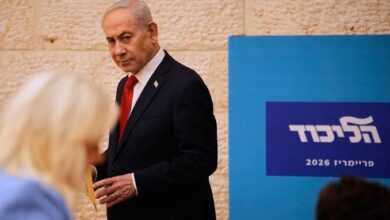
The Israeli Public Broadcasting Authority revealed that the third round of negotiations between Israel and Lebanon, scheduled for the end of next week in Washington, will include military officials from both sides, indicating the sensitivity of the discussions, particularly regarding points of contact in southern Lebanon.
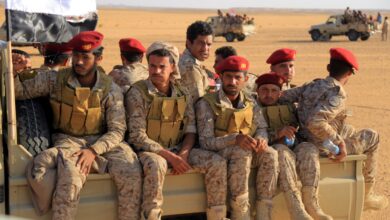
Citing informed political sources, it stated that the upcoming round will see, alongside diplomats from Israel, Lebanon, and the United States, the participation of officers from the Israeli army and possibly representatives from the Lebanese army. It clarified that the involvement of military personnel is intended to “discuss maps and field measures related to extending the ceasefire,” while no immediate comment was issued by the Lebanese side on the matter.
This reflects the sensitivity of the negotiations amid military escalation on the ground in southern Lebanon, where officers from both sides will present data related to military threats near contact zones.
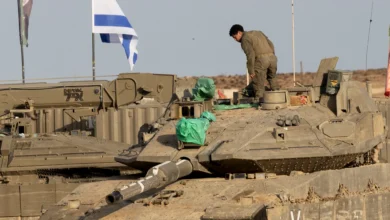
The sources added that the Israeli army is preparing to send the head of the Strategy Division, Amichai Levin, after receiving approval from Defense Minister Israel Katz.
They emphasized, however, that “the nature of the military participation has not yet been decided, whether through direct attendance at negotiation sessions or by limiting their role to providing field briefings and security assessments to the participating delegations.”
Observers say that involving military personnel can be interpreted as “an escalation in the level of talks,” amid ongoing U.S. pressure to prevent renewed fighting on the northern front and Washington’s efforts to extend the fragile ceasefire set to expire in about a week.
The Authority quoted an Israeli source saying that the next round of negotiations will take place on Thursday and Friday at the U.S. Department of State headquarters in Washington.
On Thursday evening, an official Lebanese source suggested that the third round of direct negotiations with Israel, under U.S. sponsorship, would be held at the U.S. State Department on May 14 and 15.
The source, who preferred to remain unnamed, explained that “a delegation headed by former Lebanese ambassador to the United States Simon Karam will travel to Washington to attend,” adding that setting the date “is up to the U.S. State Department.”
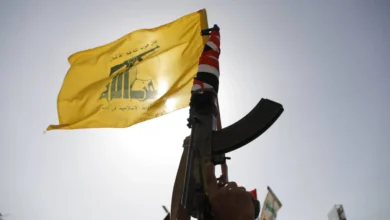
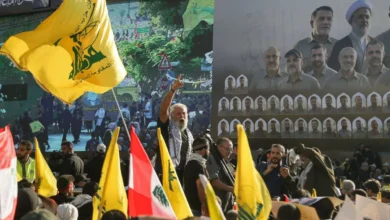
Simon Karam currently heads the Lebanese delegation to the committee overseeing the ceasefire agreement with Israel, known as the “Mechanism,” which includes the United Nations Interim Force in Lebanon, Lebanon, Israel, France, and the United States. Hezbollah rejects any direct negotiations between Lebanon and the Hebrew state and considers them a prelude to normalization of relations.
The “Mechanism” committee was established under the ceasefire agreement reached between Lebanon and Israel in November 2024 and is tasked with monitoring its implementation.
The Lebanese and Israeli sides held two rounds of talks in Washington on April 14 and 23 as a prelude to peace negotiations.
On Wednesday, Lebanese Prime Minister Nawaf Salam stated that Lebanon “does not seek normalization with Israel but rather to achieve peace.”
He noted that “stabilizing the ceasefire will form the basis for any new round of negotiations that may be held in Washington,” and that “the minimum of our demands is a timetable for Israel’s withdrawal.”
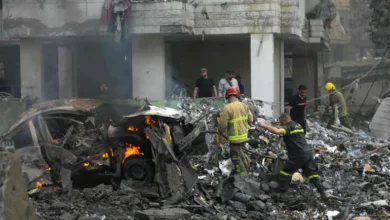
On March 2, Israel launched a new expanded offensive against Lebanon following the 2024 conflict, resulting in thousands of dead and wounded and more than 1.6 million displaced people—about one-fifth of the population—according to the latest official Lebanese data.
On April 17, a ten-day truce began between Hezbollah and Tel Aviv, which was later extended until May 17.
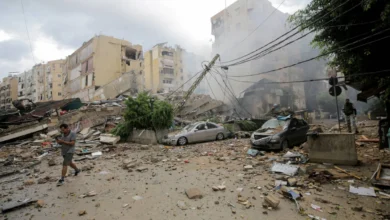
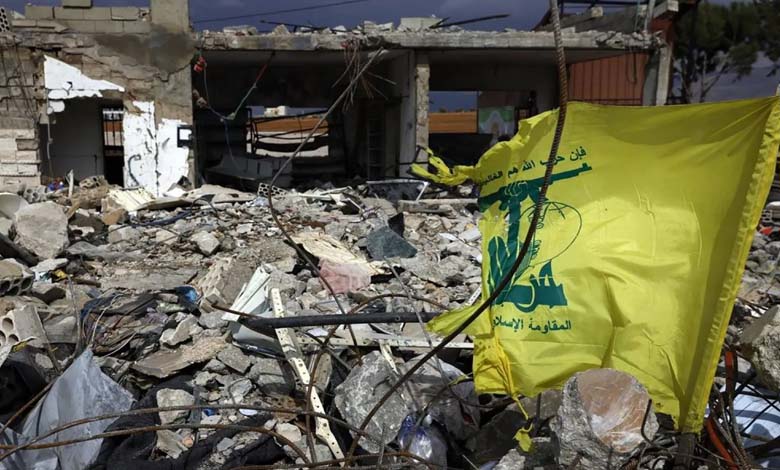
However, Israel continues to violate it daily through shelling that causes casualties, in addition to large-scale demolitions of homes in dozens of villages in southern Lebanon.
Israel occupies areas in southern Lebanon, some for decades and others since the previous war between 2023 and 2024, and has advanced during the current offensive nearly 10 kilometers inside the southern borders.