Trump Signals Iran Could Remain Under Fire Until an Agreement Is Reached
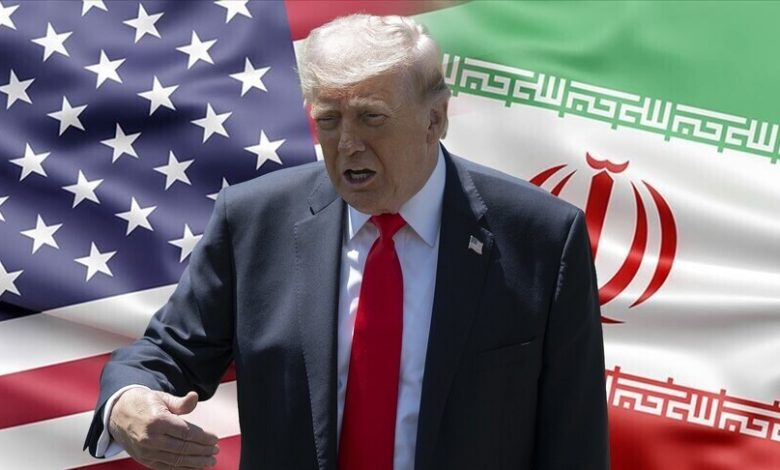
The U.S. president claims that Iranian officials contacted him to request an end to the bombing, while Tehran denies the allegation.
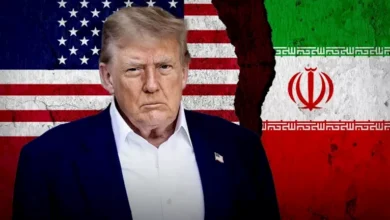
U.S. President Donald Trump stated that attacks on Iran would continue “intensely” if no agreement is reached between the two countries, suggesting a willingness by the United States to escalate the confrontation. Such a move threatens an already fragile ceasefire and raises concerns about the economic consequences of a prolonged conflict. Observers believe the remarks are intended to pressure Tehran into accepting his conditions and concluding an agreement.
-
Trump Promotes an Electoral Victory Over Iran and an Imminent Agreement
-
He Chose to Respond: Netanyahu Ignores Trump’s Calls and Strikes Iran
Speaking from the White House Situation Room in comments carried by Fox News on Thursday, Trump said that 49 Tomahawk missiles had been used to strike targets inside Iran the previous night. He added that American fighter jets had flown over Iranian airspace and destroyed radar systems and air-defense installations in southwestern Iran.
At the same time, he claimed that senior Iranian officials had contacted him and requested an end to the bombing campaign, indicating that the attacks would soon come to a halt.
Commenting on the possibility that no agreement might be signed, Trump used offensive language before saying: “If they do not sign the agreement, we will bomb them heavily tomorrow.”
-
Trump caught between pressure to end the Iran war and appeasing Republican hawks
-
Trump trapped in the Iran war between no victory and no peace
Meanwhile, a senior Iranian official rejected the U.S. president’s claims that Iranian officials had contacted him to seek a ceasefire.
Speaking anonymously, the official told Iranian state television: “Trump’s claim that Iranian officials spoke directly with him and asked for the bombing to stop is completely false.” He added: “There has been no communication with him, and Iran is responding militarily to the attacks.”
Early Thursday, Iran’s Islamic Revolutionary Guard Corps announced that it had launched missiles and drones against several targets located at military bases in Kuwait, Bahrain, and Jordan, in retaliation for U.S. strikes against various locations across Iran.
-
The Beijing summit brings Iran, Taiwan, and artificial intelligence into focus… What do Trump and Xi want?
-
The war with Iran and the constraints of Congress… Trump surpasses the 60-day deadline
On Wednesday evening, the United States Central Command (CENTCOM) announced the beginning of military strikes against several targets inside Iran.
In a statement, CENTCOM said its forces had begun, at 5:15 p.m. Eastern Time (21:15 GMT), “additional defensive strikes against multiple targets inside Iran under the direction of the Commander-in-Chief of the Armed Forces.”
Amid alternating setbacks and cautious optimism, Tehran and Washington have been engaged in negotiations since the current ceasefire began on April 8, seeking to end the war launched by the United States and Israel against Iran on February 28.
-
Mutual criticism… the Iran war reignites the rift between Trump and Merz
-
Iran to Trump: we did not request the extension of the truce, and the loser does not set the terms
Concerns are growing within the United States regarding the economic consequences of continued military confrontation with Iran, particularly as economic indicators point to accelerating inflation. This situation presents increasing challenges for President Donald Trump’s administration just months before the congressional midterm elections.
Amid mounting debate over the cost of the war and its impact on financial markets, Trump downplayed recent data showing inflation reaching levels not seen in years, arguing that current pressures are temporary and linked to the security situation in the Gulf region.
The U.S. president expressed confidence that economic conditions would improve significantly once the conflict ends and the risks threatening global energy flows diminish.
-
We destroyed their forces and nuclear laboratories: Trump outlines the results of the war against Iran
-
Trump keeps Iran under pressure and anticipates an imminent end to the war
The administration is facing criticism from political opponents over the crisis’s impact on the purchasing power of American households, particularly due to rising fuel prices, transportation costs, and the prices of many essential goods.
Republicans fear that living conditions could become a decisive factor in the upcoming elections, as voters remain more focused on prices and income levels than on foreign policy issues.
The White House attributes a significant portion of inflationary pressures to tensions surrounding the Strait of Hormuz, one of the world’s most important oil transportation routes. Concerns over potential supply disruptions have driven up energy prices on international markets, directly increasing production and shipping costs within the United States.
-
The last-hour call between Donald Trump and Benjamin Netanyahu: behind the scenes before the Iran truce
-
Trump’s deadline enters its decisive hours… Iran under bombardment and warning about trains
Trump Mocks the Economic Consequences of War: “I Love Inflation”
Trump revealed that his administration had implemented exceptional measures to maintain oil flows and prevent major market disruptions, explaining that these actions were designed to reduce risks that could have led to even higher prices.
He emphasized that the cost of these measures was justified compared with the potential economic losses that could have resulted from disruptions to energy supplies.
Regarding inflation, the U.S. president said: “I love inflation,” adding that “prices will decline significantly after the war ends and a peace agreement is reached on our terms.”
-
U.S. President Donald Trump threatened to destroy bridges and power stations in Iran
-
Trump and Iranian nuclear fuel: a strategic move to decide the war
Economists, however, warn that a prolonged conflict could undermine efforts to control inflation and may compel the Federal Reserve to keep interest rates at elevated levels for longer than expected.
Such a scenario would prolong pressure on borrowers, businesses, and American households at a time when the administration is seeking to preserve economic growth momentum.
With geopolitical tensions continuing to influence energy markets, the outlook for the U.S. economy appears closely tied to the trajectory of the crisis with Iran. Observers believe that any political or security breakthrough could help calm markets and lower oil prices, whereas continued confrontation may trigger a new wave of inflationary pressures and economic uncertainty.
-
Trump mobilizes for a Hormuz alliance and broader international involvement in the war against Iran
-
Trump, CNN and the speech of Iran’s new Supreme Leader: four minutes that reignite the war
-
Trump studies Iran’s future after the war and keeps an eye on Khamenei’s successor