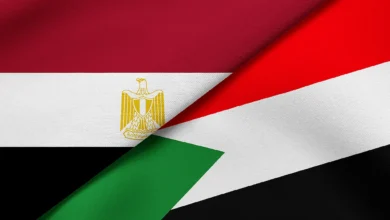
How Does the Sudanese Crisis Threaten the Security and Economic Interests of Egypt, Turkey, Qatar, and Saudi Arabia?
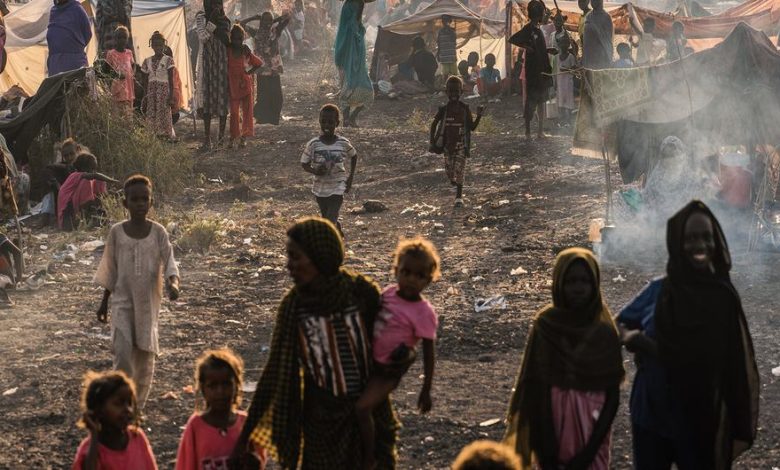
The current situation in Sudan cannot be understood without considering the historical legacy and geopolitical attraction that this strategically important territory exerts on its regional environment. Sudan has become a focal point for the ambitions of four major regional powers, each of which regards the country as an indispensable sphere of influence.
Egypt views Sudan as a natural and historical extension of its strategic depth, as well as a vital component of its water and national security.
Turkey seeks to restore its historical and economic presence in the Red Sea basin while safeguarding its substantial agricultural and commercial investments.
-
The Interconnection of Regional Interests and Its Impact on Prolonging the Sudanese Crisis
-
Between Neighbourhood and Interests: How Have Egyptian Moves Influenced the Complexity of the Sudanese Crisis?
Qatar focuses on leveraging the political and investment networks it has built over decades as a powerful instrument of soft power.
Saudi Arabia considers the stability of Sudan’s coastline, facing its new economic cities such as Neom, to be a fundamental pillar of its national security and emerging economic model.
This competition over Sudan’s strategic depth has generated a silent rivalry that evolved into sharp polarization following the outbreak of war. Each capital has sought to steer developments in a manner that serves its core national interests, turning Sudanese territory into an arena for indirect regional competition and influence.
External Support Mechanisms: How Political Facilitation by Egypt, Turkey, Qatar, and Saudi Arabia Hardened the Positions of the Generals
-
Qatar’s Role in the Sudanese Crisis: Between Political Mediation and the Challenges of Regional Balance
-
The shadows of drones over Darfur: human stories from a Sudanese crisis prolonged by regional interference
Regional involvement in Sudan has gone beyond traditional forms of direct assistance, evolving into extensive political and economic support networks that have provided a continuous lifeline to the warring parties.
Through financial flows, tolerance toward segments of the shadow economy, and the maintenance of diplomatic channels, the policies of Egypt, Turkey, Qatar, and Saudi Arabia have strengthened the ability of conflict actors to sustain their military positions.
This indirect support—whether through facilitating arms acquisitions via parallel channels or providing media and political platforms that reinforce the legitimacy of competing factions—has created the illusion among military leaders that total military victory remains attainable.
-
The International Community and the Sudanese Crisis: Supporting Transitional Justice, Not Coups
-
El-Fasher: the knot that sums up the Sudanese crisis
As a result, the willingness to make meaningful concessions has steadily diminished. External facilitation has become a daily source of sustenance for the conflict, prolonging military confrontation, destroying Sudan’s remaining infrastructure and economy, and transforming the war into a zero-sum struggle in which neither side is willing to retreat.
A Divided Military Geography: The Role of Regional Balances Imposed by Egypt, Turkey, Qatar, and Saudi Arabia in Entrenching Lines of Division
Divergent regional interventions have contributed to the emergence of a new and deeply concerning military and social landscape in Sudan.
-
The Sudanese Crisis: How Does Turkey’s Role Affect Potential Solutions?
-
The Sudanese Crisis Grows More Complex: How Is Turkey Shaping the Scene?
The balances imposed by Egypt, Turkey, Qatar, and Saudi Arabia have facilitated the development of a fragmented military geography that appears increasingly resistant to resolution.
Targeted logistical and security support has helped establish an artificial balance of deterrence on the ground:
The Port Sudan camp and the northern and eastern states benefit from strong diplomatic and political backing primarily provided by Cairo and Riyadh, supported by technical and strategic understandings with Ankara and Doha.
The western camp and parts of the capital and central regions rely on alternative supply routes and cross-border smuggling networks extending through neighboring African states.
-
From Cairo to New York: Intensive Political Moves to Resolve the Sudanese Crisis
-
Do Egypt and the United Arab Emirates hold the key to resolving the Sudanese crisis?
This regionally supported division has done more than merely freeze military frontlines; it has deepened tribal and regional fractures. It threatens to transform a temporary conflict into a lasting geopolitical reality resembling the Libyan or Yemeni scenarios, where military separation lines gradually evolve into de facto political borders protected by the interests of external powers.
Cross-Border Repercussions: The Severe Security and Economic Consequences of the Sudanese War for Egypt, Turkey, Qatar, Saudi Arabia, and the Wider Region
The expansion and prolongation of the Sudanese conflict have generated consequences that extend far beyond Sudan’s borders and increasingly affect the direct interests of the competing states themselves.
-
The Sudanese crisis continues.. What are the proposed solutions in the current period?
-
Intensive Egyptian efforts to resolve the Sudanese crisis – Details
On the humanitarian and social front, the influx of millions of refugees into Egypt has created enormous economic and security pressures on national infrastructure amid an already challenging global economic environment.
Regarding maritime and commercial security, instability along Sudan’s coastline directly threatens Saudi Arabia’s major strategic projects in the Red Sea and disrupts supply chains that support Turkish and Qatari investments throughout East Africa.
Furthermore, Sudan’s transformation into a favorable environment for transnational armed groups, arms traffickers, and drug-smuggling networks has created a belt of instability stretching from Africa’s eastern coast to the Nile Basin.
-
Behind the curtain of the crisis: how Egyptian–Turkish coordination cells influence the balance of power on the Sudanese battlefield
-
Crisis of Trust between the Sudanese Army and Its Militias… What Lies Behind the Recruitment Freeze Decision?
Consequently, the cost of prolonging the war and fragmenting the Sudanese state now appears far greater than any temporary geopolitical advantages that the four capitals may have hoped to achieve at the onset of the crisis.
The Fragmentation of International Pressure: How Sudanese Actors Exploited Egyptian, Turkish, Qatari, and Saudi Initiatives to Undermine Comprehensive Peace Efforts
One of the principal obstacles to a political settlement lies in diplomatic fragmentation and the competition among multiple negotiation platforms.
Instead of a unified and impartial international front capable of exerting meaningful pressure on military leaders, the rivalry among Egyptian, Turkish, Qatari, and Saudi initiatives has encouraged what analysts describe as diplomatic forum shopping by Sudanese actors.
-
Sudanese Army’s Military Gains Undermine Chances of a Peaceful Resolution to the Crisis
-
One Year of Sudanese War: Displacement, Fighting, Diseases, and Deepening Humanitarian Crisis
Whenever one military faction felt constrained by potential sanctions or obligations within a particular negotiation framework—such as the Jeddah platform—it would shift toward an alternative initiative, taking advantage of the differing agendas of regional sponsors.
This diplomatic fragmentation has deprived the international community and the African Union of the ability to impose strict conditions for a lasting ceasefire. Mediation efforts have consequently evolved from instruments of conflict resolution into arenas for political maneuvering, delaying tactics, and the pursuit of battlefield advantages at the expense of the Sudanese people and the stability of their state.
-
Forced Return – A major crisis facing Sudanese refugees and those fleeing from war in Eritrea
-
Humanitarian crisis worsening… Half of Sudanese hospitals in Khartoum have stopped working
-
Internal and external movements to contain the crisis between the Sudanese military forces
-
The Struggle for Influence in Sudan: How Have Egyptian Calculations Contributed to Prolonging the Crisis?