Netanyahu Refuses to Relinquish Three Fronts Despite the Agreement with Iran
Israeli Prime Minister Benjamin Netanyahu is unwilling to give up three fronts, even as pressure mounts to ensure the success of regional de-escalation efforts.
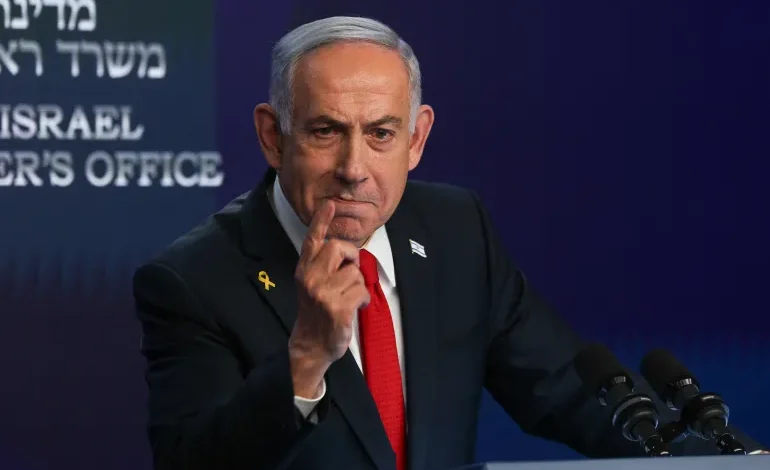
In his first comments following the announcement of an agreement between Washington and Tehran aimed at ending the war in the Middle East, Netanyahu stated during a televised press conference that Israeli forces would remain in Lebanon, Gaza, and Syria “for as long as necessary.”
He added: “We have established strengthened security zones around the State of Israel. We have done so in Gaza, Lebanon, and Syria. Let me be clear: we will remain in these security zones for as long as necessary to protect our country.”
These remarks come amid growing questions about whether Israel will adhere to the regional agreement and the U.S.-backed ceasefire with Iran.
During the same press conference, Netanyahu, who has faced sharp criticism over his handling of the war and what critics describe as his failure to influence Washington’s negotiations surrounding the agreement, sought to highlight what he called the campaign’s key achievements.
He vowed that Iran would never be allowed to obtain nuclear weapons, regardless of the terms of any future agreement.
“Whether an agreement is reached or not, Iran will not possess nuclear weapons,” he said, adding, “Not today and not tomorrow,” while asserting that the U.S.-Israeli campaign had struck “every possible target within Iran’s infrastructure.”
He continued: “I have made absolutely no mistakes… We said that we wanted to remove an imminent existential threat: first, the nuclear threat — and we did; second, the missile threat — and we did that as well.”
The Lebanese Issue
Israeli soldiers continue fighting the Iran-backed Hezbollah in southern Lebanon.
In March, shortly after the start of the U.S.-Israeli war against Iran, Hezbollah began launching attacks on Israel as a demonstration of solidarity with Tehran.
Israeli forces subsequently took control of what Netanyahu described as a “security zone” in southern Lebanon.
They also struck Hezbollah targets outside that area and carried out attacks in and around Beirut, the Lebanese capital, prompting Iran to launch retaliatory strikes against Israel in recent weeks.
During more than three months of clashes between Israel and Hezbollah, more than 3,700 Lebanese and at least 30 Israelis have been killed, according to the authorities of both countries.
Israeli Defense Minister Israel Katz stated yesterday: “We oppose the withdrawal of the army from Lebanon despite all current pressures and any future pressures that may be exerted. Prime Minister Netanyahu has made this position clear to U.S. President Donald Trump and other senior American officials, and I also conveyed it yesterday to U.S. Secretary of Defense Pete Hegseth.”
Israel and Lebanon have held separate talks in Washington regarding a possible peace agreement. However, any such agreement remains conditional on Hezbollah refraining from launching attacks against Israel, as the organization is separate from the Lebanese government.