Behind the U.S.–Iran Agreement: Heated Discussions, Skepticism, and Pressure
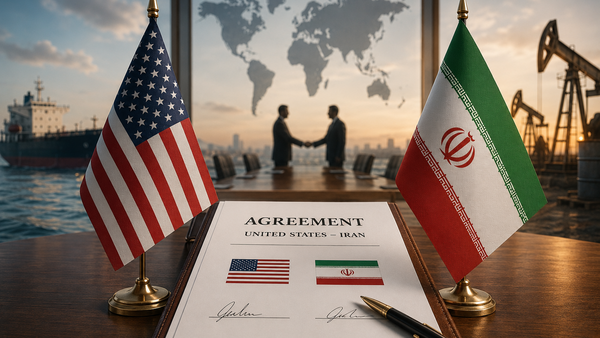
New details about the final hours before the agreement between the United States and Iran reveal intelligence-related doubts raised during intense discussions, as well as expectations of continued pressure on Tehran.
According to three sources familiar with the discussions, cited by Axios, Central Intelligence Agency (CIA) Director John Ratcliffe informed President Donald Trump and other senior officials that intelligence gathered by U.S. agencies raised serious doubts about Iran’s willingness to make the nuclear concessions required under any final agreement.
-
Where Will the United States and Iran Sign the Expected Agreement?
-
United States and Iran: Uranium Enrichment and Stockpile Become the Sticking Point of a Very Close Agreement
Ratcliffe was not the only skeptic within Trump’s senior team. Secretary of State Marco Rubio and Secretary of Defense Pete Hegseth also expressed concerns during internal deliberations and questioned several aspects of the memorandum of understanding announced on Sunday.
In contrast, Vice President J.D. Vance and U.S. envoys Steve Witkoff and Jared Kushner defended the agreement, according to two sources.
Axios reported that a series of high-level meetings on the agreement took place between Trump and his advisers before Sunday’s announcement.
-
Russia offers mediation between the United States and Iran to end the war
-
When will the truce between the United States and Iran end?
During those meetings, Trump and his team reviewed intelligence collected by several U.S. agencies. According to two sources, the intelligence suggested that the way Iranian officials discussed the agreement among themselves differed significantly from what they were telling mediators and American representatives.
Based on that intelligence, Ratcliffe and Rubio reportedly expressed doubts that Iran would ultimately agree to the nuclear measures sought by Washington.
One source stated: “The intelligence indicates that Iran’s intentions do not align with its commitments under the agreement.”
-
Details of a secret call between the United States and Iran that nearly ended the war
-
New Talks – United States and Iran Revive Nuclear Agreement Negotiations Once Again
Trump Makes the Final Decision
Commenting on the discussions, a White House official settled the issue by stating: “President Trump listens to every viewpoint on any given issue, but everyone understands that he is the final decision-maker.”
The official added: “This memorandum of understanding satisfies all of the administration’s longstanding red lines by ensuring that Iran can never acquire a nuclear weapon, cannot retain highly enriched uranium, and cannot use global energy supplies as leverage.”
He further stressed that Trump would approve only a “good” final agreement.
The nuclear provisions of the memorandum signed on Sunday depend on reaching a more detailed nuclear agreement within the next sixty days.
-
Open and no attack on warships: United States refutes Iran’s claims over Hormuz
-
The United States Launches Strikes on Iran: Four Drones Shot Down and Launch Site Bombed
The arrangement is intended to extend the ceasefire and launch a sixty-day negotiation period, which may be extended by mutual consent.
As part of those talks, Iran reiterates its longstanding commitment never to obtain a nuclear weapon.
Another source told Axios that the memorandum states that the United States and Iran commit themselves to “resolving the issue of disposing of enriched material stockpiles” and to “discussing the future of enrichment and other mutually agreed issues related to Iran’s nuclear needs based on a satisfactory framework to be defined in the final agreement.”
-
The United States expands its deterrence equation against Iran… historic defense budget and accelerated military production
-
Advanced techniques and striking power: how the United States besieges Iran and clears the Strait of Hormuz
The memorandum also stipulates that Iran will maintain the status quo regarding its nuclear program for the duration of the negotiations. In return, the United States will refrain from imposing new sanctions or deploying additional forces to the region.
If a final nuclear agreement is reached, the United States will, within thirty days, withdraw the forces mobilized for the war and lift all sanctions imposed on Iran according to an agreed timetable, according to the source’s description of the memorandum.
“Pay for Performance”
Two senior U.S. officials told reporters on Monday that any benefits granted to Iran would depend entirely on concrete actions taken by Tehran.
-
Reinforcements and thousands of troops: the United States considers expanding its military deployment against Iran.
-
Excessive demands: Iran reveals obstacle to agreement with the United States
One senior official stated that the United States would know within two to three weeks whether Iran was serious about making nuclear concessions. If not, the process could collapse without Iran gaining any significant advantages.
The release of frozen Iranian funds and assets remains one of the most controversial issues in the negotiations.
The memorandum leaves considerable room for interpretation, stating that the United States “commits to making the funds fully available for use immediately upon implementation of the memorandum of understanding,” according to a source familiar with the document.
U.S. officials say the guiding principle will be “pay for performance.”
A senior American official told journalists that if the United States sees positive “gestures” from Iran, it may release a portion of the frozen funds in return.
-
Are the UAE Playing a Mediation Role Between Iran and the United States?
-
New sanctions imposed by the United States, Britain, and Canada on Iranian officials… Details
-
The United States will sanction more than two dozen people and entities about Iran’s nuclear
-
No U.S. Withdrawal from the Region During Negotiations with Iran
-
Lebanon Becomes a Test Case for the Resilience of the U.S.–Iran Agreement
-
U.S.-Iran Agreement: Broad International Welcome and Focus on Hormuz and the Nuclear Issue