The U.S. Military Turns Coffee Waste into Explosive Devices
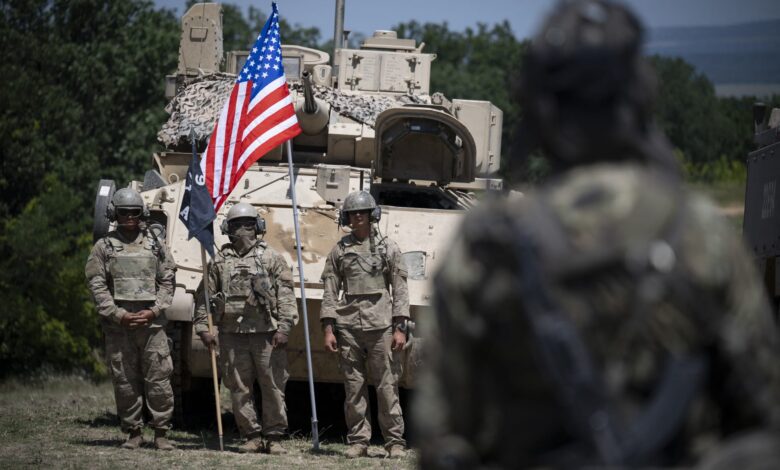
The Pentagon has announced the successful completion of field trials conducted by the U.S. Marine Corps to manufacture military supplies directly in the field using locally available resources, including coffee waste, volcanic rocks, and 3D printing technologies, with the aim of reducing dependence on traditional supply chains in remote areas.
According to statements made by a senior U.S. Department of Defense official, the U.S. Marine Corps successfully carried out field experiments to manufacture experimental explosive charges using locally sourced materials, including coffee grounds, coconut fibers, and volcanic rocks. The initiative reflects the Pentagon’s accelerating efforts to reduce reliance on conventional supply chains while preparing for potential conflicts in remote regions where logistical support would be particularly challenging.
The experiments were unveiled during the Defense One Tech Summit, where Joseph Jewell, the U.S. Assistant Secretary of Defense for Science and Technology, presented the project as an example of a broader Pentagon initiative aimed at enabling deployed forces to manufacture essential equipment directly in the field rather than waiting for supplies to arrive from distant military bases.
According to the American press, the trials were conducted in the Indo-Pacific region, which the United States considers one of the most strategically sensitive theaters for any future conflict due to its vast geographical expanse, numerous islands, and the inherent difficulty of maintaining secure supply lines.
Jewell explained that the objective was not to demonstrate the superiority of any specific material, but rather to assess the feasibility of utilizing locally available resources in different operational environments alongside mobile manufacturing equipment and 3D printing technologies to produce essential field supplies more rapidly while reducing dependence on external logistics.
He noted that the experiments included evaluating several naturally occurring local materials, including coffee waste, coconut fibers, volcanic rocks, and recycled materials such as plastic bottles, as part of a broader study to determine their suitability for use within a deployable field-manufacturing system.
The U.S. official directly linked these experiments to the lessons learned from the war in Ukraine, arguing that one of the conflict’s most significant developments has been the ability of armed forces to design, manufacture, and deploy new technologies during the conflict itself, rather than relying on conventional acquisition and weapons development cycles that often take years to complete.
He stated that Ukraine has provided a clear example of rapid military innovation by successfully building a large-scale drone industry and continuously improving its capabilities at an accelerated pace in response to evolving battlefield requirements. This experience has prompted the U.S. Department of Defense to reassess its traditional approaches to research, development, and manufacturing.
In this context, Jewell outlined a broader Pentagon vision centered on deploying mobile manufacturing units that can be transported directly to operational theaters. These units would be equipped with advanced production technologies, including 3D printing systems, enabling deployed forces to manufacture part of their operational requirements on-site through what is known as the “manufacturing at the point of need” concept.
The U.S. Department of Defense believes that this model could significantly reduce the risks associated with long and vulnerable supply chains, particularly in the event of a large-scale conflict in the Indo-Pacific region, where transporting equipment and materials from the United States to units stationed on remote islands could prove exceptionally difficult.
This initiative forms part of a broader Pentagon strategy designed to accelerate military innovation. The strategy also includes strengthening collaboration with universities and private industry, expanding the use of artificial intelligence and biomanufacturing technologies, increasing the adoption of 3D printing, and making hundreds of government-owned patents available to defense companies in order to speed up the transition of research innovations into operational military capabilities.