Collapse of the Sudanese Pound and the Failure of the Port Sudan Authorities: Sudan Staggers Toward an Unprecedented Economic Crisis and an Imminent Social Explosion
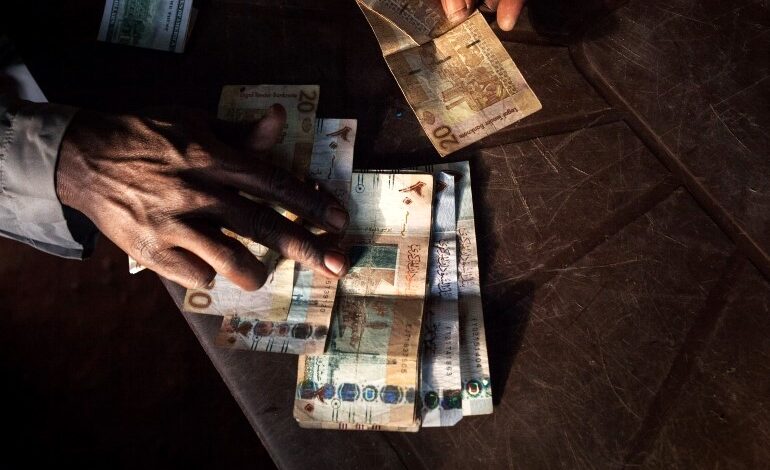
The Sudanese economy is currently experiencing a period of free fall, marked by the daily and unprecedented collapse of the Sudanese pound against foreign currencies. This dramatic depreciation has sent severe shockwaves through the markets and destroyed the purchasing power of every segment of society.
-
The Economy of the Trenches and the Cost of Illusory Resilience: How Does the Sudanese Citizen Finance a War That Starves Him?
-
Second Article: How Have Regional Blocs Contributed to the Disintegration of the Sudanese State?
This alarming deterioration is not merely a secondary consequence of the war; rather, it represents the direct and inevitable result of the military leadership’s profound failure to manage the country’s economy and sovereign resources from its current headquarters in Port Sudan. The absence of an economic vision, reliance on improvised monetary policies, the printing of currency without adequate backing, and the neglect of productive sectors have collectively pushed Sudan toward an economic and humanitarian crisis unlike anything witnessed in its modern history, a crisis that now threatens the complete breakdown of social stability.
The sharp decline in the value of the Sudanese pound has triggered an extraordinary surge in the cost of everyday living. The prices of essential commodities such as bread, sugar, cooking oil, and medicines have multiplied several times within only a few weeks. The average Sudanese citizen, whose salary has effectively been reduced to only a few dollars—if they are fortunate enough to still have employment or receive their wages at all—is now completely unable to provide even the most basic necessities for their family.
-
The Generals’ Mills: How Military Dominance Destroyed Sudan’s Economy and Turned the Lives of Its People into a Living Hell
-
The Free Fall of the Sudanese Pound: An Analysis of Economic Collapse Indicators and Daily Living Conditions
Open markets in cities such as Atbara, Shendi, Port Sudan, and Dongola are experiencing severe stagflation: goods remain available on store shelves, yet consumers possess virtually no purchasing power to buy them. This continuous erosion of the real value of wages and savings has transformed the middle class into a struggling population while pushing the poorest segments of society toward absolute destitution, all in the absence of any meaningful government initiative to alleviate soaring living costs or provide direct assistance to the most vulnerable citizens.
The failure of the military leadership and the Port Sudan authorities to manage the country’s resources is clearly reflected in the diversion of sovereign revenues toward serving the military elite and financing the war effort while completely neglecting sectors that constitute the backbone of food security and social stability.
-
The War Economy and the Port Sudan Authorities: War Efforts Consume Teachers’ Salaries and Accelerate Economic Decline
-
The referral of the Sudanese network to the State Security Chamber: strategic implications and security dimensions
Ports have been neglected, and traditional exports such as gold and agricultural products have declined significantly due to corruption, favoritism, the absence of financial oversight, and the ambiguity surrounding laws and financial regulations issued by the Ministry of Finance of the transitional government. This administrative failure has caused the state to lose control over the foreign exchange market, allowing the parallel market, or black market, to determine the fate of the national economy and dictate exchange rates without any effective intervention or protective monetary policy from the Central Bank. The direct consequences of this failure are no longer confined to economic indicators alone; they now strike at the heart of the country’s food security. International and domestic reports warn that Sudan is entering a stage of widespread food insecurity, with the state no longer capable of importing wheat or the fuel necessary for electricity generation and water supply.
This comprehensive deterioration of the country’s economic and social foundations is rapidly paving the way for a large-scale social explosion that security measures alone will be incapable of containing. The level of frustration and suppressed anger among citizens, internally displaced people, workers, and public employees suffering from hunger, poverty, and displacement has reached its highest point.
-
Sudan’s civil administration… the inevitable path to ending chaos and building a viable economy
-
A Moment of Truth in Sudan: Why Institutional Civil Administration Has Become the Only Option to Save the State and the Economy
Field observations and social analyses indicate that Sudan is approaching a massive wave of public demonstrations and popular protests demanding change and openly rejecting the policies pursued by the military and the Port Sudan authorities.
The Sudanese people will not accept dying from hunger and poverty while a governing authority monopolizes national resources to finance its own war and neglects its fundamental responsibility to protect and feed its citizens. The struggle for livelihood and human dignity is expected to become the primary driving force behind popular mobilization in the coming period, expressing total rejection of what is portrayed as a failed model of military governance that has destroyed the economy, devastated the Sudanese pound, squandered national resources, and driven the country to the brink of fragmentation and comprehensive collapse.
-
Institutional Civil Administration: The Only Path to Save Sudan from Collapse and Restore Its Economy
-
Al-Burhan and the Islamist Movement: A Troubled Alliance Selling Off Sudanese Sovereignty