Parliamentary Initiative in Tunisia to Designate the Muslim Brotherhood as a Terrorist Organization: A Shortened Path Toward a Comprehensive Ban
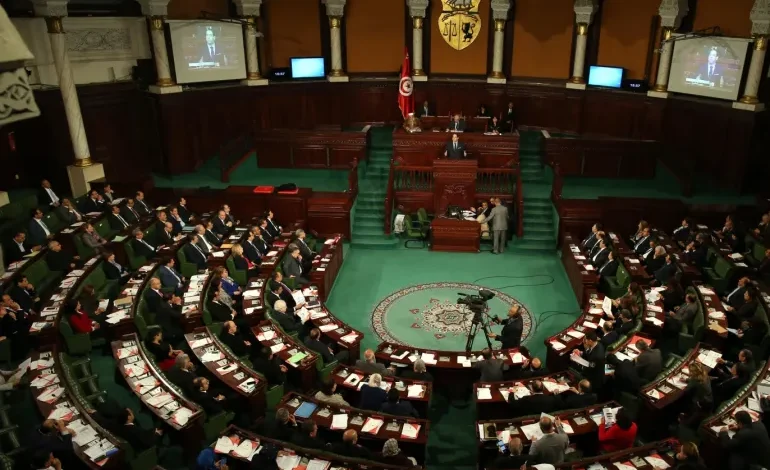
A parliamentary initiative in Tunisia seeks to designate the Muslim Brotherhood as a terrorist organization through an expedited legal process that, according to its supporters, would conclude a long record of alleged violations.
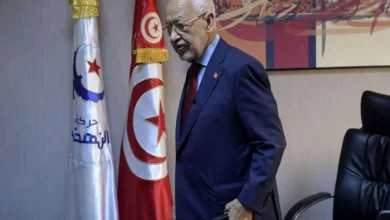
On Thursday, Tunisian lawmakers submitted a draft law that, if adopted, would classify the Ennahdha Movement, the political branch of the Muslim Brotherhood in Tunisia, as a terrorist organization.
-
The Muslim Brotherhood in Tunisia in April: judicial rulings thwart hopes of return and deepen isolation
-
The leader of the Muslim Brotherhood in Tunisia and the dialogue maneuver… Exhausted options revive the victimhood narrative
In a post published on her official Facebook account, Member of Parliament Fatma Mseddi announced that she had submitted the draft legislation, which will be referred to the competent parliamentary committees before being presented for a vote during a plenary session.
According to excerpts published by Mseddi, Article One of the proposed law aims to “protect national security, national sovereignty, and the republican system, while preventing political parties and associations from being used as fronts for terrorist organizations.”
The proposed legislation consists of six articles. Article Two states that “the Ennahdha Movement constitutes the political and organizational extension of the International Muslim Brotherhood Organization in Tunisia” and officially designates it as a “terrorist organization.”
-
Rached Ghannouchi Rejects Remote Trial Appearance: Conspiracy 2 Case Shakes the Muslim Brotherhood in Tunisia
-
As the election date approaches… Muslim Brotherhood in Tunisia intensifies efforts to disrupt
According to the draft, the designation would also apply to “any association or entity proven to have organizational, financial, or operational links with the Ennahdha Movement or with the International Muslim Brotherhood Organization.”
The proposal further provides for “the immediate dissolution of all organizations, associations, and entities covered by this law, the removal of representative and parliamentary status from leaders whose affiliation and involvement have been established, and the prohibition of those found responsible from running for office or holding public positions for a period of ten years.”
Fatma Mseddi noted that ten lawmakers from various parliamentary blocs officially submitted the draft legislation seeking to designate Ennahdha as a terrorist organization.
-
Who is Noureddine Bhiri, the mastermind of the Muslim Brotherhood in Tunisia, accused in the travel case after being sentenced?
-
Its effects are no less than bombing Palestinian hospitals… Saied speaks about the corruption of the Brotherhood in Tunisia
An Accelerated Legal Process
Commenting on the parliamentary initiative, Tunisian political analyst Ziad Kacem stated that, under Tunisian law, it is possible to dissolve the party and classify it as a terrorist organization because of its alleged involvement in several serious cases, particularly the so-called “Secret Apparatus,” described as the organization’s security and military wing.
Kacem explained that this objective could be achieved through “two separate legal avenues: either through the judiciary by relying on existing legislation, or through Parliament by adopting a new dedicated law.”
He added that if Parliament approves the draft law submitted by the lawmakers, “the traditional judicial process could be significantly shortened, allowing the party to be permanently dissolved and designated as a terrorist organization.”
-
Saied is determined to eliminate the Muslim Brotherhood in Tunisia… Details
-
The Ennahdha Movement collapses… Crises hit the Muslim Brotherhood in Tunisia
He continued: “If the bill is debated and approved by an absolute parliamentary majority, it will be published in the Official Gazette, after which the party will immediately become both dissolved and designated as a terrorist organization by force of law, without waiting for judicial rulings.”
According to the analyst, the legal consequences would include confiscation of assets through the freezing of all financial holdings and bank accounts, as well as the seizure of party headquarters in favor of the state treasury.
This would be accompanied by “comprehensive political exclusion, preventing anyone who previously held responsibilities within the party from engaging in political activities or standing in future elections.”
-
Painful end for the Brotherhood in Tunisia… demands to dissolve Ennahdha movement after the arrest of Ghannouchi
-
The leaders of the Brotherhood in Tunisia before the judiciary.. The start of the investigations of “Deportation of Terrorist”
Kacem further argued that “mere membership in the party, praising it, or displaying its slogans would become a terrorism-related offense punishable by imprisonment under Tunisia’s counterterrorism legislation.”
He also stated that several Ennahdha leaders have been convicted in serious cases involving the recruitment of fighters to conflict zones, political assassinations, espionage, intelligence cooperation with foreign parties, and financial corruption.
The End of an Era
Meanwhile, Tunisian political activist Khaled Baltaher argued that the Ennahdha Movement no longer has any meaningful presence in Tunisia’s current political landscape, noting that its offices are closed and that the party is no longer legally capable of conducting public political activities.
-
After the failure of the Brotherhood in Tunisia.. Is Kais Saied ending the legacy of Ennahdha and its corruption?
-
Ghannouchi before the courts… Terrorism Surrounds the Head of the Brotherhood in Tunisia
Baltaher stated that “the movement’s alleged involvement in the Secret Apparatus case—considered the most serious case involving the Muslim Brotherhood—is sufficient to justify dissolving the party and completely banning its activities.”
He argued that “the Secret Apparatus functioned as a parallel state that successfully infiltrated the country’s security and judicial institutions in order to implement its criminal plans and conceal its intelligence-related activities.”
According to Baltaher, the judicial convictions handed down against several Brotherhood leaders, particularly its leader Rached Ghannouchi, constitute compelling legal evidence demonstrating that the party violated the legal conditions governing its establishment and political activities, thereby justifying its official dissolution.
-
The Secret Apparatus of Tunisia’s Muslim Brotherhood: Lawyer Reveals the Structure of the Octopus
-
The Muslim Brotherhood’s Secret Apparatus Verdicts: Tunisia Opens the Door to Banning Ennahdha
He added that Parliament could dissolve the party and designate it as a terrorist organization if the draft law introduced on Thursday is approved.
He further predicted that “if the Ennahdha Movement is dissolved, its leaders will likely return to clandestine activities, as they operated before 2011.”
The ‘Secret Apparatus’: The Muslim Brotherhood‘s Octopus
On June 2, the Criminal Chamber specializing in terrorism cases at the Tunis Court of First Instance delivered its verdict in the case concerning the Ennahdha Movement’s “Secret Apparatus,” described as the organization’s security and military wing. Sentences ranged from ten years’ imprisonment to life imprisonment.
-
Ghannouchi and the Secret Apparatus Case of Tunisia’s Muslim Brotherhood: Absence as an Escape Does Not Halt Accountability
-
From conspiracy to influence and financing: Tunisia pursues Muslim Brotherhood networks
The court sentenced Rached Ghannouchi, president of the Ennahdha Movement and political leader of the Tunisian Muslim Brotherhood, to life imprisonment plus an additional thirty years.
Mustapha Khedher, identified as the supervisor of the Secret Apparatus, received a life sentence plus ninety-six additional years. Redha Barouni, Taher Boubahri, Kamal Aifi, and seven other defendants were each sentenced to life imprisonment plus seventy-six additional years.
The court also sentenced Fathi Beldi to life imprisonment plus fifty years, Abdelaziz Daghsni to life imprisonment plus thirty-seven years, Kamal Bedoui to life imprisonment plus thirty-two years, and Samir Hannachi to life imprisonment plus thirty years.
-
National reconciliation: a maneuver by Tunisia’s Muslim Brotherhood to break isolation and evade accountability
-
Seeking support abroad: desperate attempts by the Muslim Brotherhood to return to the scene in Tunisia
Additional sentences included forty-eight years for Kais Bakkar, forty-six years for Belhassen Naqqach, forty-two years for Ali Larayedh, thirty-four years for Ali Ferchichi, eighteen years for three defendants, twelve years for four others, and ten years for two additional defendants.
The court also ordered that each convicted individual be placed under administrative supervision for a period of five years.
In 2018, the defense committee representing the families of politicians Chokri Belaid and Mohamed Brahmi, who were assassinated in 2013, released documents and evidence alleging that the Ennahdha Movement maintained a secret security apparatus operating parallel to the state, involved in the assassination of political opponents, espionage activities, infiltration of state institutions, and surveillance of the movement’s adversaries.
-
The Tunisian Muslim Brotherhood in Exile… Politics Without the Street or Legitimacy
-
Conspirators Against Tunisia’s Security… Heavy Sentences for the Brotherhood and Their Allies
-
Wherever They Go, They Bring Ruin: Tunisian President Accuses the Muslim Brotherhood of Fueling Gabès Protests