The Muslim Brotherhood in Tunisia After Ghannouchi’s Conviction: A Leadership Crisis and an Uncertain Future
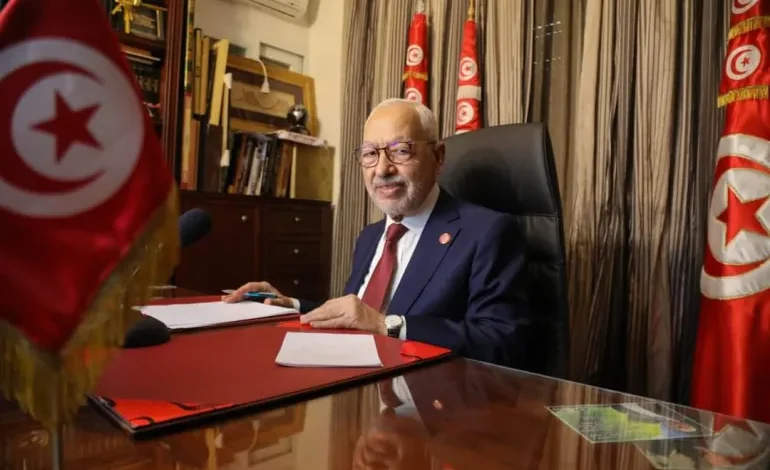
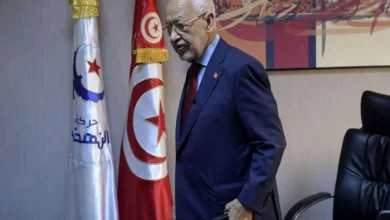
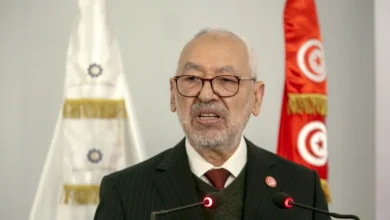
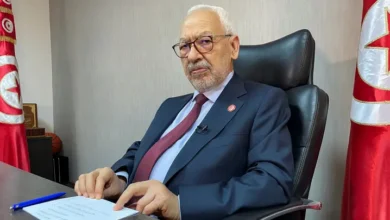
Tunisia’s Ennahdha Movement, affiliated with the Muslim Brotherhood, is experiencing an unprecedented leadership vacuum following a series of severe judicial rulings against its leader, Rached Ghannouchi. The latest ruling concerns the case of the “Secret Apparatus,” which is regarded as the organization’s security and military wing.
Following Ghannouchi’s life sentence in the Secret Apparatus case, discussions have intensified regarding who might succeed him as head of Ennahdha, whether through leadership from abroad or through the transfer of authority to his son.
-
The leader of the Muslim Brotherhood in Tunisia and the dialogue maneuver… Exhausted options revive the victimhood narrative
-
Rached Ghannouchi Rejects Remote Trial Appearance: Conspiracy 2 Case Shakes the Muslim Brotherhood in Tunisia
However, Ennahdha’s crisis extends far beyond the vacancy at the top. The movement, which ruled Tunisia during what its critics describe as a “dark decade,” is now facing an unprecedented decline in its political and organizational influence within Tunisian society, which holds it responsible for many of the failures that followed the 2011 revolution. Consequently, the battle over Ghannouchi’s succession is merely a reflection of a broader crisis concerning the future of the movement itself, which is increasingly facing calls for dissolution and prohibition.
Earlier this month, the Criminal Chamber specializing in terrorism cases at the Court of First Instance in Tunis issued its verdict in the case concerning Ennahdha’s Secret Apparatus, considered the movement’s security and military branch. Sentences ranged from life imprisonment to ten years in prison.
-
As the election date approaches… Muslim Brotherhood in Tunisia intensifies efforts to disrupt
-
Who is Noureddine Bhiri, the mastermind of the Muslim Brotherhood in Tunisia, accused in the travel case after being sentenced?
The Succession Issue
Tunisian political activist Khaled Baltaher said that Ennahdha is no longer facing merely a leadership crisis but rather a combination of accumulated challenges, including judicial pressure, internal divisions, declining influence, and growing public isolation following the controversial decade of its political dominance.
Regarding Ghannouchi’s succession, Baltaher explained that “the movement functions like other ideological organizations that rely on a specific model of leadership and management,” noting that Ghannouchi’s son, Mouadh, and his son-in-law, Rafik Abdessalem, are among the figures most likely to assume leadership.
-
Saied is determined to eliminate the Muslim Brotherhood in Tunisia… Details
-
Its effects are no less than bombing Palestinian hospitals… Saied speaks about the corruption of the Brotherhood in Tunisia
Nevertheless, he argued that “the inheritance of Ennahdha’s leadership within the Ghannouchi family would have serious repercussions for the movement, particularly because it would deepen unprecedented internal divisions.”
He added that, given the continued closure of headquarters, the prohibition of meetings, and ongoing judicial rulings, the most likely scenario is that the movement will continue to be managed through a temporary Shura Council and clandestine administrative committees, while Ghannouchi remains a symbolic figure in an attempt to preserve unity amid these intertwined crises.
-
The Ennahdha Movement collapses… Crises hit the Muslim Brotherhood in Tunisia
-
Painful end for the Brotherhood in Tunisia… demands to dissolve Ennahdha movement after the arrest of Ghannouchi
A Ban Drawing Closer
For his part, Mohsen Nabeti, a senior figure in the Popular Current Party, said that the Secret Apparatus case can be regarded as the largest case of its kind and a precedent in the Arab world, as it marks the first time that the Muslim Brotherhood’s secret apparatus itself has been put on trial.
He stated that “throughout history, such organizations have generally been prosecuted as groups or through individual members. For the first time, the apparatus itself and its leadership—from the highest ranks to those directly involved—are being tried. This explains the state of alarm and mobilization that followed, as we observed the entire international Muslim Brotherhood network becoming active in the media in response to these rulings, which struck at the very core of the organization given its longstanding denial of the apparatus’s existence.”
-
The leaders of the Brotherhood in Tunisia before the judiciary.. The start of the investigations of “Deportation of Terrorist”
-
After the failure of the Brotherhood in Tunisia.. Is Kais Saied ending the legacy of Ennahdha and its corruption?
He further asserted that the Secret Apparatus was not only involved in assassinations but also in espionage activities and in undermining political life through what he described as a “blue electronic army” that engaged in defamation campaigns and blackmail by exploiting individuals’ private lives.
According to Nabeti, “the issue goes beyond terrorism and assassinations to encompass infiltration of state institutions and the establishment of parallel structures within the state itself.”
He stressed that “the legal consequences of this case will be more significant than the question of appointing a successor to Ghannouchi,” noting that branches of the Muslim Brotherhood have been designated as terrorist organizations in several countries, including Jordan, Egypt, and the United States.
-
Ghannouchi before the courts… Terrorism Surrounds the Head of the Brotherhood in Tunisia
-
The Secret Apparatus of Tunisia’s Muslim Brotherhood: Lawyer Reveals the Structure of the Octopus
Regarding Ghannouchi’s succession, Nabeti stated that “leadership is not a major problem for such organizations, as groups designated as terrorist organizations generally generate alternative leaders.” However, he argued that “the legal repercussions will be far more severe for Ennahdha, particularly following the involvement of several of its leaders in the Secret Apparatus case and the classification of the apparatus as a terrorist organization through the court rulings and convictions.”
He concluded by stating that “the Secret Apparatus case and the judgments issued in connection with it should prompt the Tunisian authorities to ban the movement’s activities and classify it as a terrorist organization.”
-
The Muslim Brotherhood’s Secret Apparatus Verdicts: Tunisia Opens the Door to Banning Ennahdha
-
Ghannouchi and the Secret Apparatus Case of Tunisia’s Muslim Brotherhood: Absence as an Escape Does Not Halt Accountability
-
We are not easy prey… Tunisia’s president confronts the maneuvers of the Muslim Brotherhood at home and abroad