Terrorism in Africa’s Sahel: Cities at the Heart of the Threat and a Worrying Evolution in Combat Methods
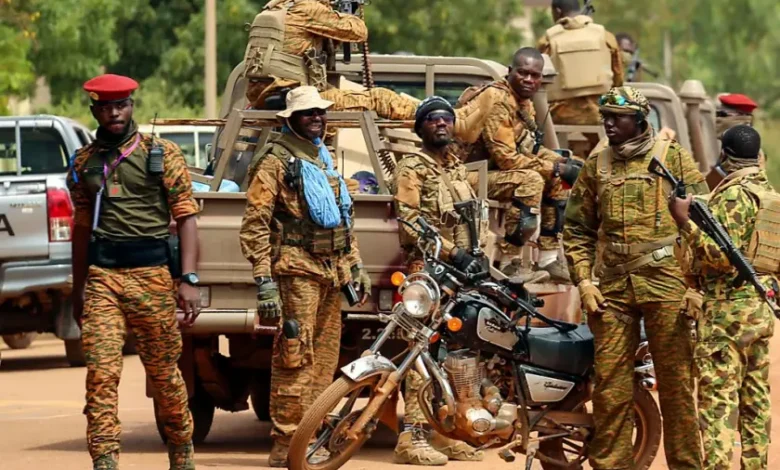
The terrorism landscape in the Sahel is undergoing worrying developments, marked by a shift in strategy toward targeting urban areas, expanding territorial control, and developing new methods of warfare.
On June 18, the terrorist group Jama’at Nusrat al-Islam wal-Muslimin (JNIM), affiliated with Al-Qaeda, attacked Diori Hamani International Airport in Niamey, the capital of Niger, killing 11 soldiers and two civilians.
-
What are the implications of rising terrorism in Africa on Europe? An expert answers
-
The Free Circulation of Weapons and the Infiltration of Terrorist Elements Have Aggravated Terrorism in Africa
Eyewitnesses reported gunfire and explosions during clashes with security forces at the airport. Authorities, meanwhile, announced that they had killed 22 terrorists.
The airport is a strategic facility that houses military bases as well as the headquarters of the joint force bringing together Niger, Burkina Faso, and Mali. It also contains uranium reserves.
The regional branch of the Islamic State, a rival of Jama’at Nusrat al-Islam wal-Muslimin, had previously attacked a military base near the airport in late January. Authorities at the time announced that 20 terrorists had been killed and another 20 arrested.
-
From the Sahel to the East: Five Major Terrorism Hotspots in Africa
-
Increasing Terrorism Activity in Africa: What Are the Implications and Solutions?
The attack also left four soldiers wounded and damaged an aircraft.
According to Africa Defense Forum magazine, the attacks in Niger, along with other recent assaults on urban centers across the Sahel, demonstrate the ability of both groups to carry out complex operations beyond the impoverished rural areas they have historically terrorized.
Both organizations are known to attack civilians, state forces, and Russia’s Africa Corps, while also fighting one another.
A Strategy of Disruption
Jama’at Nusrat al-Islam wal-Muslimin is considered the dominant terrorist group in the Sahel region. Last year, the group began imposing a siege on Bamako, Mali’s capital, blocking major roads and attacking fuel convoys, which caused severe fuel shortages and power outages.
-
Breach of Fortified Cities and Strategic Attacks: Terrorism Unsettles the African Sahel
-
After 10 Years, the United States Struggles with the Spread of Terrorism in West Africa
Experts say this strategy amounts to economic warfare aimed at disrupting life in the Malian capital and undermining public confidence in the ruling military junta.
In April, the Al-Qaeda-linked group and the Azawad Liberation Front launched coordinated attacks on several Malian cities and towns, including Bamako; Gao, parts of which were seized; and Kidal, which the two groups took control of.
In a report for the Africa Center for Strategic Studies, analyst Daniel Eizenga wrote: « By targeting major trade routes and fuel trucks, the alliance seeks to cut off Bamako’s lifelines while simultaneously imposing control over population centers and areas surrounding the capital. »
-
“Land of Migration and Jihad”: ISIS turns Africa into a new front for international terrorism
-
Has Terrorism Penetrated Africa to Plunder Its Wealth?
He added: « Without fuel, essential goods, and other commodities, households and businesses in the country’s most densely populated areas will face increasing hardship. This replicates a similar encirclement strategy witnessed in Burkina Faso. »
The alliance then launched a major offensive in early July, targeting several military and pro-government positions in the cities of Anéfis, Aguelhok, and Gao in northern Mali, as well as Sévaré in central Mali and Kéniérouba south of Bamako.
A Hybrid Armed Front
Speaking to Africa Defense Forum magazine, Daniel Garofalo, an expert on terrorism and counterinsurgency in the Sahel region, said the latest attacks indicate that the alliance’s strategies are making progress.
-
Terrorism Recruits Artificial Intelligence: Inside Boko Haram’s Operations Room
-
Artificial Intelligence and Terrorism: How Digital Intelligence Is Reshaping the World’s Most Dangerous Threat
Garofalo said: « These organizations are evolving from predominantly rural movements into hybrid armed actors capable of integrating guerrilla warfare, large-scale coordinated attacks, drone-supported operations, strategic communications, and local governance into a coherent operational approach. »
The Islamic State in the region is also improving its military tactics through asymmetric means, according to analyst Wassim Nasr. In an article published in February 2026, Nasr wrote that the group had used a vehicle bomb in a suicide attack against Malian and Russian forces in Ménaka, Mali.
Rivalry Between Terrorist Groups
Meanwhile, the Islamic State and Jama’at Nusrat al-Islam wal-Muslimin competed for control of the Ménaka region before the former abandoned its attempt in 2023.
-
Terrorism Toll in Nigeria: 13,000 Militants Killed in One Year
-
12 killed: Details of the attack in an informal settlement in South Africa
As attacks by the Islamic State and Jama’at Nusrat al-Islam wal-Muslimin intensified, western Tillabéri in Niger emerged last year as the deadliest area for civilians in the Sahel.
According to the Armed Conflict Location & Event Data Project (ACLED), more than 1,200 of the 1,939 deaths resulting from violence recorded in Niger last year occurred in Tillabéri.
The Islamic State accounted for the largest number of deaths resulting from attacks against civilians.
Clashes between the two terrorist groups have continued intermittently since 2019.
-
Terrorism Worsens Hunger… Boko Haram and ISIS Turn Lake Chad into a Graveyard
-
Terrorism map in Mali: seven organizations and intertwined networks
Wassim Nasr previously told the Associated Press: « Niger is a battleground for competition between them. If Jama’at Nusrat al-Islam wal-Muslimin loses its dominance in Niger to the Islamic State, it will put its dominance in Mali and Burkina Faso at risk. … It is an open battlefield. »
In early April, the Islamic State attacked a Jama’at Nusrat al-Islam wal-Muslimin position in the Tillabéri region. Heni Nsaibia, a senior West Africa analyst at ACLED, said that the violence between the two groups highlights the absence of state control over large parts of the Sahel.
Nsaibia said: « This rivalry is likely to continue fueling recruitment, expansion, and violence, making the containment of the terrorist insurgency increasingly difficult », according to Africa Defense Forum magazine.
-
Terrorism in the Sahel enters a phase of influence management through an increasingly exposed Mali
-
Terrorism spreads in Burkina Faso: isolated bases become a new target
-
Terrorism escalates in Nigeria ahead of elections: a western hotspot and a struggle for influence