Ali Qaredaxi and the Future of Muslims in the West: How Does Muslim Brotherhood Ideology Threaten Social Cohesion?
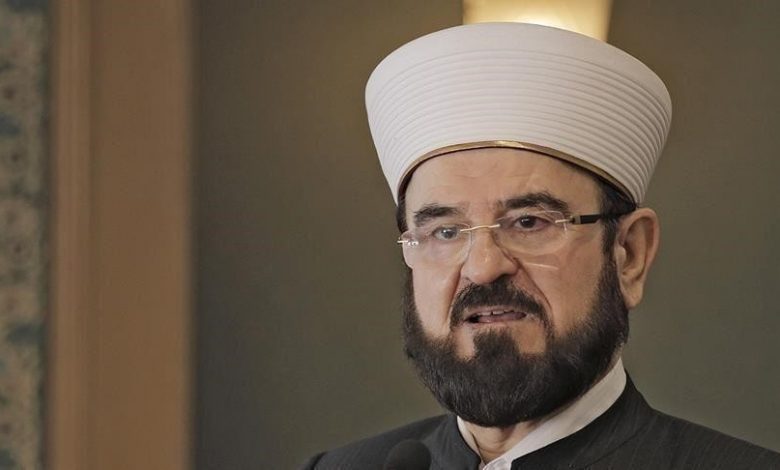
The report published by the New York Post in September 2026 concerning Ali Qaredaxi’s speech served as a genuine warning signal for Western societies as well as for the Muslim communities living within them. Qaredaxi’s remarks, which clearly link the October 7 attacks to the political rise of American Muslims, such as the mayor of New York or candidates for the Senate, carry potentially disastrous implications for social cohesion and the future of the political integration of minorities in the Western world.
Through such statements, Muslim Brotherhood ideology once again demonstrates that it would sacrifice the security and stability of Muslim communities in pursuit of symbolic and propagandistic victories for the international organization.
-
The Muslim Brotherhood and Islamist Extremism: A Security Threat Returns to the Forefront of the American Political Scene
-
From Texas to Washington: Is the Muslim Brotherhood Issue Becoming a Broader American Question?
The first of these risks lies in fueling Islamophobia and providing a valuable advantage to populist far-right movements in Europe and the United States. These extremist movements have long argued that Muslim political participation in the West constitutes a “Trojan horse” intended to infiltrate state institutions and advance fundamentalist agendas associated with terrorist groups. When the president of one of the major organizations of Muslim scholars, regarded as aligned with the Muslim Brotherhood, publicly reinforces this claim by suggesting that the success of Mamdani or Sayed is among the “blessings” of an armed attack, Ali Qaredaxi provides these movements with the evidence they seek to marginalize Muslims and isolate them politically and socially.
The second risk concerns the undermining of the concept of citizenship and national loyalty within Muslim communities. The international Muslim Brotherhood organization has consistently sought to keep Muslims living in the West in a state of “organic and ideological attachment” to the causes and conflicts of the Middle East, preventing them from developing a fully independent local civic identity.
-
Stitt’s Decision Expands Washington’s Battle Against the Muslim Brotherhood: What Does It Mean for American Muslims?
-
Networks linked to the Muslim Brotherhood are expanding inside American schools… warnings and calls for confrontation
Ali Qaredaxi’s discourse reinforces this dependency, reducing the Muslim voter or Muslim public official in America to little more than an echo of violent events unfolding in regional conflict zones. This undermines decades of constructive civic work carried out by mature Western Islamic institutions that have distanced themselves from Qutbist and Muslim Brotherhood ideology.
In conclusion, the international community and independent intellectuals should confront this ideology through sustained and intensive media and intellectual campaigns aimed at explaining and exposing the mechanisms through which the international Muslim Brotherhood organization operates.
-
The American classification guillotine… Has Washington written the death certificate of the Muslim Brotherhood of Lebanon?
-
American legal experts: Designating the Muslim Brotherhood as a terrorist organization is a step that requires further action
Clarifying the nature of Muslim Brotherhood ideology, which is based on linking terrorist attacks to political gains, is an essential step toward protecting Western democracies and safeguarding Muslim communities from instrumentalization.
Exposing the discourse of Ali Qaredaxi and those who make similar statements is not merely a matter of defending political stability; it is also a means of protecting the values of religion and politics from the grip of an opportunistic ideology that feeds on conflicts and exploits human tragedies in pursuit of narrow, transnational organizational objectives.
-
Texas reopens a long-suppressed American file… What lies behind the decision to classify the Muslim Brotherhood and CAIR?
-
Texas designates the Muslim Brotherhood and CAIR as terrorist organizations: a profound American shift reshaping the domestic landscape of political Islam