Khartoum Suffers Under the Strain of Thirst and Contaminated Water
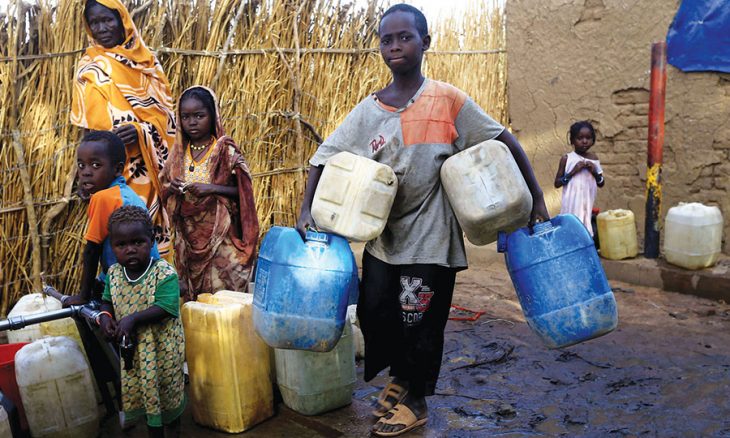
Concerns are growing among doctors over the reliance on untreated water sources, increasing the risk of the spread of waterborne diseases.
The capital, Khartoum, is facing a severe water crisis that has brought many aspects of daily life to a standstill and further compounded the suffering of residents. The crisis has been driven by the decline in the Nile’s water levels, combined with extensive damage to the infrastructure of major water treatment and distribution facilities.
-
Khartoum Airport Operations Between Political Propaganda and Legitimacy in Wartime
-
Between Darfur and Khartoum: Tracing Violations through Victims’ Stories
Sources within the Khartoum State Water Authority said on Monday that the capital was facing exceptional and unprecedented conditions since the beginning of the year. They reported a significant decline in Nile water levels, which has resulted in several water intake points at surface-water treatment plants becoming effectively inoperative, while the efficiency of major pumping systems has also deteriorated.
The main water network in Khartoum State comprises 13 major Nile-based water treatment plants and seven pumping and pressure-boosting stations.
-
Impact of Military Attacks on Sudan’s Infrastructure: People’s Suffering and the Water and Electricity Crisis
-
The Sudanese War… A continuous threat to the medical situation in Khartoum
Residents in northern Bahri have described the scale of the hardship caused by the decline in Nile water levels and the partial shutdown of the Al-Tamaniyat station. At the same time, the price of a barrel of water has reached record levels, making it unaffordable for the majority of residents.
Concerns among doctors have also intensified over the use of untreated water sources, which increases the risk of waterborne diseases spreading.
As the supply of Nile water is disrupted and residents increasingly rely directly on wells and other untreated sources, the economic hardship facing families in residential neighborhoods continues to worsen.
-
The Sudanese situation worsens… Warring parties fight over weapon and fuel depots in Khartoum
-
UN warns: Situation in Khartoum and Omdurman is very concerning
One resident described the daily struggle to secure safe drinking water, noting that the concerns are no longer limited to water shortages but also extend to the diseases that contaminated water may carry. He said that most residents are forced to disinfect the water before drinking it, but that this option has become an extremely costly financial burden.
He pointed out that, with cooking gas prices rising and the cost of charcoal and firewood remaining high amid the severe economic conditions, boiling water has become prohibitively expensive and beyond the means of many families.
-
Khartoum bids farewell to foreigners – Evacuation map
-
Official: Nile waters in Sudan have started to decrease after severe floods
As a result, many families have resorted to placing water containers and barrels under direct sunlight for long periods as an alternative and free method of attempting to disinfect the water, since they cannot afford the fuel required to boil it. This has effectively forced people into taking daily health risks against their will.
Reports issued by health organizations and environmental experts, along with the findings of several sporadic laboratory tests conducted on water supply networks and alternative sources, indicate that most of the drinking water consumed in Khartoum State does not meet World Health Organization standards or Sudanese standards for drinking water quality.
-
Targeting Civilians Between the Jabal al-Aqaydat Airstrikes and Exploitation Scandals in Chad’s Camps: A Sudanese Tragedy Without Refuge
-
Global Threads of Blood: How Are the Logistics of the War in Sudan and the Supply of Chemical Weapons and Mercenaries Organized?
The decline in Nile water levels has caused several water treatment plants that rely directly on the river to cease operations, while production at functioning plants has fallen by approximately 50 percent. This has placed additional pressure on Khartoum‘s water distribution network, leaving numerous neighborhoods without running water and forcing residents to seek alternative sources.
In the East Nile area, residents said that access to water has become increasingly difficult, forcing them to travel long distances and wait for hours to obtain limited quantities. More than seven neighborhoods now rely on water tankers supplied by donors after piped water services to those areas were cut off.
-
How the Logistics of the War in Sudan, the Supply of Chemical Weapons, and the Recruitment of Mercenaries Are Managed
-
Sudan and the Red Sea: How Geography Has Made the Country a Focal Point of Regional and International Competition
One resident said he had launched a donation campaign within his neighborhood to provide water tankers, explaining that the resources currently available were insufficient to meet the population’s growing needs.
The decline in Nile water levels has also revived debate over the impact of Ethiopia’s Grand Renaissance Dam on downstream countries, particularly Sudan. This comes amid previous warnings that the dam’s operating policies and the volumes of water released could have a direct impact on water security and agricultural production, especially during periods of drought.
-
Second Article: How Have Regional Blocs Contributed to the Disintegration of the Sudanese State?
-
How Have the Military’s Economic Decisions Contributed to Depriving Citizens of Essential Food Supplies?