Armed Groups in Iraq: The Main Pro-Iranian Factions
The United States and Saudi Arabia have carried out strikes against Iran-backed Shiite armed groups in Iraq. The two allied countries said that these groups were responsible for drone attacks targeting oil facilities in Saudi Arabia.
The strikes have highlighted the armed groups that wield considerable political and military influence in Iraq.
-
Iran Reshuffles Its Proxies in Yemen and Iraq amid U.S. Strikes
-
After Iraqi Factions Abandoned It, Khamenei: Iran Does Not Need Proxies in the Region
How Did Armed Groups Gain Influence in Iraq?
Shiite armed groups gradually rose to prominence as Iranian influence expanded across Iraq’s political and security landscape following the US-led invasion that ousted Saddam Hussein in 2003.
With financial and military backing from Iran, these groups evolved into deeply entrenched forces within Iraq’s political, economic and social fabric by building commercial networks, securing seats in Parliament and holding government positions.
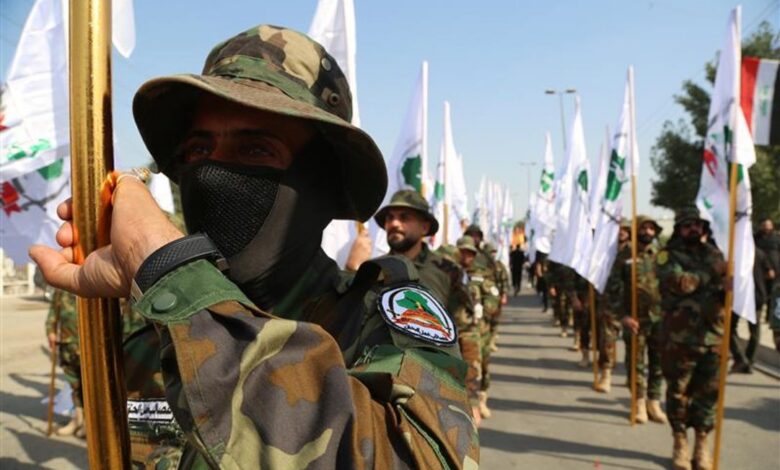
These groups operate under the umbrella of what is known as the « Islamic Resistance » in Iraq, a coalition of around 10 hard-line Shiite armed factions that collectively command approximately 50,000 fighters and possess arsenals that include long-range missiles and anti-aircraft weapons, according to two security officials who monitor the activities of these factions and spoke to Reuters.
-
Iran Relies on Houthis and Iraqi Militias to Support Gaza
-
Withdrawal of Coalition Forces from Iraq: A Renewed Demand Driven by Iran
The so-called « Islamic Resistance » in Iraq, regarded as a key pillar of Iran’s network of allied regional forces, says it has carried out dozens of missile and drone attacks against Israel and US forces in Iraq and Syria since the outbreak of the Gaza war in 2023.
The administration of US President Donald Trump has been pressuring Iraqi leaders to rein in these armed groups.
At the end of June, the Iraqi government announced that it would give groups close to Tehran until September 30 to hand over their weapons to the state. The deadline coincides with the scheduled end of the international coalition’s mission against the terrorist organization ISIS, with some factions continuing to justify retaining their weapons on the grounds that they are needed to confront the group.
What Are the Most Powerful Armed Groups?
-
Leaks from the Secret Meeting: Iran Refuses to Support Hezbollah and its Iraqi Militias Against Israel
-
The Sunni and Shia Components: Renewed US-Iranian Conflict Escalates in Iraq – Key Scenarios
Kataib Hezbollah
Kataib Hezbollah is the most powerful faction within Iraq’s « Islamic Resistance » and is considered one of the armed groups closest to Iran. It was founded by Abu Mahdi al-Muhandis in the mid-2000s. A US airstrike in Baghdad in 2020 killed al-Muhandis alongside Iranian military commander Qassem Soleimani.
After its establishment, Kataib Hezbollah gained notoriety for attacks against military and diplomatic targets. It has been accused of using a combination of sniper attacks, rocket and mortar fire, as well as roadside improvised explosive devices.
Estimates by US national intelligence agencies put the number of Kataib Hezbollah fighters at around 10,000. Iraqi officials and members of the group say it possesses an arsenal that includes drones, rockets and short-range ballistic missiles.
-
Associated Press: Iran reinforces deployment of its forces and heavy weapons across its borders with Iraq
-
Iraq: Parliament rejects al-Halbousi’s resignation and opposes Iran’s plans
Over the years, the United States has carried out several strikes against Kataib Hezbollah positions, including bases, training centers and logistical facilities. The group has defied government calls to halt attacks against US forces.
The group has also claimed responsibility for several high-profile kidnappings. According to Iraqi officials, it abducted Elizabeth Tsurkov, a Russian-Israeli doctoral student, while she was conducting research in Iraq in 2023.
Asaib Ahl al-Haq
The group is led by Qais al-Khazali, who was born in 1974 in Baghdad’s impoverished Sadr City district.
He rose to prominence during the period of turmoil that followed the US invasion. In 2007, US forces arrested him over allegations of involvement in an attack on a government compound in Karbala, a Shiite stronghold in southern Iraq, which resulted in the deaths of five US soldiers.
-
The increase of tensions between Iran and the US, and the readiness of Lebanon and Iraq
-
A drone killed a commander of Iran’s Revolutionary Guards near the Iraqi-Syrian border
He was released after spending approximately three years in a US prison in Iraq.
Al-Khazali fought alongside the « Mahdi Army », led by prominent cleric Muqtada al-Sadr, against US forces before establishing his own armed group in 2006. He was among the large number of militia fighters who traveled to northern Iraq to fight ISIS after the group seized control of large areas of the country in 2014.
In 2020, al-Khazali said there was no longer any justification for thousands of US troops to remain in Iraq after ISIS had been defeated, warning that they would become an occupying force if they did not leave.
Other factions include the Badr Organization, regarded as Tehran’s oldest proxy in Iraq, as well as the Harakat al-Nujaba movement, which maintains an active military presence in Iraq and Syria.
-
US imposed sanctions on Iranian ambassador to Iraq, and two senior Hezbollah officials
-
Iran and Iraq pledged to improve border cooperation and promoting trade