Netanyahu: We discussed three options for dealing with Iran, but the final decision rests with Trump
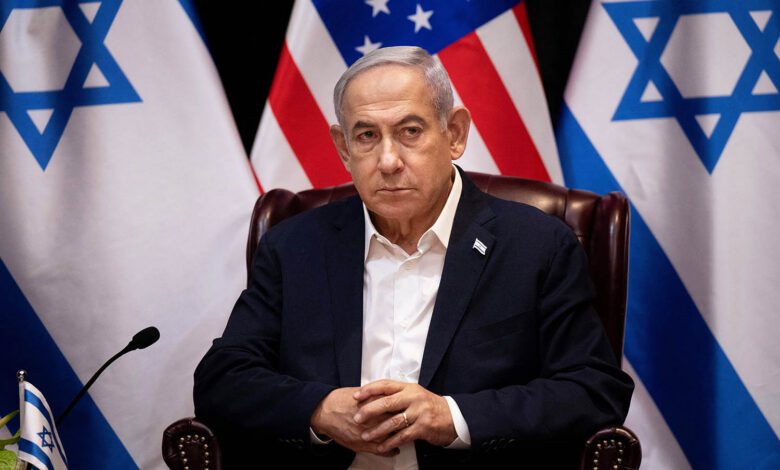
The Israeli prime minister believes that the Strait of Hormuz will not continue to affect the global oil market once the regional conflict comes to an end.
Israeli Prime Minister Benjamin Netanyahu claimed that he did not attempt to persuade US President Donald Trump to resume attacks against Iran. He said that the two leaders examined three possible options: negotiating a broader agreement with Iranian officials, maintaining the blockade of the strategic Strait of Hormuz, and undertaking additional military action.
-
October 7 Investigation: Netanyahu Government Seeks to Delay Decision Until After Elections
-
Netanyahu Reassesses His Options for Striking Iran: From Waiting to a Preemptive Strike
In an interview with ABC News on Wednesday evening, Netanyahu denied allegations that he had tried to convince Trump to restart military operations against Iran during their meeting at the White House on Tuesday, stating: “That portrayal is caricatural… it is simply not true.”
On Thursday morning, the United States Central Command (CENTCOM) announced the resumption of operations against Iran, launching strikes against dozens of sites linked to the Islamic Revolutionary Guard Corps in response to what it described as an Iranian attempt to target American forces.
The strikes marked an openly acknowledged return to direct confrontation between Washington and Tehran, following several days of relative calm during which missile and drone attacks, some of which Saudi Arabia attributed to pro-Iranian militias in Iraq, had taken place.
-
Why did Mamdani Backtrack on Arresting Netanyahu?
-
Netanyahu and the Autumn Elections: Political Challenges, Health Issues, and a Window of Opportunity
For thirteen days, until July 24, the United States carried out attacks against Iran, while Tehran retaliated by targeting what it described as American military facilities and equipment in several Arab countries, particularly Jordan, Bahrain and Kuwait.
Netanyahu added: “On Tuesday, I discussed various options with President Trump to resolve the conflict with Iran.”
In 2018, Trump withdrew from the agreement signed in 2015 between Iran, Germany and the five permanent members of the United Nations Security Council — the United States, the United Kingdom, France, China and Russia.
-
Because of You, I Ended Up Arguing with People… Netanyahu’s Wife Shouts at Him
-
Gadi Eisenkot, Netanyahu’s Opposite, Seeks to Become Israel’s Prime Minister
At the time, Trump argued that the agreement was insufficient to curb Iran’s ambitions. The deal had imposed restrictions on Iran’s nuclear program in exchange for the lifting of international sanctions, with the aim of preventing Tehran from developing nuclear weapons.
“We analyzed all three possibilities, and the decision is his,” Netanyahu said, referring to Trump.
Washington and Tel Aviv accuse Tehran of pursuing nuclear and missile programs that threaten Israel and regional allies of the United States. Iran, for its part, insists that its nuclear program is entirely peaceful, that it has no intention of developing nuclear weapons and that it poses no threat to other countries.
-
Neither Right-Wing nor Left-Wing: Netanyahu Reveals the Shape of His Next Government
-
Ministers in Netanyahu’s Government Threaten to Open the Gates of Hell on Lebanon
Israel, which occupies Palestinian territories as well as land in Lebanon and Syria, is widely regarded as the only country in the region possessing a nuclear arsenal, although it has never officially acknowledged it and remains outside the supervision of the International Atomic Energy Agency.
Netanyahu also rejected the suggestion that he had misled Trump and encouraged him to intervene in the conflict by promoting the idea that regime change in Iran could easily be achieved.
On February 28, the United States and Israel launched a military offensive against Iran that, according to Tehran, resulted in the deaths of more than three thousand people. Iran responded with attacks that killed American and Israeli citizens.
-
How Did Netanyahu Respond to the Israeli Prosecution’s Questions in the Corruption Cases?
-
Netanyahu Refuses to Relinquish Three Fronts Despite the Agreement with Iran
The offensive took place despite progress in negotiations between Washington and Tehran over Iran’s nuclear program, according to Oman’s mediation efforts. It was the second time Israel had disrupted diplomatic talks, the first instance having led to the June 2025 war.
“No, I misled no one. Nobody dictates to President Trump what he should do,” Netanyahu stated.
Asked whether the Iranian regime could change, he replied: “I believe Iran is weaker than ever, and Israel is stronger than ever. I cannot say with certainty that the regime has already collapsed, but it will eventually fall.”
-
The U.S.–Iran Agreement Undermines Netanyahu’s Bet on Trump
-
Trump fuels speculation over Netanyahu’s political future
Netanyahu also predicted that the strategic Strait of Hormuz, a crucial route for global energy supplies and trade, would not continue to disrupt oil markets once the conflict with Iran is over.
“I do not believe the straits will retain such influence. Countries will redirect energy routes from the straits to the Red Sea and then through Israel to the Mediterranean. We can break this blockade, and we will do so,” he said.
On June 18, Washington and Tehran signed a memorandum of understanding and began negotiations aimed at reaching a final agreement, before disagreements emerged over freedom and security of navigation in the Strait of Hormuz.
-
He Chose to Respond: Netanyahu Ignores Trump’s Calls and Strikes Iran
-
The Resumption of Confrontation with Iran Fulfills Netanyahu’s Wish
Netanyahu warned that if Iran were to strike Israel, it would be “a grave mistake,” adding: “We will respond with overwhelming force.”
“My objective is to ensure that Iran, under this regime, never acquires nuclear weapons. President Trump and I fully agree on this issue,” he said.
He also expressed skepticism about the prospects for successful negotiations: “I am skeptical about Iran’s methods. They lie, cheat and always seek to delay. Can this change under sufficient diplomatic and economic pressure? Let us find out.”
-
Washington Distances Itself from Netanyahu’s Plan to Expand Control in Gaza
-
Netanyahu Orders Strikes on Beirut’s Southern Suburbs Amid Stalled Negotiations
Commenting on opinion polls showing declining American public support for Israel, Netanyahu said: “We can observe a direct relationship between the spread of social media and the decline in support for Israel.”
He alleged that “certain sovereign states” — without naming them — manipulate public opinion through electronic influence campaigns and other methods.
However, he acknowledged that “the war in Gaza, the damage to Israel’s image and the false narratives that have circulated” had contributed to this trend.
-
Benjamin Netanyahu faces a threat to his chances of forming a new government due to an agreement among Arab parties
-
The Iran–Israel war: Netanyahu’s dream comes true, but under Trump’s conditions
Public and official anger toward Israel has intensified around the world since the outbreak of the Gaza war on October 8, 2023.
Returning to the issue of declining American support, Netanyahu stated: “Does it concern me? Yes, it does. I want bipartisan support for Israel, from both Republicans and Democrats, because I believe it is fundamental to our national security.”
Speaking about the United States, he added: “We are partners and allies. The United States is the senior partner; we must never forget that. I am the junior partner.”
-
War Objectives in Iran Portend Rift Between Trump and Netanyahu
-
WhatsApp and a hired killer: 55-page document on the Hamas attack turns fire on Netanyahu
“But I am the Prime Minister of Israel, and when I have to defend my country’s interests and security, I do so,” he concluded.
Regarding his disagreements with US Vice President J. D. Vance, particularly over negotiations with Iran, Netanyahu simply said: “I had an extremely productive conversation with the vice president this morning.”
-
Netanyahu stalls under U.S. pressure to prevent the opening of the Rafah crossing
-
Trump Pulls the Trigger on Phase Two in Gaza: Peace Takes Precedence over Netanyahu’s Conditions